How to control on/off of a spark gap (Thread Ended)

Status
Not open for further replies.

Thread Starter

AriK48

Joined Nov 7, 2025
32
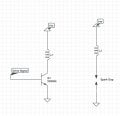
I'm working on a project and I've run into a problem. I have a high voltage DC power source and I want to be able to turn that into pulsing dc or AC using a spark gap. Is there a way to control the on/off of a spark gap the same way you can control the on/off of a transistor/MOSFET?
 

Attachments

Reloadron

Joined Jan 15, 2015
7,850
Something you can look at is Google "spark gap tesla coil". The idea is allow a capacitor to charge till the gap fires and you can change the distance of the gap. More years ago than I care to remember, maybe 1963 or 64 I hand made my capacitors using glass plates to sandwich aluminum foil. My glass plates were 12" X 12".

That's my best guess and I am amazed I never killed myself playing with that thing. :) I was using a 15 KV neon sign transformer capable of 30 mA.

Ron
 

Thread Starter

AriK48

Joined Nov 7, 2025
32
Something you can look at is Google "spark gap tesla coil". The idea is allow a capacitor to charge till the gap fires and you can change the distance of the gap. More years ago than I care to remember, maybe 1963 or 64 I hand made my capacitors using glass plates to sandwich aluminum foil. My glass plates were 12" X 12".

That's my best guess and I am amazed I never killed myself playing with that thing. :) I was using a 15 KV neon sign transformer capable of 30 mA.

Ron
I would ideally like to build something without capacitors or having to tune the circuit as if I'm not mistaken, the resonant frequency can vary due to humidity and other factors. On the other hand a self tuned circuit like an SSTC is appealing. Just SSTC's are limited because transistors/MOSFET's can only handle so much voltage, current, and frequency. So would there be a way to use an antenna/ feedback system and then use it to trigger a spark gap at that said signal?
 

Danko

Joined Nov 22, 2017
2,136
@AriK48
Provide please parameters of your coil, then I will try solve your problem:
Coil diameter = ?
Wire diameter = ?
Number of turns = ?
Expected working frequency = ?
Expected out voltage = ?
 

MisterBill2

Joined Jan 23, 2018
27,159
Certainly a triggered spark gap is possible, and I have seen the circuit to do it. The much more important question is about switching it off. The difficulty is that an electrical arc is both a fairly good conductor and also very hot. That is why arc welding can work. One more unfortunate detail is that a DC arc is more difficult to extinguish. With an AC arc, the voltage passes thru zero twice every cycle, while with a DC ark that does not happen. So the string of ionized air in a DC arc never has a chance to cool, making a DC arc hotter.
An arc can be extinguished by moving the electrodes much farther apart, by magnetic flux stretching it until it breaks, or by physically blocking the current path with an insulating material that can resist the heat.

I have experimentally shown that I can hold an AC arc thru quarter inch thick plate glass, once the arc is struck .

What we need to know is both the open circuit voltage of the source, and the current capability of the voltage source.
 

Futurist

Joined Apr 8, 2025
720
I'm working on a project and I've run into a problem. I have a high voltage DC power source and I want to be able to turn that into pulsing dc or AC using a spark gap. Is there a way to control the on/off of a spark gap the same way you can control the on/off of a transistor/MOSFET?
Are you asking how to repeatedly interrupt/resume the arc? have it stop/start under the control of some external electrical influence?
 

Thread Starter

AriK48

Joined Nov 7, 2025
32
@AriK48
Provide please parameters of your coil, then I will try solve your problem:
Coil diameter = ?
Wire diameter = ?
Number of turns = ?
Expected working frequency = ?
Expected out voltage = ?
The expected working frequency is around 33MHz based on Tesla coil calculator.

Expected output voltage is 32kV.
 

Thread Starter

AriK48

Joined Nov 7, 2025
32
Certainly a triggered spark gap is possible, and I have seen the circuit to do it. The much more important question is about switching it off. The difficulty is that an electrical arc is both a fairly good conductor and also very hot. That is why arc welding can work. One more unfortunate detail is that a DC arc is more difficult to extinguish. With an AC arc, the voltage passes thru zero twice every cycle, while with a DC ark that does not happen. So the string of ionized air in a DC arc never has a chance to cool, making a DC arc hotter.
An arc can be extinguished by moving the electrodes much farther apart, by magnetic flux stretching it until it breaks, or by physically blocking the current path with an insulating material that can resist the heat.

I have experimentally shown that I can hold an AC arc thru quarter inch thick plate glass, once the arc is struck .

What we need to know is both the open circuit voltage of the source, and the current capability of the voltage source.
So SGTC, are the sparks at the spark gap dc or ac? I’m asking because Tesla coils work at over 100KHz + normally and yet the spark gap is audible, while plasma over 10-20KHz is not.
 

Thread Starter

AriK48

Joined Nov 7, 2025
32
Are you asking how to repeatedly interrupt/resume the arc? have it stop/start under the control of some external electrical influence?
Exactly. Right now I’m thinking of the source of the signal to be some sort of feedback system whether it’s a coil, antenna, or something else.
 

Thread Starter

AriK48

Joined Nov 7, 2025
32
Also another question. Does humidity or other factors that change the resonant frequency of a coil change its coil inductance, capacitance, or both?
 

Futurist

Joined Apr 8, 2025
720
Also another question. Does humidity or other factors that change the resonant frequency of a coil change its coil inductance, capacitance, or both?
Permittivity and permeability of air is influenced slightly by humidity I think so a capacitance with free air between the plate or an inductor with an air core will I suppose vary with humidity and hence resonant frequency might well vary too.
 

Futurist

Joined Apr 8, 2025
720
Exactly. Right now I’m thinking of the source of the signal to be some sort of feedback system whether it’s a coil, antenna, or something else.
How much current do you measure through the electrodes when the arc is active? what is the voltage across the gap right before the arc forms and while the arc is active? If you linearly increase the voltage slowly, at what voltage does the arc appear?

Read this Triggered spark gap design
 

Thread Starter

AriK48

Joined Nov 7, 2025
32
Permittivity and permeability of air is influenced slightly by humidity I think so a capacitance with free air between the plate or an inductor with an air core will I suppose vary with humidity and hence resonant frequency might well vary too.
All the more reason why I want to make the circuit self tuned
 
Status
Not open for further replies.
Top