Facebook
 Google
 GitHub
 Linkedin
I'm trying to find the best way to design a low cost capacitive soil moisture sensor. I need to find a design that won't need to be fully tested and re-calibrated for every single different soil type. Perhaps the best way to achieve this would be taking the averages of several readings of the most common soil types, and making it as resistant to outside variables as possible(salinity, soil volume, soil types, etc.)
The end project will have a ESP32 connected to it.
The majority of cheap capacitive soil moisture sensor out there use a TLC555. It works but due to low frequency it is more effected by salinity in the soil, causing it to need very specific calibration from what I've found.
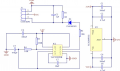
Another option I've seen is using the MCU to generate a higher frequency and PWM. Like the chirp sensor: https://github.com/Miceuz/i2c-moisture-sensor/blob/master/README.md Or: https://github.com/ChococookieOS/pwm-moisture-sensor
I do wonder how the high frequencies would effect the other components on a compact board design. And how much they drift over time.
Any help or advice is greatly appreciated!
The end project will have a ESP32 connected to it.
The majority of cheap capacitive soil moisture sensor out there use a TLC555. It works but due to low frequency it is more effected by salinity in the soil, causing it to need very specific calibration from what I've found.
Another option I've seen is using the MCU to generate a higher frequency and PWM. Like the chirp sensor: https://github.com/Miceuz/i2c-moisture-sensor/blob/master/README.md Or: https://github.com/ChococookieOS/pwm-moisture-sensor
I do wonder how the high frequencies would effect the other components on a compact board design. And how much they drift over time.
Any help or advice is greatly appreciated!