panic mode
- Joined Oct 10, 2011
- 4,989
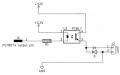
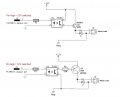
I think both circuits need a high-value turn-off resistor.High side using a NPN and PNP transistors.
Bench tested, resistor not required.I think both circuits need a high-value turn-off resistor.
ak
The TS asked is the reason I posted the BJT circuits.Given the TS requirement is to switch 40mA or so (post #6), why complicate it with BJTs etc.
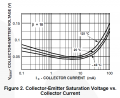
OK I'll give you that with the PNP, better than I recall, assuming the current is definitely that low, but with an NPN the output will always be 0.6v below the input.At these low currents, the saturation voltage of a 2N3904 is less than 90 mV, and the 2N2222 is lower.
True, but if it's just a relay, why bother with high-side switching? There's no obvious benefit as far as I can see.If the load is a 12 volt relay @ 40 ma then 9.9 volts output might work.
Hi sghioto,Getting back to post #1 the request is feasible using the N channel as a high side switch depending on the load.
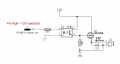
Below is an actual test using a IRF520N mosfet may get better results using the IRL540N as originally listed.
If the load is a 12 volt relay @ 40 ma then 9.9 volts output might work.
View attachment 362413
its the relay dc switching currentWhat is this 40ma load?
Why does it have to be high side switching?its the relay dc switching current
one side of the load is permanetly groundedWhy does it have to be high side switching?