Facebook
 Google
 GitHub
 Linkedin
https://www.eia.gov/consumption/commercial/data/2018/ce/pdf/e5.pdf
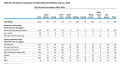
Hi everyone,
I'm trying to interpret a table on electricity consumption in billion kilowatt-hours (kWh) by end use, specifically the row about LEDs (page 7). The table lists a total of 860 billion kWh for LEDs, but there are additional numbers across columns labeled for different end uses like space heating (48), cooling (114), ventilation (163), water heating (18), and so on.
Here’s my confusion:
Thanks for your help!
Hi everyone,
I'm trying to interpret a table on electricity consumption in billion kilowatt-hours (kWh) by end use, specifically the row about LEDs (page 7). The table lists a total of 860 billion kWh for LEDs, but there are additional numbers across columns labeled for different end uses like space heating (48), cooling (114), ventilation (163), water heating (18), and so on.
Here’s my confusion:
- LEDs are primarily used for lighting (143 billion kWh in the "Lighting" column), so what do these other numbers represent?
- For example, how can 163 billion kWh be attributed to ventilation using LEDs? That’s more than the electricity consumed for lighting.
Thanks for your help!