Generate a + and - power supply from a single battery

Thread Starter

Dominick00

Joined Mar 27, 2025
31
Goodmorning,

I'm a civil engineering using LTsplice for my thesis. I want to try for my circuit configuration to use only one battery and i have to use an amplificator which need positive and negative current.
I've tried a lot of different configuration, some found online, some invented by me but it doesn't work; I need to generate a positive and a negative continuous current from a single current if possible.
is it possible? how should i do it?
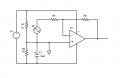
(I already tried the configuration below, the only one that work is V5 V6 but has 2 battery, V4 create 2 current but aren't continuous so the amplificator doesn't work (I think it's because of this))
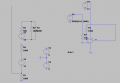
1743071775134.png
 

Alec_t

Joined Sep 17, 2013
15,101
Welcome to AAC!
References to currents, without specifying where they flow, are unclear.
Please post the exact wording of your assignment, in English (using Google Translate if necessary).
 

Thread Starter

Dominick00

Joined Mar 27, 2025
31
Welcome to AAC!
References to currents, without specifying where they flow, are unclear.
Please post the exact wording of your assignment, in English (using Google Translate if necessary).
Hi, sorry but that's not really into my study.
The amplificator LM358 have to amplify the signal coming from the power source V2; this amplificator needs power supply: in the + (below U1) a positive one (example 6V), in the - (below the + below U1) a negative one (example -6V) so that it can amplify both the positive and negative signal coming from the source V2.
So I need to give to the amplifier a continuous positive and negative tension with only one battery if it's possible
 

MrAl

Joined Jun 17, 2014
13,667
Goodmorning,

I'm a civil engineering using LTsplice for my thesis. I want to try for my circuit configuration to use only one battery and i have to use an amplificator which need positive and negative current.
I've tried a lot of different configuration, some found online, some invented by me but it doesn't work; I need to generate a positive and a negative continuous current from a single current if possible.
is it possible? how should i do it?
(I already tried the configuration below, the only one that work is V5 V6 but has 2 battery, V4 create 2 current but aren't continuous so the amplificator doesn't work (I think it's because of this))
View attachment 345495
Hi,

There are several ways to do this. The simplest is to use an op amp when the current requirements are low, but they also make power supply splitter IC's which can handle this, probably better than an op amp because they are made for this.

If you can use an op amp the simple way is to make a voltage divider with two equal resistors like 10k, and that divides the single supply so you get half the output, then feed that to an op amp non inverting input and set as a voltage follower, then use the output of the op amp as the virtual ground. That means that the original positive output becomes the new positive output at 1/2 of the original voltage, and the original ground becomes the new minus output at 1/2 of the original supply voltage only negative.

Note that in this power supply splitter circuits we only get 1/2 of the original voltage as plus and minus, so a 10v power supply can produce plus and minus 5 volts. If you need plus and minus 10 volts then you need to use an inverting boost converter to produce the minus 10 volts.
 

MrAl

Joined Jun 17, 2014
13,667
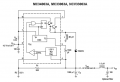
You can use an inverting switching regulator.

From OnSemi:
View attachment 345628
View attachment 345629
Hi,

Yes, I was suggesting something similar.
We do have to be careful though because the impedance of the output is not symmetrical like say a push/pull circuit would have. That means if the circuit tries to source current into the output the output could go way above what we consider to be the new 'ground' reference. This is a common problem and might be why dedicated IC chips came about for this and why op amps are often used when low current is involved.

For this particular circuit, it may not be as bad as the usual power supply splitter circuit though, but a splitter is the usual requirement where we have say 10v input and we want +5v and +5v output. For this circuit that would be a little worse because the output would be considered ground, but then if we try to source a current into the output we might end up with the output looking almost like the -5v rail.
 

Irving

Joined Jan 30, 2016
4,996
@Dominick00 This is a common issue for battery powered circuits and there are many solutions, some of which have already been mentioned here. No doubt you have found this very confusing, but which is best for you does depend on your application which we don't have enough detail on. The most important criteria is whether the signal you wish to amplify goes down to DC or very low frequencies. The second criteria is the output voltage you expect from your amplifier. These two criteria, plus the actual supply voltage available to you, will determine whether a passive solution (virtual ground) or an active solution (-ve boost or charge pump) is appropriate.

Also, what you do in LTSpice for simulation purposes isn't necessarily what you will do physically - using two voltage sources is a common starting point for a more complex simulation later.

Maybe you could share your application details.
 
Last edited:

Thread Starter

Dominick00

Joined Mar 27, 2025
31
Hi,

There are several ways to do this. The simplest is to use an op amp when the current requirements are low, but they also make power supply splitter IC's which can handle this, probably better than an op amp because they are made for this.

If you can use an op amp the simple way is to make a voltage divider with two equal resistors like 10k, and that divides the single supply so you get half the output, then feed that to an op amp non inverting input and set as a voltage follower, then use the output of the op amp as the virtual ground. That means that the original positive output becomes the new positive output at 1/2 of the original voltage, and the original ground becomes the new minus output at 1/2 of the original supply voltage only negative.

Note that in this power supply splitter circuits we only get 1/2 of the original voltage as plus and minus, so a 10v power supply can produce plus and minus 5 volts. If you need plus and minus 10 volts then you need to use an inverting boost converter to produce the minus 10 volts.
I already tried with two equal resistors splitting the V but it didn't work, I think that I'm confused on the part " then use the output of the op amp as the virtual ground". can you try to do a drawing to make it more understandable? thanks!
 

Thread Starter

Dominick00

Joined Mar 27, 2025
31
The word for "amplificatore" is "amplifier" in english.

You can create a virtual ground using two resistors and a capacitor (R3, R4, C3).
Note that is is an inverting amplifier.


View attachment 345505
Thanks,
I have a question about this circuit; why is the V2 connected with the battery? I'm using a piezoelectric, shouldn't it has a circuit on it's own?
I mean, shouldn't the - and + of the op amp being connected only with a circuit with V2, without having to share a circuit with the power supply?
 

ericgibbs

Joined Jan 29, 2010
21,390
Hi Domin.
Please post your LTS asc file, also the specification on the Piezo.
E
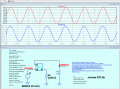
added: this is an example of a piezo in LTS.
EG57_ 2786.gif
 

DickCappels

Joined Aug 21, 2008
10,661
The solution shown by MrChips in post #7 is often the most practical solution, especially when you don't draw much current from ground. I have used it many times.
 

Art Vandelay

Joined Nov 1, 2024
140
Try this circuit. It's a basic example demonstrating how a single supply can be made into a dual supply with few components.

It works by defining 0V GND (referred to as virtual ground) as the mid-point between R1 and R2. These resistors are the DC return path(s) to stabilise the op amp but don't sink / source much current (Ohm's Law). Once charged, C1 and C2 provide additional current instead of it having to pass through R1 or R2. Finally, the op amp is non-inverting with a gain of 3 (1 + (R4 / R3)).

The main drawback of this circuit is the total available output current (per positive and negative cycle) depends on the values of R1, R2, C1, C2. As a result, the load has to be relatively high resistance otherwise the output signal will become heavily distorted.

I suggest simulating this circuit with different values then building it on the breadboard to see where the simulation falls short. And if your up to it, try calculating the component values for a desired load. Good luck.

x3kda3.png
 

Attachments

MrAl

Joined Jun 17, 2014
13,667
I already tried with two equal resistors splitting the V but it didn't work, I think that I'm confused on the part " then use the output of the op amp as the virtual ground". can you try to do a drawing to make it more understandable? thanks!
Hi,

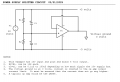
You can only get away with using just two resistors when the current the external circuit draws is very small relative to the value of the resistors, and this is usually the main problem. That is where the op amp comes in. It still uses two resistors, but the op amp acts as a buffer. See attachment which uses some of the symbols from post #7 because it was such a neat drawing (credit to Mr Chips).

As you can see, we get plus and minus 5v with a new ground. If you had a 12v input then you would get plus and minus 6v outputs. If you had an 8v input you would get plus and minus 4 volt outputs.
This kind of circuit has been around for many years, at least 50 years I think.

There is one more little caution here though. During startup when the +10v source is first turned on, the load on the +5v rail may have to take the full 10v for a few microseconds. That's because the LM358 or other op amp will start out with the output at 0v, which for this circuit would mean it would be at -5 volts for a short time while the LM358 starts up. If that is a problem then we have to modify the circuit a little more.
 

Attachments

Last edited:

ericgibbs

Joined Jan 29, 2010
21,390
hi Domon,
I would agree with Mr Al, an active voltage splitter will give improved performance.
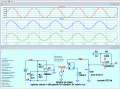
A simple basic circuit as the LTSpice sim would be my choice.
E
EG57_ 2787.gif
 

MrAl

Joined Jun 17, 2014
13,667
hi Domon,
I would agree with Mr Al, an active voltage splitter will give improved performance.
A simple basic circuit as the LTSpice sim would be my choice.
E
View attachment 345828
Hi there Eric,

The only thing I would change here I think is to add another capacitor to the R1 and R2 network. With 47n across R2 another 47n across R1. That helps keep the two supply rails equal with any changes that might occur on the 12v input.
 

Thread Starter

Dominick00

Joined Mar 27, 2025
31
Try this circuit. It's a basic example demonstrating how a single supply can be made into a dual supply with few components.

It works by defining 0V GND (referred to as virtual ground) as the mid-point between R1 and R2. These resistors are the DC return path(s) to stabilise the op amp but don't sink / source much current (Ohm's Law). Once charged, C1 and C2 provide additional current instead of it having to pass through R1 or R2. Finally, the op amp is non-inverting with a gain of 3 (1 + (R4 / R3)).

The main drawback of this circuit is the total available output current (per positive and negative cycle) depends on the values of R1, R2, C1, C2. As a result, the load has to be relatively high resistance otherwise the output signal will become heavily distorted.

I suggest simulating this circuit with different values then building it on the breadboard to see where the simulation falls short. And if your up to it, try calculating the component values for a desired load. Good luck.

View attachment 345824
Thanks! this works and it's a success.
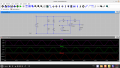
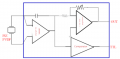
Now i have to attache a charge to voltage behind the opamp, any help on how to do it? this has to be my last scheme, there is also a comparator but i don't need it
1743675270711.png
 

Irving

Joined Jan 30, 2016
4,996
Now i have to attache a charge to voltage behind the opamp, any help on how to do it? this has to be my last scheme, there is also a comparator but i don't need it
Can you explain this statement? The diagram you show in post #19 shows an integrator, before the opamp, with a transfer characteristic of:

\[ Vout = -\int_0^tVin\,\,\frac{\mathrm{d}t} {Rin.C} \]
 
Top