Gate driver IC, diode and resistor

Thread Starter

shortbus

Joined Sep 30, 2009
10,050
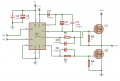
Probably another of my "dumb questions", but what's new? In this (just the latest one) thread there is a schematic. http://forum.allaboutcircuits.com/threads/my-board-killed-three-ir2110-ics-help-plz.125431/ The schematic is one that comes up all over the web. It shows a diode and resistor in parallel between the gate and the driver. To my pea brain the diode is backward, it puts the diode conducting when the driver is turning off. It is my understanding that the following is true -
1. the gate should be turned on as fast as possible.
2. the resistor is to prevent "ringing" during turn off of the gate.

My questions about this are -
1. Doesn't the resistor limit the turn on of the gate?
2. Doesn't the way the diode is biased in the circuit negate the desired 'anti- ringing' effect?

Wouldn't it be better to change the direction of the diode in this application? Allowing the diode to conduct in turn on and the resistor to eliminate ringing at turn off.
 

recklessrog

Joined May 23, 2013
985
For some reason i cannot see the full size image, only the thumbnail. It looks like it is a bootstrap diode to drive the top fet.
Can you post a full size image?
 

cmartinez

Joined Jan 17, 2007
8,749
My questions about this are -
1. Doesn't the resistor limit the turn on of the gate?
2. Doesn't the way the diode is biased in the circuit negate the desired 'anti- ringing' effect?
Here's my answer, and I hope I'm not too far off the mark:

Mosfets are voltage controlled devices, as opposed to transistors, which are current controlled. This means that applying a voltage to a fet's gate will activate it, and removing it will deactivate it. The gate, however, behaves as if it were a small capacitor, which needs to be charged until the applied voltage has reached its full potential. This being the case, the resistor at the gate is there to prevent too much current from flowing into the gate during startup, this helps prevent "ringing" at moderate to high switching frequencies (the resistor is not needed at low frequencies) and also makes things easier for the driver.

This resistor is there to control current flowing into the gate during turn-on of the fet, but it's really not needed during turn off. In fact, a very quick turn off event is a desirable thing. That's why the diodes are there in parallel with the resistors, so as to bypass them during turn off, and to allow the gate to be discharged into ground as fast as possible.

Hope I made sense. If not, feel free to correct me.
 

Thread Starter

shortbus

Joined Sep 30, 2009
10,050
This resistor is there to control current flowing into the gate during turn-on of the fet, but it's really not needed during turn off. In fact, a very quick turn off event is a desirable thing. That's why the diodes are there in parallel with the resistors, so as to bypass them during turn off, and to allow the gate to be discharged into ground as fast as possible.
I guess I need to go back and read some app notes. As I was remembering it, the ringing was only a 'turn off' problem. A continuation of voltage conducting and diminishing with each 'ring' spike. And the gate doesn't do it at turn on. I also thought the idea was to turn on as fast as possible to avoid the linear(ohmic) region of the mosfet.

Thanks to all for answering.
 

Thread Starter

shortbus

Joined Sep 30, 2009
10,050
For some reason i cannot see the full size image, only the thumbnail. It looks like it is a bootstrap diode to drive the top fet.
Can you post a full size image?
Don't know why it came up so small:( C. posted it full size. First picture post since up grade to Win10.
 

recklessrog

Joined May 23, 2013
985
I can see now the circuit is full size, D1 looks like the bootstrap diode, although I have not looked up the spec of the IR2110. As others have pointed out, the diodes in question are for turning off the mosfets quickly.
 

ronv

Joined Nov 12, 2008
3,770
Probably another of my "dumb questions", but what's new? In this (just the latest one) thread there is a schematic. http://forum.allaboutcircuits.com/threads/my-board-killed-three-ir2110-ics-help-plz.125431/ The schematic is one that comes up all over the web. It shows a diode and resistor in parallel between the gate and the driver. To my pea brain the diode is backward, it puts the diode conducting when the driver is turning off. It is my understanding that the following is true -
1. the gate should be turned on as fast as possible.
2. the resistor is to prevent "ringing" during turn off of the gate.

My questions about this are -
1. Doesn't the resistor limit the turn on of the gate?
2. Doesn't the way the diode is biased in the circuit negate the desired 'anti- ringing' effect?

Wouldn't it be better to change the direction of the diode in this application? Allowing the diode to conduct in turn on and the resistor to eliminate ringing at turn off.
Your right it is all over and it is not real good.
First R3 & R4 are not needed if the driver is always in the circuit.
Second - since R3 is so low C1 needs to be bigger than the calculator Max attached will indicate.
I think the intent of the diode is to turn off the FETs faster than they turn on. Since the FET gate have capacitance that needs to be charged and discharge to turn it on and off it takes longer when the gate is going positive (on direction). But since the resistor is so small it makes almost no difference.
The resistor does reduce ringing however.
 

Lestraveled

Joined May 19, 2014
1,946
You are missing something. If your Bootstrap drivers are dyeing for no apparent reason then consider the following:
Most gate driver chips can not survive having the VS pin driven below ground more than .7 volts. This easily happens in these circuits due to parasitic inductances. What is needed, is to clamp that VS pin to ground with a resistor and fast schottky diode.
Example:


Locate the diode as close to the driver chip as you can.

The above has nothing to do with shoot through current but it is just as disastrous.

Edit: .7 volts was an overstatement. This maximum varies between chips.
 
Last edited:

cmartinez

Joined Jan 17, 2007
8,749
You are missing something. If your Bootstrap drivers are dyeing for no apparent reason then consider the following:
Most gate driver chips can not survive having the VS pin driven below ground more than .7 volts. This easily happens in these circuits due to parasitic inductances. What is needed, is to clamp that VS pin to ground with a resistor and fast schottky diode.
Example:


Locate the diode as close to the driver chip as you can.

The above has nothing to do with shoot through current but it is just as disastrous.
That's very interesting, Les. I'm going to include that protective diode and resistor in my 90VDC h-bridge motor driver. Thanks for the tip!
 

Lestraveled

Joined May 19, 2014
1,946
In the data sheet for the LM5104 the range for Vs is clearly indicated in the Absolute Maximum Ratings table. The max negative voltage for Vs is 1 volt. I could not find the same information in the IR2110 data sheet but I did find it in the app note on page 9. The IR2110 is unaffected up to 5 volts below ground for the Vs input.
 

Attachments

cmartinez

Joined Jan 17, 2007
8,749
In the data sheet for the LM5104 the range for Vs is clearly indicated in the Absolute Maximum Ratings table. The max negative voltage for Vs is 1 volt. I could not find the same information in the IR2110 data sheet but I did find it in the app note on page 9. The IR2110 is unaffected up to 5 volts below ground for the Vs input.
I'm guessing, then, that a UF4004 oughta do the trick. Since although it's not a schottky, it's fast enough and has an fv of only 1.3V
 

Thread Starter

shortbus

Joined Sep 30, 2009
10,050
Again thanks for the replies. The schematic was for example only, not for anything I'm doing. It was the latest one in any thread that showed the parallel resistor and diode. Went back and reread some App notes on mosfets and seems like it was a figment of my imagination. But will keep searching as time allows.
 
Top