Facebook
 Google
 GitHub
 Linkedin
Hugh Riddle
- Joined Jun 12, 2020
- 78
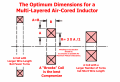
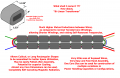
The inductor is a core element in any switch-mode system that transfers energy from an input to an output circuit which operate at different DC voltages. It is used as a short term energy store that is 'charged' by the input circuit and then 'discharged' into the output circuit over each switching cycle - with very little energy lost.I am making a step up DC-DC converter using a full bridge configuration and bridge rectifier output, using high speed rectifier diodes.
I see that in many designs on the net, they use an additional inductor on the output side between the rectifying diodes and smoothing capacitor. I have tried this, but it causes horrific oscillations in the voltage at the rectifier and they very easily go over their voltage limit. A snubber circuit would make this more useable but I am then disipating a lot of power in it. What is the purpose of this inductor and is it really necessary?
Two types of oscillations are often encountered in switch-mode circuit development: a very brief 'ringing' (typically a rapidly decaying cycle or two at MHz) when the circuit switches from discharging to charging the inductor which can be limited by adding passive 'snubber' components and a much slower oscillation (typically in the 10-1000Hz region) which can be eliminated by tailoring the frequency response of the feedback loop that controls the output voltage.