Facebook
 Google
 GitHub
 Linkedin
Full Bridge DC-DC converter... Why the additional Inductor?
- Thread starter pmd34
- Start date
-
- Tags
- dc-dc full-bridge

Scroll to continue with content

Make you life and you Circuits simple.
There's no need for a Full Bridge Primary Configuration,
or for a Full Bridge Output Rectifier,
You're doubling the parts count,
and quadrupling the complicated interactions between all the various components,
and doubling the number of Voltage Drops that generate heat, and therefore, reduce efficiency.
INDUCTOR VALUES ARE CRITICAL
Somebody said they're not, don't kid yourself.
Capacitance and Loads are just as critical as well.
Here's an example of what can be done with one quarter of the parts count .........
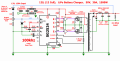
There's no need for a Full Bridge Primary Configuration,
or for a Full Bridge Output Rectifier,
You're doubling the parts count,
and quadrupling the complicated interactions between all the various components,
and doubling the number of Voltage Drops that generate heat, and therefore, reduce efficiency.
INDUCTOR VALUES ARE CRITICAL
Somebody said they're not, don't kid yourself.
Capacitance and Loads are just as critical as well.
Here's an example of what can be done with one quarter of the parts count .........
That's ~83% Efficiency .......
Not a particularly impressive number .....
Better choices of FETs,
in exchange for lower initial expense,
less convenience in making extremely high current connections,
and somewhat less stability with varying Loads,
probably should be done,
and I'll probably do just that when I find the time.
BTW, you can swap Voltage for Ampacity in many cases,
but, higher Voltage is usually easier, and cheaper, than higher Amperage.
Also, you should present ALL of your specifications to a Toroid Transformer/Toroid Choke Manufacturer,
and let them use their expertise and sophisticated software to design the magnetics for you.
But you do need to decide on the topology that gives you the best fit for your needs,
I don't see any advantage to using a full bridge single winding Primary or Secondary in your Transformer.
Use twice as much wire, (at half the average current), and half as many Semi-Conductors,
you're not driving a Motor, it's a Transformer, and you have many options.
.
.
Not a particularly impressive number .....
Better choices of FETs,
in exchange for lower initial expense,
less convenience in making extremely high current connections,
and somewhat less stability with varying Loads,
probably should be done,
and I'll probably do just that when I find the time.
BTW, you can swap Voltage for Ampacity in many cases,
but, higher Voltage is usually easier, and cheaper, than higher Amperage.
Also, you should present ALL of your specifications to a Toroid Transformer/Toroid Choke Manufacturer,
and let them use their expertise and sophisticated software to design the magnetics for you.
But you do need to decide on the topology that gives you the best fit for your needs,
I don't see any advantage to using a full bridge single winding Primary or Secondary in your Transformer.
Use twice as much wire, (at half the average current), and half as many Semi-Conductors,
you're not driving a Motor, it's a Transformer, and you have many options.
.
.

Well that's hardly a shining example of good circuit design, is it? only 83% efficient. Fets on the point of failure due to poor gate waveform, wrongly calculated output filter, and a four-pole filter inside the feedback loop - how on earth is that going to be stable with a 360 degree phase shift? 1uF NPO capacitor? The only one I've ever seen for sale was £69 each in Digikey.Make you life and you Circuits simple.
There's no need for a Full Bridge Primary Configuration,
or for a Full Bridge Output Rectifier,
You're doubling the parts count,
and quadrupling the complicated interactions between all the various components,
and doubling the number of Voltage Drops that generate heat, and therefore, reduce efficiency.
INDUCTOR VALUES ARE CRITICAL
Somebody said they're not, don't kid yourself.
Capacitance and Loads are just as critical as well.
Here's an example of what can be done with one quarter of the parts count .........
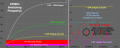
View attachment 218694View attachment 218695
A push-pull circuit is not necessarily the answer (at certain powers and voltages, it may be). The reduction of transistor losses is often cancelled out by an increase in transformer losses because it needs two primary windings and only one is conducting at any time.
Good magnetic coupling between the two primaries is essential to prevent overshoot on switch-off, but a very low inter-winding capacitance is also required. Not an easy transformer to design. And is there really a reduction in semiconductor losses or cost? They have to be rated at twice the supply voltage. Rds(on) for a given die size varies as the square of the voltage, so transistors four times a big are required for the same loss. Compare with the full bridge, which requires only twice as much silicon and a simple, single-primary transformer (but admittedly, a more complex drive circuit)
Last edited:
So, to calculate the output inductor, first choose the peak-to-peak ripple - this is an arbitrary choice, anywhere from 10% to 30% of output current, so that's already an arbitrary 3:1 range for the inductor.INDUCTOR VALUES ARE CRITICAL
Somebody said they're not, don't kid yourself.
Capacitance and Loads are just as critical as well.
Then work out the number of turns (or let Micrometals do it for you)
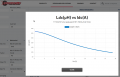
This one was designed for 150uH @ 10A, and its inductance varies by a factor of two from zero to full load, and you're saying it's critical?
And what do you mean by the load being critical? How rarely does a power supply have to work with a fixed load?
Actually it's an advantage if the inductance increases at low load, because it keeps the output in continuous conduction down to lower load currents.
0.85m ohm at 40V. Infineon's IRL40SC209 can achieve that with 178nC gate charge instead of IXYS's 860nC. That would require only a fifth of the gate drive, and might stand a chance of getting a proper gate waveform.Better choices of FETs,
£16 each? instead of £2.50 for the IRL40SC209.in exchange for lower initial expense,
I appreciate all the comments this is stimulating now. I would however like to learn a bit from my experience so far, so wonder if anyone can actually explain what I am seeing with my own circuit, which is actually based on some of TI's own application notes, which considers all the different forms of DC-DC conversion, but sadly (maybe a bit mysteriously!) lacks component values!
That's .00085 Ohms, not .085 Ohms,
I'm dealing with extremely high currents of ~120 Amps,
this will make the pins on that IRL40SC209 glow like a light bulb, if not completely fail like a Fast-Blow Fuse.
Anyway .......
After Selecting a more appropriate FET,
(smaller Specs, but same HUGE Brick Package),
I got a big surprize with a substantial efficiency bump,
now up to ~90% !!
Output = 23A X 55V = 1265 Watts
Input = 116A X 12V = 1392 Watts
1265/1392 = 90% Efficiency
(the efficiency is NOT accurate because the Gate Drivers are not included)
Which means I'll only have to dissipate ~140 watts under Peak Load !!
Low Load performance surprized me as well,
( from 2.4 Ohms minimum, to 10 Ohms ),
I've had serious oscillations with past attempts,
( by-guess-and-by-golly ),
and I expected that it would be a train wreck with low loads,
but apparently, the Ripple Current only got better with this change !!
Ripple Current is virtualy unmeasurable !!
And efficiency has increased to almost ~98% !!!!!!
6A X 59.7V = 358W
30.5A X 12V = 366W
358/366 = 97.8% Efficiency
(the efficiency is NOT accurate because the Gate Drivers are not included)
There is no "Bulk Capacitance" in this circuit, except on the input.
There is no Feed-Back Voltage Regulation in this circuit,
but there will be,
right now it's just a Square Wave Input to test Filtering ideas.
I sure hope that adding Feed-Back is not going to create more problems,
but of course it will create problems to some degree.
FET "On-Time" is estimated to be around ~90% because of the
massive Gate Capacitance in the Huge FETs, which make them "slow".
I theorize that this may actually "smooth-out" what would normally be
a really sharp voltage transition, which usually causes ugly oscillations.
So, maybe this circuit has good performance "by accident".
------------------------------------------------------------------------------------------
Very low Load ..... ( 20 Ohms ),
Things seem to only get better .......
60V X 3A = 180W
12V X 15.3A = 183.6W
180/183.6 = 98% Efficiency
(the efficiency is NOT accurate because the Gate Drivers are not included)
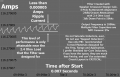
Still no discernable Ripple Current or Oscillations,
and the software I'm using gets
really happy with creating "off-the-scale", ~120,000 Amp oscillations.
Maybe I've stumbled on to something.
Basically, it seems to be very necessary to use a Filter that is very Low-Q,
( Butterworth Alignment ),
and, to make it 4-Pole, ( LC-LC ) in series,
( 24 db/Octave in Speaker Crossover terminology ).
I'm quite sure that some of the Filter Formulas out there
try to gain some cost advantage by using a
very High-Q Formula, tuned to a very narrow Frequency Range.
This is obviously difficult to figure out by reverse engineering the Math.
I had no clue about how effective this method is before
doing these simulations on this project.
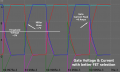
Next is the "Torture Test" where I try to establish how well it
recovers from hard transient spikes, up or down in current.
..
..
I'm dealing with extremely high currents of ~120 Amps,
this will make the pins on that IRL40SC209 glow like a light bulb, if not completely fail like a Fast-Blow Fuse.
Anyway .......
After Selecting a more appropriate FET,
(smaller Specs, but same HUGE Brick Package),
I got a big surprize with a substantial efficiency bump,
now up to ~90% !!
Output = 23A X 55V = 1265 Watts
Input = 116A X 12V = 1392 Watts
1265/1392 = 90% Efficiency
(the efficiency is NOT accurate because the Gate Drivers are not included)
Which means I'll only have to dissipate ~140 watts under Peak Load !!
Low Load performance surprized me as well,
( from 2.4 Ohms minimum, to 10 Ohms ),
I've had serious oscillations with past attempts,
( by-guess-and-by-golly ),
and I expected that it would be a train wreck with low loads,
but apparently, the Ripple Current only got better with this change !!
Ripple Current is virtualy unmeasurable !!
And efficiency has increased to almost ~98% !!!!!!
6A X 59.7V = 358W
30.5A X 12V = 366W
358/366 = 97.8% Efficiency
(the efficiency is NOT accurate because the Gate Drivers are not included)
There is no "Bulk Capacitance" in this circuit, except on the input.
There is no Feed-Back Voltage Regulation in this circuit,
but there will be,
right now it's just a Square Wave Input to test Filtering ideas.
I sure hope that adding Feed-Back is not going to create more problems,
but of course it will create problems to some degree.
FET "On-Time" is estimated to be around ~90% because of the
massive Gate Capacitance in the Huge FETs, which make them "slow".
I theorize that this may actually "smooth-out" what would normally be
a really sharp voltage transition, which usually causes ugly oscillations.
So, maybe this circuit has good performance "by accident".
------------------------------------------------------------------------------------------
Very low Load ..... ( 20 Ohms ),
Things seem to only get better .......
60V X 3A = 180W
12V X 15.3A = 183.6W
180/183.6 = 98% Efficiency
(the efficiency is NOT accurate because the Gate Drivers are not included)
Still no discernable Ripple Current or Oscillations,
and the software I'm using gets
really happy with creating "off-the-scale", ~120,000 Amp oscillations.
Maybe I've stumbled on to something.
Basically, it seems to be very necessary to use a Filter that is very Low-Q,
( Butterworth Alignment ),
and, to make it 4-Pole, ( LC-LC ) in series,
( 24 db/Octave in Speaker Crossover terminology ).
I'm quite sure that some of the Filter Formulas out there
try to gain some cost advantage by using a
very High-Q Formula, tuned to a very narrow Frequency Range.
This is obviously difficult to figure out by reverse engineering the Math.
I had no clue about how effective this method is before
doing these simulations on this project.
Next is the "Torture Test" where I try to establish how well it
recovers from hard transient spikes, up or down in current.
..
..
Last edited:
Strangely enough, I do know what a milliOhm is, and the IRL40SC209 has a maximum (package limited) current of 200A.That's .00085 Ohms, not .085 Ohms,
I'm dealing with extremely high currents of ~120 Amps,
this will make the pins on that IRL40SC209 glow like a light bulb, if not completely fail like a Fast-Blow Fuse.
The IRL40SC209 Rds(on) is 850 micro Ohms.
The Q varies with the load resistance. A Butterworth is not a particularly low-Q filter. Bessel and Critically Damped are lower.Basically, it seems to be very necessary to use a Filter that is very Low-Q,
( Butterworth Alignment ),
and, to make it 4-Pole, ( LC-LC ) in series,
( 24 db/Octave in Speaker Crossover terminology ).
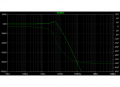
Your filter has this response according to LTSpice, with a -3dB point of around 8kHz.
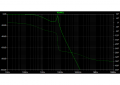
Reduce the load, by increasing the resistance to 20 Ohms and it looks like this:
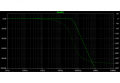
Zverev gives the following values for a 4th Order Butterworth, with zero source resistance and 2.4 Ohms load resistance.
L1 = 11.7uH, C1 = 2.1uF, L2 = 8.27uH, C2 = 510nF
and LT Spice gives the response as below, which looks much more like a Butterworth to me.
Increase the load resistance to 20ohms and it doesn't look so benign, and it's easy to see why a design that is tolerant of varying inductance values is important. That second peak looks far too close to the switching frequency.
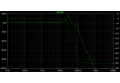
The cut-off frequency of the filter is normally placed well away from the switching frequency, so that variations in Q caused by variations in load don't cause any problems.
I think the only reasons it hasn't started oscillating at 7kHz and blown up is the poor HF response of the error amplifier in the LM3524.
Whyever not? Good luck if you ever want to make a flyback converter!Do not use gapped inductors
I still think it's a magnetic coupling problem. How did you wind the power toroid? Photo?I appreciate all the comments this is stimulating now. I would however like to learn a bit from my experience so far, so wonder if anyone can actually explain what I am seeing with my own circuit, which is actually based on some of TI's own application notes, which considers all the different forms of DC-DC conversion, but sadly (maybe a bit mysteriously!) lacks component values!
You have too much "Monkey-Motion" going on in this Schematic ....
First you have a Boost Converter, (IC-1) making ~15V so that you'll have
enough voltage to cover the Voltage sag in your
LED Isolated, Low Side FET Drivers, and be able to drive the Gates harder.
WAY to complex .......
Then you have another Boost Module (PS-3) going from
5V to ~15V (?????) to power the High Side FET Drivers.
Also, WAY too complex .....
Then you have the LED Isolated FET Drivers themselves, ( IX3180 ),
which are probably too slow and lacking enough Current Capacity
to turn on your FETs quickly and cleanly.
( I didn't do the calculations, and the Data Sheet isn't very helpful ).
The Data Sheet uses a 10 Ohm Gate Resistance for reference,
your chosen FETs have no Gate Resistance listed.
These FETs also require 20V Gate Drive for
minimum RDS-On Resistance ( ???),
and the RDS is not that great at ~40 to ~50 Mohms.
The Gate needs to be "over-driven" by at least ~2 to ~3 volts to
get respectable turn on speeds, this means that you will need
~23V of Gate drive Voltage to get that
lowest possible ~40 Mohm RDS number.
Remember, you're charging a Capacitor,
which charges slower and slower,
on a standard exponential curve,
as the Capacitor charge level reaches the charging Voltage.
Also, this FET is only rated for ~15 Amps continuous.
I don't know how much Current you are expecting at ~300 Volts,
it's not stated on the Schematic,
but with a maximum stated Input Current of ~12 Amps,
that's ~144 Watts, minus losses of, lets say, ~20%,
that comes to roughly ~115 Watts, ( on a good day ),
that's ~0.4 Amps at 300V.
Since this Schematic is labeled as a "Sine Wave Converter"
I'll assume that it will ultimately have a ~240V 50 or 60 hz output.
So your Transformer calculations are off,
You'll need at least ~346 Volts to make a 240V Sine Wave.
So, figuring on a minimum input Voltage of, lets say, ~11 Volts,
you'll need a Turns Ratio of at least 31.5 to one,
so keeping your existing 7 Turn Primary,
that will be ~112 Turns on the Secondary.
At a full 14.5 Volt Alternator Output, that will put the
required DC Output Voltage at around ~464 Peak Volts.
I assume that this is a Hobby oriented build,
and not for mass production,
so why not spend a few more Dollars and get
a MUCH higher performance FET ?
RDS .048 + .048 = .096 Ohms,
at the max stated Input Current on your Schematic,
which is ~12 Amps that's 13 Watts of heat that must be dissipated.
Have you done a proper simulation to determine
the correct/optimum value of Gate Resistor ?
Or maybe you shouldn't have one at all for best stability.
The reason for the Resistor is to prevent Gate Capacitance Ringing,
this "may be" a large portion of the problems that you are having.
The FET Gates have a certain amount of Gate Resistance built-in,
and your Gate Drivers have a certain Output Impedance too,
which is a big part of the simulation/testing, for Gate oscillations.
You may also get better stability by using a different Gate Driver,
they are definitely not all the same.
A Vishay IRLIZ44G, has an RDS of only .028 Ohms,
substantially lower than your current choice,
adding up to only .056 Ohms per pair,
almost half the amount of wasted power,
from ~13 Watts down to ~8 Watts.
Which also means a smaller Heat Sink,
and this is with a "Logic Level" Gate Threshold Voltage,
it achieves this RDS value at 5V on the Gate.
It will handle ~20Amps of Current at just 2.5V on the Gate,
but the Gate can still handle up to +/- 10 Volts,
and you need a Gate Protection Zener in any case,
which I don't see in your Schematic.
This last bonus makes up for the fact that
this FET has a much higher "Gate Charge" than your current one.
It may be necessary to up-grade your FET Drivers,
I don't know, I haven't done all the Gate Drive Simulations.
P.S. If you determine that you actually do need an external Gate Resistor
to calm down any ringing that may show up,
it's a good idea to add a "Pull-Down" Diode bypassing the resistor,
to make sure that the Gate turns off is as fast as possible.
P.S. Your Gate Drivers don't specify an Output Impedance for
doing the Gate Drive Calculations, but the nearest that I can figure
is that they probably have around a ~6 Ohm Impedance,
this is barely acceptable.
Try these Drivers .....
SiliconLabs "Si8261ABC-C-IP",
(drop-in replacement for your existing Drivers (8-Pin DIP)).
They have a 2.6 Ohm Impedance, and are rated at ~4 Amps,
and they also have lower Drive Current Requirements because of
its special "LED Emulator" Circuit,
which is not really an LED at all but is still fully isolated.
They also have an 8 Volt "Under Voltage Lockout",
instead of the 10V UnVLO on your current FET Drivers,
these will work much better with my suggested FETs.
BTW, you don't need your "Lo-Side" Power Module with these FETs I'm suggesting,
in fact, the FET Driver Supply must be limited to 10V max,
which you could do with a simple, single FET, "Voltage Stabilizer" circuit
and a Zener Diode,
and have virtually unlimited current on tap for the Low Side Drivers,
and one thing less to fail, or act in an undesirable manner.
The entire "Voltage Stabilizer" Circuit is soldered directly to the
Pins on the TO-220 Package, so it takes up very little real estate,
and can effortlessly feed both of the Low Side Drivers at the same time,
using the exact same FET as the ones used in the Bridge,
the specs of the FET are almost irrelevant in this particular application.
This is not a "hard" regulator design, but "close enough",
and it will handle serious Current with no effort.
In fact, regarding my mentioning using a High Side Voltage Pump,
this type of single FET Regulator is a perfect match for adding
additional stability to the Charge Pump Output,
which are generally not known for great Voltage Regulation.
Your choice of a tiny "Power Module" for the High Side FETs worries me.
You could easily replace it with a bullet-proof "Charge-Pump" circuit
using just a couple of Capacitors and Diodes.
The Charge Pump will also give you a pseudo "Soft-Start" effect,
which can be a bonus in certain instances.
The High Side FETs will receive a lower Drive Voltage for
several of the first initial cycles of the Oscillator,
at 100khz that happens pretty fast,
but it can still soften the start up slightly.
An attractive way of doing this is to add a small winding to the
Main Transformer, then a small 5-Amp Bridge,
then into the "Voltage Stabilizer",
or, use 2 generic 5-Amp Linear Regulators,
one for each High Side Driver,
I prefer the single Voltage Stabilizer because of its
superior Current capabilities, and only being a single TO-220 device,
plus it's much less expensive.
Either way, they must be mounted to a Heat Sink or an Aluminum Box.
P.S. I just noticed that you have an 8 Amp Current Limiter,
you could easily bump this up to ~10 or ~12 Amps or more
with the FETs I'm suggesting here.
12 Amps would put you up to ~144 Watts.
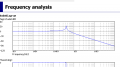
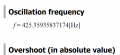
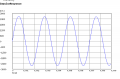
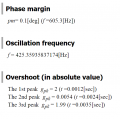
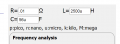
Output Filter
2.6mh and 56uf
See Pictures of analysis ........
It's an Oscillator Circuit, plain and simple.
putting a small load on it "might" help.
I suggest that you copy my 4-Pole Filter from the Schematic I posted.
Rectifiers ....................
You may have already released the Magic Blue Smoke out of
a couple of them, as they're only rated for 5 Amps,
and it's a real neat trick to dissipate heat away from a
"D-Pak" Package soldered to a a PC Board,
there's just not enough surface area.
These Diodes have a somewhat high Forward Voltage at .85V,
so they will produce some heat, and with an expected system
output in the 400V range, a 600V rated part could get spiked
when things go wrong.
I'd suggest some Silicon Carbide Diodes, they come in 1000V ratings
and can withstand an absurd level of heat without failure.
.
.
First you have a Boost Converter, (IC-1) making ~15V so that you'll have
enough voltage to cover the Voltage sag in your
LED Isolated, Low Side FET Drivers, and be able to drive the Gates harder.
WAY to complex .......
Then you have another Boost Module (PS-3) going from
5V to ~15V (?????) to power the High Side FET Drivers.
Also, WAY too complex .....
Then you have the LED Isolated FET Drivers themselves, ( IX3180 ),
which are probably too slow and lacking enough Current Capacity
to turn on your FETs quickly and cleanly.
( I didn't do the calculations, and the Data Sheet isn't very helpful ).
The Data Sheet uses a 10 Ohm Gate Resistance for reference,
your chosen FETs have no Gate Resistance listed.
These FETs also require 20V Gate Drive for
minimum RDS-On Resistance ( ???),
and the RDS is not that great at ~40 to ~50 Mohms.
The Gate needs to be "over-driven" by at least ~2 to ~3 volts to
get respectable turn on speeds, this means that you will need
~23V of Gate drive Voltage to get that
lowest possible ~40 Mohm RDS number.
Remember, you're charging a Capacitor,
which charges slower and slower,
on a standard exponential curve,
as the Capacitor charge level reaches the charging Voltage.
Also, this FET is only rated for ~15 Amps continuous.
I don't know how much Current you are expecting at ~300 Volts,
it's not stated on the Schematic,
but with a maximum stated Input Current of ~12 Amps,
that's ~144 Watts, minus losses of, lets say, ~20%,
that comes to roughly ~115 Watts, ( on a good day ),
that's ~0.4 Amps at 300V.
Since this Schematic is labeled as a "Sine Wave Converter"
I'll assume that it will ultimately have a ~240V 50 or 60 hz output.
So your Transformer calculations are off,
You'll need at least ~346 Volts to make a 240V Sine Wave.
So, figuring on a minimum input Voltage of, lets say, ~11 Volts,
you'll need a Turns Ratio of at least 31.5 to one,
so keeping your existing 7 Turn Primary,
that will be ~112 Turns on the Secondary.
At a full 14.5 Volt Alternator Output, that will put the
required DC Output Voltage at around ~464 Peak Volts.
I assume that this is a Hobby oriented build,
and not for mass production,
so why not spend a few more Dollars and get
a MUCH higher performance FET ?
RDS .048 + .048 = .096 Ohms,
at the max stated Input Current on your Schematic,
which is ~12 Amps that's 13 Watts of heat that must be dissipated.
Have you done a proper simulation to determine
the correct/optimum value of Gate Resistor ?
Or maybe you shouldn't have one at all for best stability.
The reason for the Resistor is to prevent Gate Capacitance Ringing,
this "may be" a large portion of the problems that you are having.
The FET Gates have a certain amount of Gate Resistance built-in,
and your Gate Drivers have a certain Output Impedance too,
which is a big part of the simulation/testing, for Gate oscillations.
You may also get better stability by using a different Gate Driver,
they are definitely not all the same.
A Vishay IRLIZ44G, has an RDS of only .028 Ohms,
substantially lower than your current choice,
adding up to only .056 Ohms per pair,
almost half the amount of wasted power,
from ~13 Watts down to ~8 Watts.
Which also means a smaller Heat Sink,
and this is with a "Logic Level" Gate Threshold Voltage,
it achieves this RDS value at 5V on the Gate.
It will handle ~20Amps of Current at just 2.5V on the Gate,
but the Gate can still handle up to +/- 10 Volts,
and you need a Gate Protection Zener in any case,
which I don't see in your Schematic.
This last bonus makes up for the fact that
this FET has a much higher "Gate Charge" than your current one.
It may be necessary to up-grade your FET Drivers,
I don't know, I haven't done all the Gate Drive Simulations.
P.S. If you determine that you actually do need an external Gate Resistor
to calm down any ringing that may show up,
it's a good idea to add a "Pull-Down" Diode bypassing the resistor,
to make sure that the Gate turns off is as fast as possible.
P.S. Your Gate Drivers don't specify an Output Impedance for
doing the Gate Drive Calculations, but the nearest that I can figure
is that they probably have around a ~6 Ohm Impedance,
this is barely acceptable.
Try these Drivers .....
SiliconLabs "Si8261ABC-C-IP",
(drop-in replacement for your existing Drivers (8-Pin DIP)).
They have a 2.6 Ohm Impedance, and are rated at ~4 Amps,
and they also have lower Drive Current Requirements because of
its special "LED Emulator" Circuit,
which is not really an LED at all but is still fully isolated.
They also have an 8 Volt "Under Voltage Lockout",
instead of the 10V UnVLO on your current FET Drivers,
these will work much better with my suggested FETs.
BTW, you don't need your "Lo-Side" Power Module with these FETs I'm suggesting,
in fact, the FET Driver Supply must be limited to 10V max,
which you could do with a simple, single FET, "Voltage Stabilizer" circuit
and a Zener Diode,
and have virtually unlimited current on tap for the Low Side Drivers,
and one thing less to fail, or act in an undesirable manner.
The entire "Voltage Stabilizer" Circuit is soldered directly to the
Pins on the TO-220 Package, so it takes up very little real estate,
and can effortlessly feed both of the Low Side Drivers at the same time,
using the exact same FET as the ones used in the Bridge,
the specs of the FET are almost irrelevant in this particular application.
This is not a "hard" regulator design, but "close enough",
and it will handle serious Current with no effort.
In fact, regarding my mentioning using a High Side Voltage Pump,
this type of single FET Regulator is a perfect match for adding
additional stability to the Charge Pump Output,
which are generally not known for great Voltage Regulation.
Your choice of a tiny "Power Module" for the High Side FETs worries me.
You could easily replace it with a bullet-proof "Charge-Pump" circuit
using just a couple of Capacitors and Diodes.
The Charge Pump will also give you a pseudo "Soft-Start" effect,
which can be a bonus in certain instances.
The High Side FETs will receive a lower Drive Voltage for
several of the first initial cycles of the Oscillator,
at 100khz that happens pretty fast,
but it can still soften the start up slightly.
An attractive way of doing this is to add a small winding to the
Main Transformer, then a small 5-Amp Bridge,
then into the "Voltage Stabilizer",
or, use 2 generic 5-Amp Linear Regulators,
one for each High Side Driver,
I prefer the single Voltage Stabilizer because of its
superior Current capabilities, and only being a single TO-220 device,
plus it's much less expensive.
Either way, they must be mounted to a Heat Sink or an Aluminum Box.
P.S. I just noticed that you have an 8 Amp Current Limiter,
you could easily bump this up to ~10 or ~12 Amps or more
with the FETs I'm suggesting here.
12 Amps would put you up to ~144 Watts.
Output Filter
2.6mh and 56uf
See Pictures of analysis ........
It's an Oscillator Circuit, plain and simple.
putting a small load on it "might" help.
I suggest that you copy my 4-Pole Filter from the Schematic I posted.
Rectifiers ....................
You may have already released the Magic Blue Smoke out of
a couple of them, as they're only rated for 5 Amps,
and it's a real neat trick to dissipate heat away from a
"D-Pak" Package soldered to a a PC Board,
there's just not enough surface area.
These Diodes have a somewhat high Forward Voltage at .85V,
so they will produce some heat, and with an expected system
output in the 400V range, a 600V rated part could get spiked
when things go wrong.
I'd suggest some Silicon Carbide Diodes, they come in 1000V ratings
and can withstand an absurd level of heat without failure.
.
.

Hello,I am making a step up DC-DC converter using a full bridge configuration and bridge rectifier output, using high speed rectifier diodes.
I see that in many designs on the net, they use an additional inductor on the output side between the rectifying diodes and smoothing capacitor. I have tried this, but it causes horrific oscillations in the voltage at the rectifier and they very easily go over their voltage limit. A snubber circuit would make this more useable but I am then disipating a lot of power in it. What is the purpose of this inductor and is it really necessary?
There are a number of things that can cause low efficiency when working at 100kHz.
The first is the wire size. You should not go over AWG #26 at that frequency or skin effect could take a toll. I mention this first because sometimes it is just not thought about.
Next we have DC in the primary. DC in the primary comes from unmatched MOSFET drain-source voltage. If one mosfet drops 2v and the other drops 1v you end up with 1v DC right across the primary for some time which of course ends up creating a DC offset current in the primary which does nothing to add to the output power. DC current in the primary will eat up lots and lots of power.
We also have the switching transients of the MOSFETs. The rise and fall time has to be minimal yet hopefully not create too much ringing. The rise and fall times are related to the gate drive currents. The current should be at least 1 amp peak for both turn on and turn off. Asymmetrical drive is an idea too.
Then we have the MOSFETs source connection wiring. The MOSFET source wiring should be aa tight as possible and the minus side of the gate drive should go directly to the MOSFET source not to any common ground or anything such as that. With four MOSFETs that means four separate source wires, kept as short as possible.
Also the type of core material. You need to use a core material that is ok at 100kHz. If the core can not operate at 100kHz without heating too much that will cause a lot of power loss.
Diodes ring because they contain capacitance that resonates with any inductance in the circuit.
The output inductor needs to be one that can handle significant DC current. A regular core with regular wire will probably saturate even with 100ma. The inductor has to have a gap either one ground into the core or a distributed gap that comes as part of the material. The idea is to lower the permeability so that the DC current can not take the core material up too high on its BH curve. The lower the permeability the better, although the tradeoff is lower base inductance.
The inductor and output capacitor work together along with the load. If the inductor causes oscillation then it could be that the entire circuit needs to be compensated. Without the indcutor it is more or less a first order system, but with the inductor (even a good one) the plant turns into a second order system which can oscillate without proper compensation. Of course it helps to have the right inductor to start with.
To look into compensation you should look at any reference designs you can find.
Snubbers may be needed across the MOSFET drain source terminals.
For good coupling the transformer should have the secondary wound right on top of the primary (with just tape in between) unless you have to meet an isolation class standard and then they have to be physically separated on the core. That leads to leakage inductance which may help with the output smoothing. Depending on how much leakage inductance you end up with no matter how you wind the windings it may help smooth the output so you may not even need an output inductor. This is actually a key design point in converters that have to be designed at minimal cost.
The output inductor helps to smooth the output as well as protect the capacitor from peak currents that are too high and also lowers peak current in the diodes.
If you keep having problems try operating at 50kHz. 50kHz is less of a challenge than 100kHz.
Last edited:
Yes, it's a bit on the complicated side, but I've seen it done with separate power supplies for the high-side FETs. The internal capacitance of the power supplies presents a small capacitive load to the FET bridge.
It's a bit short on silicon, and the transformer ratio is wrong, but. . .
2.5A peak output, which will charge a 15nC MOSFET gate in 6ns
If you want to know how to keep a switched-mode converter stable, read this https://www.ti.com/seclit/ml/slup340/slup340.pdf
Should he use the values you specify which gives a 9kHz rolloff, or design a proper 50kHz Butterworth filter?
I've seen some BMS circuits which really don't tolerate ripple current very well, and a 4-pole filter would be an advantage, but take the feedback from the top of the first capacitor, so that only two poles are inside the feedback loop.
In the mean time, let's look at the transformer design, as that's where the problems seem to be.
It's a bit short on silicon, and the transformer ratio is wrong, but. . .
<100ns delayThen you have the LED Isolated FET Drivers themselves, ( IX3180 ),
which are probably too slow and lacking enough Current Capacity
to turn on your FETs quickly and cleanly.
( I didn't do the calculations, and the Data Sheet isn't very helpful ).
2.5A peak output, which will charge a 15nC MOSFET gate in 6ns
48m ohm Rds(on) is quoted at Vgs = 10V. The graph of Id vs. Vgs stops at 10V, implying not much improvement is to had.These FETs also require 20V Gate Drive for
minimum RDS-On Resistance ( ???),
3 ohms, I believe,from the circuit diagram posted.The Data Sheet uses a 10 Ohm Gate Resistance for reference,
your chosen FETs have no Gate Resistance listed.
But they have twice the voltage drop of the silicon diode that said were "a bit high".I'd suggest some Silicon Carbide Diodes, they come in 1000V ratings
and can withstand an absurd level of heat without failure.
No it isn't. It needs phase shift >180 degrees before it will oscillate. You conveniently cropped off the phase graph, but it doesn't get to 180 degrees.Output Filter
2.6mh and 56uf
See Pictures of analysis ........
It's an Oscillator Circuit, plain and simple.
No - really, DON'T do that, a 4-pole filter has way too much phase shift and will almost certainly oscillate.I suggest that you copy my 4-Pole Filter from the Schematic I posted.
If you want to know how to keep a switched-mode converter stable, read this https://www.ti.com/seclit/ml/slup340/slup340.pdf
Should he use the values you specify which gives a 9kHz rolloff, or design a proper 50kHz Butterworth filter?
I've seen some BMS circuits which really don't tolerate ripple current very well, and a 4-pole filter would be an advantage, but take the feedback from the top of the first capacitor, so that only two poles are inside the feedback loop.
In the mean time, let's look at the transformer design, as that's where the problems seem to be.
@Ian0 I measured the coupling of my transformers, using the inductance of the primary with and without a short on the secondary... I was surprised that actually the torroidal won hands down at k=0.9973 (L=145uH Lshorted=0.78uH). However I also measured one of my board traces to transformer and this was comparable to the shorted inductance!
Thanks to @MrAl for your comments! Yup I thought about the skin effect so I'm actually using litz wire.. slooooowly learning about inductors! The other comments were also very instructive!
I'm not very pro. with LTspice but had a go at modeling the setup and it does seem that ANY loss of coupling results in strange goings on at the secondary side.
Having gotten rather frustrated with the transformer option I am considering if a simple Boost converter might be the simplest and most efficient way of doing this, though I suspect I am on the very edge of the limit of max. duty cycle as I need about a x10.6 voltage increase.
Thanks to @MrAl for your comments! Yup I thought about the skin effect so I'm actually using litz wire.. slooooowly learning about inductors! The other comments were also very instructive!
I'm not very pro. with LTspice but had a go at modeling the setup and it does seem that ANY loss of coupling results in strange goings on at the secondary side.
Having gotten rather frustrated with the transformer option I am considering if a simple Boost converter might be the simplest and most efficient way of doing this, though I suspect I am on the very edge of the limit of max. duty cycle as I need about a x10.6 voltage increase.
Hello again,@Ian0 I measured the coupling of my transformers, using the inductance of the primary with and without a short on the secondary... I was surprised that actually the torroidal won hands down at k=0.9973 (L=145uH Lshorted=0.78uH). However I also measured one of my board traces to transformer and this was comparable to the shorted inductance!
Thanks to @MrAl for your comments! Yup I thought about the skin effect so I'm actually using litz wire.. slooooowly learning about inductors! The other comments were also very instructive!
I'm not very pro. with LTspice but had a go at modeling the setup and it does seem that ANY loss of coupling results in strange goings on at the secondary side.
Having gotten rather frustrated with the transformer option I am considering if a simple Boost converter might be the simplest and most efficient way of doing this, though I suspect I am on the very edge of the limit of max. duty cycle as I need about a x10.6 voltage increase.
If you can test the transformer with a 100kHz sine that would be good, then maybe at 300kha and 500kHz.
I was not aware that you were not that familiar with inductors.
The inductor is the dual of the capacitor, so we can say that:
An inductor is to current as a capacitor is to voltage.
That may help understand it if you are familiar with how a capacitor works.
Quoting > MrAl
""There are a number of things that can cause low efficiency when working at 100kHz.
The first is the wire size.
You should not go over AWG #26 at that frequency or skin effect could take a toll.
I mention this first because sometimes it is just not thought about.""
I've been seeing quite a few references to
using "Flat Copper Ribbon" instead of
Bi-Filar/Tri-Filar/Quadra-Filar Windings.
Sounds like a good idea.
Just one more reason to let a Magnetics Specialty Company
design and build the Transformer for you.
----------------------------------------------------------------------------
Quoting > MrAl
""DC current in the primary will eat up lots and lots of power.""
Mostly what it eats up is Core Inductance, Permeability, etc.,
In addition to this, many people don't realize that when they
calculate for the required Core Parameters that
those numbers are "minimums".
You almost can't have "too much" Core Cross-Section, or Length,
many unseen factors will be chipping away at that critical
minimum Cross-Section value, not the least of which is temperature,
which has a direct effect on the Core Parameters.
Getting anywhere close to Core Saturation is BAD, BAD, BAD,
but people make these compromises like it's a routine procedure
to see just how small and cheap they can go on the Magnetics,
even going so far as to claiming there are "advantages" to doing so,
when the efficiency falls of a cliff, and starts turning into Heat,
I call BS, .....
Cost and Board space are the only reasons to not use
the largest Core you can accommodate
that has a comfortable buffer on all the critical specs,
in addition to this, the layout,
and the required number of windings can be better idealized.
When the Core gets anywhere close to Saturation,
for any of a number of reasons,
the stability of the whole system starts to go wacky,
and a whole new "Bucket-of-Worms" gets opened up.
----------------------------------------------------------------------------------
Quoting > MrAl
""We also have the switching transients of the MOSFETs.
The rise and fall times have to be minimal,
yet hopefully not create too much ringing.
The rise and fall times are related to the gate drive currents.
The current should be at least 1 amp peak for both turn on and turn off.
Asymmetrical drive is an idea too.""
I think you should have clarified that Ringing is always undesirable,
and should be, and can almost always, be tuned-out.
The only places that ringing could be considered not to be such a
serious problem would be below the Threshold Voltage, and
above the Saturation Voltage,
ringing anywhere else is sure to spread Noise and Trash
all throughout the System,
often exciting oscillations in other components that would
otherwise, normally, be stable.
As for Asymmetrical Drive, ....
anything you can do to speed-up any part of the turn-on, or turn-off, of the Gate,
without creating oscillations, is always a good thing.
It might be just a Resistor, or it could even be a tuned Snubber,
or going the other way with a lower impedance Gate Driver,
the real bonus with the stiffer Gate Driver is that it is never a bad thing.
A perfect square wave is what you want,
but that just ain't gonna happen,
it's always going to be a wiggly ramp, hopefully not too wiggly.
-----------------------------------------------------------------------------------
Quoting > MrAl
""Then we have the MOSFETs source connection wiring.
The MOSFET source wiring should be as tight as possible,
and the minus side of the gate drive should go directly to
the MOSFET source not to any common ground or anything such as that.
With four MOSFETs that means four separate source wires,
kept as short as possible. ""
Two thumbs up on that !!
I do mostly point-to-point, and Bread Board Construction and like to place
the Gate Drivers and FETs side-by-side,
and use 12 or 14 gauge solid Copper Wire as Buss Bars with the
component pins soldered directly to it them,
keeping everything as short as physically possible, including
protection Diodes and multiple Bypass Capacitors being attached
from point to point, making it into a very solid and compact assembly.
This has eliminated many problems from "back-in-the-dumb-old-days".
It ain't pretty, or sexy looking,
but it's very effective at eliminating those annoying stray Inductance Loops
and minimizes Noise Radiation, or reception, into, or out of, other circuits,
and as a bonus, it helps to prevent unnecessary heat generation,
and helps to evenly distribute, and get rid of heat really well.
Heavy and thick Copper is your friend.
-------------------------------------------------------------------------------------
Quoting > MrAl
""Diodes ring because they contain capacitance that
resonates with any inductance [or resistance] in the circuit.""
They also create a "Step" or a "Pulse" in Voltage and Current
which can excite otherwise dormant oscillations in other parts of the circuit.
I've actually selected way over rated Diodes in the past just to
take advantage of the increase in Capacitance from the larger junction.
----------------------------------------------------------------------------------------
Quoting > MrAl
""The output inductor needs to be one that can handle significant DC current.""
Always go by the recommendations of the NEC (National Electrical Code (US)),
AS A MINIMUM wire Gauge size for a particular Amperage Circuit.
This is based on heat generation.
You can "fudge" on this by no more than one wire gauge number.
The exceptions are .....
Bare, uninsulated wire, which can shed its additional heat.
Just be aware that that heat is going to be very efficiently transferred
into anything that that wire is attached to, and conversely,
an oversized wire can help to draw heat OUT of a component,
just as well as an undersized wire can put heat into a component.
Transformers and Inductors/Chokes,
if you have a single layer winding, with free air flow,
standard NEC recommendations usually apply.
With multi-layered windings the heat build-up increases very quickly,
to the point where, virtually each and every additional layer requires a
reduction in the calculated Ampacity of the Wire,
because the heat that is generated has no where to go.
Heat has serious negative effects on the Properties of the Core Materials.
High Frequencies can generate additional heat,
in addition to the normal heat generated by the
expected/calculated Amperage,
which is based on Wire Cross-Section vs Amps.
This is caused by Stray/Parasitic Capacitances and Inductances
interacting between wires, or between wires and the Core,
almost all of which turn into additional heat which must be dissipated.
Heat is always wasted power/efficiency,
unless you are actively causing heat to be generated for a particular purpose.
Voltage Drop is normally only a problem with long wire runs,
but significant, measurable Voltage Drops do occur over any length of wire,
especially in the context of electronic circuits.
A single straight Wire, all by its self,
has a measurable amount of Inductance.
That Inductance is directly proportional to the Length of the Wire.
The inductance is caused by the fact that the Wire slows-down
the speed at which the electrons flow,
to some speed that is "less than" the Speed of Light,
which is the normal speed of Electron flow in a vacuum.
This slowing of the speed of Electrons also generates a Magnetic Field.
A wire with a bend in it has increased Induction over a straight section of Wire.
A wire bent into a circle, is now a "Coil" and has substantially increased Induction.
2 Wires running side-by-side have some amount of Capacitance.
I guess I got carried away, so sue me
Wire Ampacity Chart at the end of this post.
------------------------------------------------------------------------------------------
Quoting > MrAl
""A regular core with regular wire will probably saturate even with 100ma.""
This is a very uninformed statement, or generalization.
It is false.
First there is no such thing as a "regular core".
All of the many and various Core materials were devised for
very important, specific reasons,
many of them are not even remotely similar in their magnetic properties.
A particular Core Material can contain a specific strength of Magnetic Field,
this is measured in "Gauss".
When the maximum Gauss Level is being approached,
and the Core can not be "Charged" with any additional Gauss strength,
the Core is considered to be "Saturated".
The glass is full of water, and you can't put any more water into it.
This is only one parameter related to Core Properties,
but it is an extremely important one which needs to be understood well.
When the Maximum Gauss Level is approached, and then exceeded,
the Inductance Value quickly drops and the Coil is transformed into
a plain piece of copper wire,
and the high "Impedance" of the Coil is transferred into
being simply the DC Resistance of the Copper in the Coil.
A specific Core Material Formula,
in a specific AC Current Frequency Range, (or DC Current),
can "handle",
(that is, take in a certain amount of Power,
and then release that Power back into the circuit that it is connected to ),
"X-quantity" of Power measured in Gauss.
And this "X-quantity" of Power is directly related to the physical "MASS" of the Core,
which is usually calculated as Cross Section, or "Window", times the
"Length" or circumference through the center of the Core Material.
A physically larger, and/or, heavier Core can almost always handle
more power, WITHOUT SATURATION, than a smaller version.
SIZE MATTERS,
but as frequencies go up,
so does the Power Handling capability for a given MASS of Core,
(generally speaking, of course),
so Higher Frequency Cores can usually be smaller for the same Power Handling.
but then you start running into the problem of trying to stuff all that
heavy gauge Copper through a tiny Core,
so you can only get down to a certain size,
relative to Power Handling Capabilities.
Cores also have a DC level of Magnetic Saturation,
which can directly take away from the Core's AC Power Handling capability.
Remember, the glass, (the MASS), can only hold a certain amount of water.
The general shape of a Toroid is almost irrelevant to its Power handling capabilities.
Different shapes are available to accommodate differing space and configuration needs.
Torroids can be stacked and glued together to double, or triple,
or even quadruple their Power Handling Capabilities.
"Gapped Cores" are simply an attempt to "Cheat the Rule Book" and
"get away with" using a smaller, and/or, cheaper Core, (with less MASS),
but they are extremely "fickle" and "finicky", and getting one to deliver
reliable consistent performance REQUIRES a "cut-and-try" method and
extensive testing with expensive equipment.
A Magnetics Manufacturing Company may be able to deliver to you a
very workable Gapped Core Inductor based on their software database
and experience, all so you can save a little of that precious Board Space
and pay twice as much for your part,
to get inferior, but hopefully acceptable, performance.
They are always less efficient than a solid Core.
There are certain specific situations where a manufacturer can profit from
using a Gapped Core, but it is usually money, or available space, motivated.
Also, a Gapped Core is going to radiate a much larger/stronger
field of Magnetic Noise Interference,
and may actually produce objectionable sounds/noises.
A Toroidal Core can come fairly close to performing as a perfect transformer
until you start trying to make it handle more power than it was designed for.
In other words, keep it as far away from Saturation as is practical.
You can do this by simply increasing its MASS/Power Handling Capabilities,
SIZE MATTERS,
this however, will not cover-up an inappropriate Core Material Selection,
or anything having to do with Best Practices in Copper Selection and
Copper Winding/Fixing/Taping Techniques.
ALL the details count.
-----------------------------------------------------------------------------------
Quoting > MrAl
""If you keep having problems,
try operating at 50kHz.
50kHz is less of a challenge than 100kHz.""
Very True Statement,
but don't forget that the
Transformer and Inductor Core Sizes,
including the Output Filter Capacitors,
MUST BE INCREASED IN SIZE.
But don't give up, 100khz is very doable for a dedicated Hobbyist,
it's just that you can't get away with being quite so sloppy.
It's a steeper learning curve for sure.
Then again, I wouldn't attempt anything much higher.
30khz used to be my limit, and RF still scares me.
-------------------------------------------------------------------------------
Quoting > Ian0
LowQCab said:
The Data Sheet uses a 10 Ohm Gate Resistance for reference,
your chosen FETs have no Gate Resistance listed.
""3 ohms, I believe,from the circuit diagram posted."
I wasn't referring to the Gate "Resistor" between the Driver and the Gate,
I'm referring to the "Internal Gate Resistance" inside of the FET.
Every FET has Gate Resistance, but not all Data Sheets provide that Spec.
The output Impedance of the Driver,
and the "Internal" Gate Resistance of the FET must be known to
do a proper simulation that reveals the possibilities of Gate Ringing
at various frequencies,
with various Driving Configurations,
allowing the elimination of those problems ahead of time,
without releasing to much of the Magic Blue Smoke.
-------------------------------------------------------------------------------------
Quoting > Ian0
LowQCab said:
Output Filter
2.6mh and 56uf
See Pictures of analysis ........
It's an Oscillator Circuit, plain and simple.
""No it isn't. It needs phase shift >180 degrees before it will oscillate.
You conveniently cropped off the phase graph,
but it doesn't get to 180 degrees.""
LowQCab said:
I suggest that you copy my 4-Pole Filter from the Schematic I posted.
""No - really, DON'T do that,
a 4-pole filter has way too much phase shift and will almost certainly oscillate.
If you want to know how to keep a switched-mode converter stable, read this https://www.ti.com/seclit/ml/slup340/slup340.pdf
Should he use the values you specify which gives a 9kHz rolloff,
or design a proper 50kHz Butterworth filter?
I've seen some BMS circuits which really don't tolerate ripple current very well,
and a 4-pole filter would be an advantage,
but take the feedback from the top of the first capacitor,
so that only two poles are inside the feedback loop.""
Ian , dude, chill-out man.
You're accusing me of purposefully "Cutting Off" the Phase Shift Chart ???
Really ????
Let me clarify the situation immediately,
this is only the FIRST STAGE of an AC output Inverter,
it only produces the raw DC power which will LATER be regulated and
turned into an AC Sine Wave,
it does not require tight voltage regulation,
it does not need a FEEDBACK LOOP.
A Feedback Loop WILL have serious issues with too much Phase Delay.
On the other hand,
if it needs to be SO quick and accurate that it can make
instantaneous corrections in real-time,
on a pulse by pulse basis,
similar to an Audio Amp,
then YES,
it needs a Feedback Loop,
and Phase Shift within the Loop matters.
However,
this is only a Bulk Voltage Converter.
It only needs to create lots of high voltage DC,
which remains above the minimum Voltage required for
the following stage that it supplies,
in order that it can perform properly under full expected load.
I just went back and looked at the Schematic again,
just to check to see if there was any Feedback Loop,
and there IS a Feedback Loop,
WHICH IS NOT NEEDED,
and the way that this Feedback is handled Digitally by the Processor
is probably THE ENTIRE PROBLEM with the oscillation in ths circuit.
Well .... maybe not the entire problem .....
The Output Filter DOES IN FACT have a 30db spike in its response
that makes it extremely susceptible to self-oscillation.
A 30db Spike is MASSIVE,
this is when it is actually AMPLIFYING fluctuations in the output,
rather than smoothing and filtering them out.
My Filter design was specifically designed to be "over-damped",
with zero self oscillating properties.
I haven't looked into the Phase Shift because it doesn't cause me problems,
I can completely ignore Phase Shift because my inverter design
basically doesn't need the tight Voltage Regulation that it has available.
Also, I haven't gotten to the point of simulating the Control Chip,
I'll figure that out as I come to it.
I've been very frustrated by not having had a reliable formula for creating
a really effective 4-Pole Output Filter,
now I do.
It's a Speaker Crossover Filter Calculator that specifically lets you select
the "Q" value of the Filter, and how many Poles you would like it to have.
The "Q" of the Filter that is contained in the provided Schematic
is a horrendously mis-matched design.
I agree with you on putting the output Feedback connection
earlier in the Filter Chain, or even completely before the Output Filter.
--------------------------------------------------------------------------------------
pmd34
You really have me wondering what prompted you to use
a Micro Processor to control a Circuit that has so many
dedicated, and well refined, controller chips available.
Regardless of all of the other interesting conversations going on,
it a appears to me that the problems that you are having are related to
2 specific areas.
1) Do you need tight voltage control feedback ?
( I'm guessing that you don't )
2) Your Output Filter is definitely a problem source right now.
Exactly how your Processor handles Voltage Feedback is critical for stability,
that is, if you feel that you really need to keep its functionality.
-------------------------------------------------------------------------------------
""There are a number of things that can cause low efficiency when working at 100kHz.
The first is the wire size.
You should not go over AWG #26 at that frequency or skin effect could take a toll.
I mention this first because sometimes it is just not thought about.""
I've been seeing quite a few references to
using "Flat Copper Ribbon" instead of
Bi-Filar/Tri-Filar/Quadra-Filar Windings.
Sounds like a good idea.
Just one more reason to let a Magnetics Specialty Company
design and build the Transformer for you.
----------------------------------------------------------------------------
Quoting > MrAl
""DC current in the primary will eat up lots and lots of power.""
Mostly what it eats up is Core Inductance, Permeability, etc.,
In addition to this, many people don't realize that when they
calculate for the required Core Parameters that
those numbers are "minimums".
You almost can't have "too much" Core Cross-Section, or Length,
many unseen factors will be chipping away at that critical
minimum Cross-Section value, not the least of which is temperature,
which has a direct effect on the Core Parameters.
Getting anywhere close to Core Saturation is BAD, BAD, BAD,
but people make these compromises like it's a routine procedure
to see just how small and cheap they can go on the Magnetics,
even going so far as to claiming there are "advantages" to doing so,
when the efficiency falls of a cliff, and starts turning into Heat,
I call BS, .....
Cost and Board space are the only reasons to not use
the largest Core you can accommodate
that has a comfortable buffer on all the critical specs,
in addition to this, the layout,
and the required number of windings can be better idealized.
When the Core gets anywhere close to Saturation,
for any of a number of reasons,
the stability of the whole system starts to go wacky,
and a whole new "Bucket-of-Worms" gets opened up.
----------------------------------------------------------------------------------
Quoting > MrAl
""We also have the switching transients of the MOSFETs.
The rise and fall times have to be minimal,
yet hopefully not create too much ringing.
The rise and fall times are related to the gate drive currents.
The current should be at least 1 amp peak for both turn on and turn off.
Asymmetrical drive is an idea too.""
I think you should have clarified that Ringing is always undesirable,
and should be, and can almost always, be tuned-out.
The only places that ringing could be considered not to be such a
serious problem would be below the Threshold Voltage, and
above the Saturation Voltage,
ringing anywhere else is sure to spread Noise and Trash
all throughout the System,
often exciting oscillations in other components that would
otherwise, normally, be stable.
As for Asymmetrical Drive, ....
anything you can do to speed-up any part of the turn-on, or turn-off, of the Gate,
without creating oscillations, is always a good thing.
It might be just a Resistor, or it could even be a tuned Snubber,
or going the other way with a lower impedance Gate Driver,
the real bonus with the stiffer Gate Driver is that it is never a bad thing.
A perfect square wave is what you want,
but that just ain't gonna happen,
it's always going to be a wiggly ramp, hopefully not too wiggly.
-----------------------------------------------------------------------------------
Quoting > MrAl
""Then we have the MOSFETs source connection wiring.
The MOSFET source wiring should be as tight as possible,
and the minus side of the gate drive should go directly to
the MOSFET source not to any common ground or anything such as that.
With four MOSFETs that means four separate source wires,
kept as short as possible. ""
Two thumbs up on that !!
I do mostly point-to-point, and Bread Board Construction and like to place
the Gate Drivers and FETs side-by-side,
and use 12 or 14 gauge solid Copper Wire as Buss Bars with the
component pins soldered directly to it them,
keeping everything as short as physically possible, including
protection Diodes and multiple Bypass Capacitors being attached
from point to point, making it into a very solid and compact assembly.
This has eliminated many problems from "back-in-the-dumb-old-days".
It ain't pretty, or sexy looking,
but it's very effective at eliminating those annoying stray Inductance Loops
and minimizes Noise Radiation, or reception, into, or out of, other circuits,
and as a bonus, it helps to prevent unnecessary heat generation,
and helps to evenly distribute, and get rid of heat really well.
Heavy and thick Copper is your friend.
-------------------------------------------------------------------------------------
Quoting > MrAl
""Diodes ring because they contain capacitance that
resonates with any inductance [or resistance] in the circuit.""
They also create a "Step" or a "Pulse" in Voltage and Current
which can excite otherwise dormant oscillations in other parts of the circuit.
I've actually selected way over rated Diodes in the past just to
take advantage of the increase in Capacitance from the larger junction.
----------------------------------------------------------------------------------------
Quoting > MrAl
""The output inductor needs to be one that can handle significant DC current.""
Always go by the recommendations of the NEC (National Electrical Code (US)),
AS A MINIMUM wire Gauge size for a particular Amperage Circuit.
This is based on heat generation.
You can "fudge" on this by no more than one wire gauge number.
The exceptions are .....
Bare, uninsulated wire, which can shed its additional heat.
Just be aware that that heat is going to be very efficiently transferred
into anything that that wire is attached to, and conversely,
an oversized wire can help to draw heat OUT of a component,
just as well as an undersized wire can put heat into a component.
Transformers and Inductors/Chokes,
if you have a single layer winding, with free air flow,
standard NEC recommendations usually apply.
With multi-layered windings the heat build-up increases very quickly,
to the point where, virtually each and every additional layer requires a
reduction in the calculated Ampacity of the Wire,
because the heat that is generated has no where to go.
Heat has serious negative effects on the Properties of the Core Materials.
High Frequencies can generate additional heat,
in addition to the normal heat generated by the
expected/calculated Amperage,
which is based on Wire Cross-Section vs Amps.
This is caused by Stray/Parasitic Capacitances and Inductances
interacting between wires, or between wires and the Core,
almost all of which turn into additional heat which must be dissipated.
Heat is always wasted power/efficiency,
unless you are actively causing heat to be generated for a particular purpose.
Voltage Drop is normally only a problem with long wire runs,
but significant, measurable Voltage Drops do occur over any length of wire,
especially in the context of electronic circuits.
A single straight Wire, all by its self,
has a measurable amount of Inductance.
That Inductance is directly proportional to the Length of the Wire.
The inductance is caused by the fact that the Wire slows-down
the speed at which the electrons flow,
to some speed that is "less than" the Speed of Light,
which is the normal speed of Electron flow in a vacuum.
This slowing of the speed of Electrons also generates a Magnetic Field.
A wire with a bend in it has increased Induction over a straight section of Wire.
A wire bent into a circle, is now a "Coil" and has substantially increased Induction.
2 Wires running side-by-side have some amount of Capacitance.
I guess I got carried away, so sue me
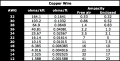
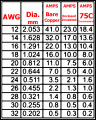
Wire Ampacity Chart at the end of this post.
------------------------------------------------------------------------------------------
Quoting > MrAl
""A regular core with regular wire will probably saturate even with 100ma.""
This is a very uninformed statement, or generalization.
It is false.
First there is no such thing as a "regular core".
All of the many and various Core materials were devised for
very important, specific reasons,
many of them are not even remotely similar in their magnetic properties.
A particular Core Material can contain a specific strength of Magnetic Field,
this is measured in "Gauss".
When the maximum Gauss Level is being approached,
and the Core can not be "Charged" with any additional Gauss strength,
the Core is considered to be "Saturated".
The glass is full of water, and you can't put any more water into it.
This is only one parameter related to Core Properties,
but it is an extremely important one which needs to be understood well.
When the Maximum Gauss Level is approached, and then exceeded,
the Inductance Value quickly drops and the Coil is transformed into
a plain piece of copper wire,
and the high "Impedance" of the Coil is transferred into
being simply the DC Resistance of the Copper in the Coil.
A specific Core Material Formula,
in a specific AC Current Frequency Range, (or DC Current),
can "handle",
(that is, take in a certain amount of Power,
and then release that Power back into the circuit that it is connected to ),
"X-quantity" of Power measured in Gauss.
And this "X-quantity" of Power is directly related to the physical "MASS" of the Core,
which is usually calculated as Cross Section, or "Window", times the
"Length" or circumference through the center of the Core Material.
A physically larger, and/or, heavier Core can almost always handle
more power, WITHOUT SATURATION, than a smaller version.
SIZE MATTERS,
but as frequencies go up,
so does the Power Handling capability for a given MASS of Core,
(generally speaking, of course),
so Higher Frequency Cores can usually be smaller for the same Power Handling.
but then you start running into the problem of trying to stuff all that
heavy gauge Copper through a tiny Core,
so you can only get down to a certain size,
relative to Power Handling Capabilities.
Cores also have a DC level of Magnetic Saturation,
which can directly take away from the Core's AC Power Handling capability.
Remember, the glass, (the MASS), can only hold a certain amount of water.
The general shape of a Toroid is almost irrelevant to its Power handling capabilities.
Different shapes are available to accommodate differing space and configuration needs.
Torroids can be stacked and glued together to double, or triple,
or even quadruple their Power Handling Capabilities.
"Gapped Cores" are simply an attempt to "Cheat the Rule Book" and
"get away with" using a smaller, and/or, cheaper Core, (with less MASS),
but they are extremely "fickle" and "finicky", and getting one to deliver
reliable consistent performance REQUIRES a "cut-and-try" method and
extensive testing with expensive equipment.
A Magnetics Manufacturing Company may be able to deliver to you a
very workable Gapped Core Inductor based on their software database
and experience, all so you can save a little of that precious Board Space
and pay twice as much for your part,
to get inferior, but hopefully acceptable, performance.
They are always less efficient than a solid Core.
There are certain specific situations where a manufacturer can profit from
using a Gapped Core, but it is usually money, or available space, motivated.
Also, a Gapped Core is going to radiate a much larger/stronger
field of Magnetic Noise Interference,
and may actually produce objectionable sounds/noises.
A Toroidal Core can come fairly close to performing as a perfect transformer
until you start trying to make it handle more power than it was designed for.
In other words, keep it as far away from Saturation as is practical.
You can do this by simply increasing its MASS/Power Handling Capabilities,
SIZE MATTERS,
this however, will not cover-up an inappropriate Core Material Selection,
or anything having to do with Best Practices in Copper Selection and
Copper Winding/Fixing/Taping Techniques.
ALL the details count.
-----------------------------------------------------------------------------------
Quoting > MrAl
""If you keep having problems,
try operating at 50kHz.
50kHz is less of a challenge than 100kHz.""
Very True Statement,
but don't forget that the
Transformer and Inductor Core Sizes,
including the Output Filter Capacitors,
MUST BE INCREASED IN SIZE.
But don't give up, 100khz is very doable for a dedicated Hobbyist,
it's just that you can't get away with being quite so sloppy.
It's a steeper learning curve for sure.
Then again, I wouldn't attempt anything much higher.
30khz used to be my limit, and RF still scares me.
-------------------------------------------------------------------------------
Quoting > Ian0
LowQCab said:
The Data Sheet uses a 10 Ohm Gate Resistance for reference,
your chosen FETs have no Gate Resistance listed.
""3 ohms, I believe,from the circuit diagram posted."
I wasn't referring to the Gate "Resistor" between the Driver and the Gate,
I'm referring to the "Internal Gate Resistance" inside of the FET.
Every FET has Gate Resistance, but not all Data Sheets provide that Spec.
The output Impedance of the Driver,
and the "Internal" Gate Resistance of the FET must be known to
do a proper simulation that reveals the possibilities of Gate Ringing
at various frequencies,
with various Driving Configurations,
allowing the elimination of those problems ahead of time,
without releasing to much of the Magic Blue Smoke.
-------------------------------------------------------------------------------------
Quoting > Ian0
LowQCab said:
Output Filter
2.6mh and 56uf
See Pictures of analysis ........
It's an Oscillator Circuit, plain and simple.
""No it isn't. It needs phase shift >180 degrees before it will oscillate.
You conveniently cropped off the phase graph,
but it doesn't get to 180 degrees.""
LowQCab said:
I suggest that you copy my 4-Pole Filter from the Schematic I posted.
""No - really, DON'T do that,
a 4-pole filter has way too much phase shift and will almost certainly oscillate.
If you want to know how to keep a switched-mode converter stable, read this https://www.ti.com/seclit/ml/slup340/slup340.pdf
Should he use the values you specify which gives a 9kHz rolloff,
or design a proper 50kHz Butterworth filter?
I've seen some BMS circuits which really don't tolerate ripple current very well,
and a 4-pole filter would be an advantage,
but take the feedback from the top of the first capacitor,
so that only two poles are inside the feedback loop.""
Ian , dude, chill-out man.
You're accusing me of purposefully "Cutting Off" the Phase Shift Chart ???
Really ????
Let me clarify the situation immediately,
this is only the FIRST STAGE of an AC output Inverter,
it only produces the raw DC power which will LATER be regulated and
turned into an AC Sine Wave,
it does not require tight voltage regulation,
it does not need a FEEDBACK LOOP.
A Feedback Loop WILL have serious issues with too much Phase Delay.
On the other hand,
if it needs to be SO quick and accurate that it can make
instantaneous corrections in real-time,
on a pulse by pulse basis,
similar to an Audio Amp,
then YES,
it needs a Feedback Loop,
and Phase Shift within the Loop matters.
However,
this is only a Bulk Voltage Converter.
It only needs to create lots of high voltage DC,
which remains above the minimum Voltage required for
the following stage that it supplies,
in order that it can perform properly under full expected load.
I just went back and looked at the Schematic again,
just to check to see if there was any Feedback Loop,
and there IS a Feedback Loop,
WHICH IS NOT NEEDED,
and the way that this Feedback is handled Digitally by the Processor
is probably THE ENTIRE PROBLEM with the oscillation in ths circuit.
Well .... maybe not the entire problem .....
The Output Filter DOES IN FACT have a 30db spike in its response
that makes it extremely susceptible to self-oscillation.
A 30db Spike is MASSIVE,
this is when it is actually AMPLIFYING fluctuations in the output,
rather than smoothing and filtering them out.
My Filter design was specifically designed to be "over-damped",
with zero self oscillating properties.
I haven't looked into the Phase Shift because it doesn't cause me problems,
I can completely ignore Phase Shift because my inverter design
basically doesn't need the tight Voltage Regulation that it has available.
Also, I haven't gotten to the point of simulating the Control Chip,
I'll figure that out as I come to it.
I've been very frustrated by not having had a reliable formula for creating
a really effective 4-Pole Output Filter,
now I do.
It's a Speaker Crossover Filter Calculator that specifically lets you select
the "Q" value of the Filter, and how many Poles you would like it to have.
The "Q" of the Filter that is contained in the provided Schematic
is a horrendously mis-matched design.
I agree with you on putting the output Feedback connection
earlier in the Filter Chain, or even completely before the Output Filter.
--------------------------------------------------------------------------------------
pmd34
You really have me wondering what prompted you to use
a Micro Processor to control a Circuit that has so many
dedicated, and well refined, controller chips available.
Regardless of all of the other interesting conversations going on,
it a appears to me that the problems that you are having are related to
2 specific areas.
1) Do you need tight voltage control feedback ?
( I'm guessing that you don't )
2) Your Output Filter is definitely a problem source right now.
Exactly how your Processor handles Voltage Feedback is critical for stability,
that is, if you feel that you really need to keep its functionality.
-------------------------------------------------------------------------------------
The vast majority of switched-mode power-supplies are flyback circuits. They ALL have gapped cores. That is because they have net DC current through the core, and ferrite would saturate."Gapped Cores" are simply an attempt to "Cheat the Rule Book" and
"get away with" using a smaller, and/or, cheaper Core, (with less MASS),
but they are extremely "fickle" and "finicky", and getting one to deliver
reliable consistent performance REQUIRES a "cut-and-try" method and
extensive testing with expensive equipment.
A Magnetics Manufacturing Company may be able to deliver to you a
very workable Gapped Core Inductor based on their software database
and experience, all so you can save a little of that precious Board Space
and pay twice as much for your part,
to get inferior, but hopefully acceptable, performance.
They are always less efficient than a solid Core.
Iron powder is a "distributed gap" material - there is a gap around each iron particle.
Only the gap can store energy. True, this isn't a flyback converter, but a very small gap in the core can prevent saturation and prevent a "flux walking" problem. Back in 1956, Crowhurst was advocating a small gap in valve amplifier output transformers for the same reason.
The Al value of ferrite is not very accurate (+/-20%), but the Al value of AIR is. A gapped transformer is more repeatable in production.
There's two ways of approaching this - I've seen them both used commercially.this is only the FIRST STAGE of an AC output Inverter,
it only produces the raw DC power which will LATER be regulated and
turned into an AC Sine Wave,
it does not require tight voltage regulation,
it does not need a FEEDBACK LOOP.
A Feedback Loop WILL have serious issues with too much Phase Delay.
1) Produce an accurate DC high-voltage bus, of about 340V, then generate the sinewave open-loop
2) Produce a DC bus which is a crtain multiple of the input voltage, but using an open-loop step-up circuit, then produce the sinewave with feedback to keep it accurate.
I see them both as equally valid - it seems a matter of choice.
My opinion is that feedback will probably be much simpler to keep stable in the former, as it does not have to cope with a multitude of different output loads, lagging or leading power factor, bad crest factor driving switched-mode supplies etc.
Did your fancy software design that filter? An put the 3dB point at 8kHz when you wanted it at 50kHz. And put a big spike at 9kHz when you wanted a Butterworth response? You've been "sold a bill of goods" as my wife who's American would say.I've been very frustrated by not having had a reliable formula for creating
a really effective 4-Pole Output Filter,
now I do.
It's a Speaker Crossover Filter Calculator that specifically lets you select
the "Q" value of the Filter, and how many Poles you would like it to have.
Would you like a copy of the tables from Zverev "A handbook of filter synthesis"? Happy to scan a few pages for you.
There's Bessel, Butterworth and several varieties of Chebyshev, in all orders up to 8th.
The 2nd order output filter is ubiquitous, and for a good reason - with less than 180 degrees phase shift it's relatively easy to keep it stable, with the right compensation around the error amplifier.
The oscillation was at 1MHz and that oscillation was not present in the primary waveform, so it's not a feedback problem, it's a transformer problem, although we haven't yet seen both primary waveforms, or the voltage measured across the primary, not from one end to ground.and the way that this Feedback is handled Digitally by the Processor
is probably THE ENTIRE PROBLEM with the oscillation in this circuit.
There could still be some PWM error causing a DC offset, caused by digitally generating the PWM. Microcontroller PWM peripherals often give a positive period 1 count longer than the negative (or vice versa) by the way they are timed.
One thing on which we both agree is that attempting to do the feedback with a microprocessor is not going to end well. The unlabelled 100nF capactor by R12 is a bad start. Another 90 degrees lag in the feedback network is just what it needs to push it into oscillation. It's going to need a DSP at some considerable speed, running IIR filters to implement the error amplifier.
Last edited:
The vast majority of switched-mode power-supplies are flyback circuits. They ALL have gapped cores. That is because they have net DC current through the core, and ferrite would saturate.
Iron powder is a "distributed gap" material - there is a gap around each iron particle.
Only the gap can store energy. True, this isn't a flyback converter, but a very small gap in the core can prevent saturation and prevent a "flux walking" problem. Back in 1956, Crowhurst was advocating a small gap in valve amplifier output transformers for the same reason.
The Al value of ferrite is not very accurate (+/-20%), but the Al value of AIR is. A gapped transformer is more repeatable in production.
There's two ways of approaching this - I've seen them both used commercially.
1) Produce an accurate DC high-voltage bus, of about 340V, then generate the sinewave open-loop
2) Produce a DC bus which is a crtain multiple of the input voltage, but using an open-loop step-up circuit, then produce the sinewave with feedback to keep it accurate.
I see them both as equally valid - it seems a matter of choice.
My opinion is that feedback will probably be much simpler to keep stable in the former, as it does not have to cope with a multitude of different output loads, lagging or leading power factor, bad crest factor driving switched-mode supplies etc.
Did your fancy software design that filter? An put the 3dB point at 8kHz when you wanted it at 50kHz. And put a big spike at 9kHz when you wanted a Butterworth response? You've been "sold a bill of goods" as my wife who's American would say.
Would you like a copy of the tables from Zverev "A handbook of filter synthesis"? Happy to scan a few pages for you.
There's Bessel, Butterworth and several varieties of Chebyshev, in all orders up to 8th.
The 2nd order output filter is ubiquitous, and for a good reason - with less than 180 degrees phase shift it's relatively easy to keep it stable, with the right compensation around the error amplifier.
The oscillation was at 1MHz and that oscillation was not present in the primary waveform, so it's not a feedback problem, it's a transformer problem, although we haven't yet seen both primary waveforms, or the voltage measured across the primary, not from one end to ground.
There could still be some PWM error causing a DC offset, caused by digitally generating the PWM. Microcontroller PWM peripherals often give a positive period 1 count longer than the negative (or vice versa) by the way they are timed.
One thing on which we both agree is that attempting to do the feedback with a microprocessor is not going to end well. The unlabelled 100nF capactor by R12 is a bad start. Another 90 degrees lag in the feedback network is just what it needs to push it into oscillation. It's going to need a DSP at some considerable speed, running IIR filters to implement the error amplifier.
Actually it's just feeding back more of the signal to the error amplifier.Well .... maybe not the entire problem .....
The Output Filter DOES IN FACT have a 30db spike in its response
that makes it extremely susceptible to self-oscillation.
A 30db Spike is MASSIVE,
this is when it is actually AMPLIFYING fluctuations in the output,
rather than smoothing and filtering them out.
A correctly designed error amplifier has 90 degrees phase advance on the input at that frequency. 180 degrees lag from the LC filter, 180 degrees because the error amplifier inverts. Total = 270 degrees. No oscillation.
It's like the dominant pole capacitor in a power amplifier. It feeds MORE signal back to the input of the voltage amplifier stage at higher frequencies, which makes it LESS likely to oscillate at higher frequencies.