Electromagnetic Pendulum (pulse movement) (2)

panic mode

Joined Oct 10, 2011
4,983
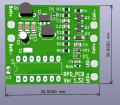
as i was the one designing PCBs for them, i heard some of the feedback. basically:
version with OpAmps was working fine but calibrating correct pendulum length was time consuming.
version with MCU was much simpler to setup but it was sort of finicky with respect to choice of coil and supply voltage.
not sure about long term tests though i would expect MCU version to be more stable due to crystal oscillator.

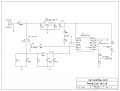
i would also like to point out to an issue with the coil driver circuit. in original circuit as shown in post #17 has Q1 and Q2 connected directly - without any current limiting. if you go that route, i would suggest making some changes. at the very least add a resistor between the transistors:

1754408566231.png
 

Jerry-Hat-Trick

Joined Aug 31, 2022
823
In case it's of interest, I used an opto interrupter at the bottom of the pendulum with a 5mm wide card to trigger a 555 monostable. It triggered the coil in both directions but the field strength of the coil when the pendulum is swinging away is weak enough not to matter. A pot to adjust the duration of the pulse to control the amplitude.

Then I used a dual opto interrupter and an ATtiny85 processor to sense the direction so it only fires the coil in one direction. The system can start a stationary pendulum by activating the coil for 20% of the known pendulum period when the opto interrupters are not being triggered, (so it starts to resonate) and once the amplitude is enough to trigger the opto interrupters the amplitude can be controlled with a feedback loop based on the proportion of the time one opto interrupter is/is not triggered.
 

AnalogKid

Joined Aug 1, 2013
12,130
i would also like to point out to an issue with the coil driver circuit. in original circuit as shown in post #17 has Q1 and Q2 connected directly - without any current limiting. if you go that route, i would suggest making some changes. at the very least add a resistor between the transistors:
AND - add a resistor from the Q1 base to its emitter to assure a complete and rapid turn-off.

ak
 

Seaskiff

Joined Aug 1, 2025
3
For the record, I am a retired electrician with little electronics expertise. Yes, I understand ohms law and other basic formulas, but that's it. That said, I would welcome any pdf circuits that are simple to build and function without needing an electronics engineering degree. Thank you all again for your responses!
 
Omg you are too much . That is fantastic. But let me first get this guy's board that I paid $50 for and see if it will even work. I might have to redesign the clock base to be sure I have space for the PCB and battery. I'm using 1 18650 lithium ion battery work a rechargeable board. So the clock will run by USB-C 5v little charger as well as recharge the battery at the same time. Or you can pull out the cord and the clock will run off the 18650 battery for about 6 to 8 months before charging.
 
I would like to hear from @kicksnj about his experience with these boards and information about the rechargable battery and board included in his clocks.
 
Last edited by a moderator:
Top