Facebook
 Google
 GitHub
 Linkedin

The sandwich technique in action ...Here is the result of clamping the PTFE sheet between pieces of wood and drilling through the sandwich with a 3/16 " brad point drill.
 but I hadn't considered the brad point before ...
The sandwich technique in action ...Here is the result of clamping the PTFE sheet between pieces of wood and drilling through the sandwich with a 3/16 " brad point drill.
but I hadn't considered the brad point before ...
A high modulus of elasticity then? Well.. Correct me if you disagree. Based upon your remarks it seems PTFE is well applied as a gap spacer, doesn't it? Fastener sets the compressive force, fine tunes the thickness and PTFE elasticity maintains tension, what's not to like?It compresses and distorts to seal, but doesn't deform and hold that deformity it springs back to allow reuse in the same joint.
Then.. Under those conditions force is sufficient to produce plastic deformation? Now that's informative! I had assumed "pipe tape" PTFE was a special formulation.Look at your example of teflon pipe tape, it deforms to fill the gap in the threads of a pipe joint. Don't belive me, just get a male and female fitting wrap the male joint and screw them together. Then unscrew them and look at the tape that was there, it is now 'smashed' to a very small percentage of it's original thickness. It didn't rebound because it is so thin but it did compress.
Seems like a good prospect! Well ok.. I'm new to this topic area (material properties, mechanics). I am aware, however, that a point of concern demands minimal plastic deformation and maintenance of elasticity within the anticipated temperature range (285°K ~ 350°K). Conditions, that if met by Nylon or Polyester "shim stock", may well provide a solution assuming adequate chemical and (high energy) photochemical stability. FYI Julie is now investigating acquisition of a test sample.The plastics in the shim stock while maybe not as chemically resistant as PTFE are stable and for the most part non-compressible, thus the name, "shim stock". Shims are used to adjust a gap between two or more parts, they by the name don't compress and change thickness. As to the heat thing, the plastic in the shim stock is almost always the same as what is used as insulation on magnet wire, polyester or nylon.
Not too shabby! And it gets even better! The 29 punch set falls in line with Julie's price guidelines. Yeah, sure, I flamed her overly optimistic assessment of our readers' WTP. Well, I'm just the new girl in town, what do I know? Now, having viewed what's offered, I'll admit it most definitely looks like a "must have"! Hey! @Aleph(0) get this! If my low expectations are borne out, the situation is, nonetheless, relieved by the tools' individual (piece-wise) availability. It's a win-win!
So ok, this is way outside my experience and no doubt wrong. I recall talk of a specially angled "glass drilling bit". Word was the unique shape eliminated binding and therefore fracturing of brittle work. Truth? Or just an old husband's tale?Again I have to disagree this time with C.
Yeah, I get it! No denying I have a big mouth on occasionYou can get away with this?
But really! My work keeps me in daily contact with likely members of our "target demographic". I swear! It's not uncommon for "that type" to scream bloody murder over a the price of a cup of coffee! Getting past that, in my opinion the Alpha Team are well selected representatives of our "target" in all but one aspect viz., socioeconomics. @HP @Aleph(0) Hey! No offense! Your phenomenal investment of effort, creativity, work and worry on assurance of reader accessibility despite financial circumstances is a matter of open record! I applaud that! As a "for instance" your election of old TV parts as an alternative to much more expensive HF radiography transformers (over the objections and ridicule from myself and others) attests to your earnestness here! So please! Let me be clear. I see no insensitivity to their (the majority of our likely readers') circumstances! In that respect you have demonstrated greater sensitivity than any of us! What worries me is your stark ignorance of their culture (No, really! Socioeconomic class is a cultural phenomenon). Well, admittedly, I don't know if that constitutes a problem? Still it has the potential to breed misunderstanding, a false impression of abstracted insensitivity, that's what worries me. Let's talk?Did he say that?! Well.. For what it's worth that's his "standard response" when people reject offers of compensation or complimentary remarksEven JC called me part of the "austerity group"!
(long story). Did you refuse his offer of payment for something you intended as a favor? That's "Jazz" all the way! A nice guy but a miserable haggler! Nothing personal in it!Awesome! Looks great! Thanks for the photographic walk-through! I've linked your post in texts to HP, Julie, Babs, Lori, Ron, Kayla, Jennifer, Theresa, Andrea, Kathleen and JC. Expect their return to this thread next week.After looking through my various specialty drills, I realize that what I was remembering as the thing we need is a "brad point drill": https://www.homedepot.com/p/DEWALT-High-Speed-Steel-Brad-Point-Drill-Bit-Set-6-Piece-DW1720/202279646?keyword=brad+point+bits+4pcs.&semanticToken=21040+++>++++st:{brad+point+bits+4pcs.}:st++cn:{0:0}++bit+{product}brad+{productName_nostem}+brad+point+{productName_nostem}+point+{productName_nostem}++4pcs.+{rest}+
Here is the result of clamping the PTFE sheet between pieces of wood and drilling through the sandwich with a 3/16 " brad point drill. A very clean hole in the PTFE results:
View attachment 151720
View attachment 151721
(As an alternative to this, the 5 mm cork boring tool could be used to punch the ID hole in the PTFE.)
Then I inserted the butt end of a 3/16 " drill into the hole left in the wood, slid the PTFE piece with the 3/16 " hole down to rest on the wood, and slid a 1/2 " OD, 3/16 " ID plastic spacer down on top of the PTFE sheet:
View attachment 151722
Then using a fine tip marker, draw a circle on the PTFE around the periphery of the spacer.
View attachment 151726
This leaves us with a 1/2 " circle on the PTFE, concentric to the 3/16 " ID hole, and defining the OD of our reluctance gap spacer. It can then be cut out with scissors to perfectly adequate accuracy.
The 1/2 " brad point drill in the Home Depot kit could, I suppose, be used to cut the 1/2 " outer diameter by stopping the cut as soon as the outer cutting tips have penetrated the PTFE. I think it's better to use the spacer for drawing a 1/2 " circle and cut it out with scissors.
That would be fine if your using a thickness of 1/16" or so. But it is my understanding from much earlier in the thread that this is going to be made up of pipe tape, stacked to the required thickness. Maybe things have changed since that was stated. Even with a piece 0.02" or so thick you will get compression, compression means you no longer have the thickness you want/need. The only way you could do that is measure the overall thickness of the pot core as you tighten the parts together. If the gap is as touchy as Aleph says(which I still have my doubts), what happens if the fastener isn't tight when that gap is reached? Unlike common thought torque and thus continued clap force in a screw is due to stretch of the screw, and that stretch comes from the friction between the screw head and the part being clamped. So you need the gap spacer to either be thick enough to allow enough compression to tighten the screw, or, you need a spacer that won't compress like the shim stock.A high modulus of elasticity then? Well.. Correct me if you disagree. Based upon your remarks it seems PTFE is well applied as a gap spacer, doesn't it? Fastener sets the compressive force, fine tunes the thickness and PTFE elasticity maintains tension, what's not to like?
Nope, just thin. The plastic deformation is what makes teflon/ptfe so good for gaskets. It has a high resistance to plastic deformation. It will deform to make a good seal, and then "bounce back" when the joint is unbolted. The non-stick part of ptfe was just a bonus in gaskets. Not talking thin ptfe, like pipe tape but thicker like the 0.02" or more Aleph is suggesting. Years ago I had my first experience with ptfe sheet. Made some experimental gaskets for nuclear reactor piping. To be used in the powering of a submarine, they need gaskets that both sealed better than the 'paper' gaskets that were being used and that could be reused when the sub was on an extended mission. The reactor company chose ptfe, and the company I worked for did work for the research part of that company.Then.. Under those conditions force is sufficient to produce plastic deformation? Now that's informative! I had assumed "pipe tape" PTFE was a special formulation.
Your talking about carbide glass drills. They are not like a normal 'twist' drill used on plastic or other materials. Today that type is only used on small holes, anything over `1/4" they use a diamond or carbide grit hole saw.So ok, this is way outside my experience and no doubt wrong. I recall talk of a specially angled "glass drilling bit". Word was the unique shape eliminated binding and therefore fracturing of brittle work. Truth? Or just an old husband's tale?
Oh! Seems you missed Julie's last post? Spacers are cut from a single thickness of 1/100 (0.01) inch (254μm) PTFE sheet. Not too bad really! Just 4μm off ideal and in the right direction. Practically? I didn't look but I assume it's within Eplastics "tolerance box"..That would be fine if your using a thickness of 1/16" or so. But it is my understanding from much earlier in the thread that this is going to be made up of pipe tape, stacked to the required thickness. Maybe things have changed since that was stated. Even with a piece 0.02" or so thick you will get compression,
Sure but it's easier and more accurate to measure spacer thickness by observing AL. So yeah, we torque the fastener to attain the AL corresponding with the target spacer thickness (because the magnetic path is twice broken, the effective gap is twice the physical gap (spacer thickness).compression means you no longer have the thickness you want/need. The only way you could do that is measure the overall thickness of the pot core as you tighten the parts together.
As a courtesy to you (and our legions of spellbound lurkers [/wishful thinking]) I've proofed her last post (including the formulae quoted from HP's blog), pleased to report all's in order!If the gap is as touchy as Aleph says(which I still have my doubts),
I suppose "touchy" is relative?Interesting you should ask! Many of us expected that problem but it hasn't happened yet!? I find it impossible to ascribe our good luck to that extra 4μm!? Well, I guess it's one of those things, unidirectional (upward only) tolerance, perhaps?what happens if the fastener isn't tight when that gap is reached?
You got it! We notice it! Can't miss it using nylon fasteners (Dia 5mm, TP 10 per cm). As to how tension remains constant all the way to 350°K? I haven't a clue! I recall Jason (@Jazz2C ) remarking that, as per HP's design requirements, nylon was chosen, in part, for its broad "post-yield isostress characteristic" but I don't really understand that? @HP @Jazz2C please clue us in!Unlike common thought torque and thus continued clap force in a screw is due to stretch of the screw,
Now that's true irony! Critical maritime materials courtesy "of the bridge" (DuPont)!Years ago I had my first experience with ptfe sheet. Made some experimental gaskets for nuclear reactor piping. To be used in the powering of a submarine, they need gaskets that both sealed better than the 'paper' gaskets that were being used and that could be reused when the sub was on an extended mission. The reactor company chose ptfe, and the company I worked for did work for the research part of that company.
Julie and JC will be elated! 1/4" is all it takes to pilot the hub, smaller fasteners can secure the periphery (of the hub). Well, really, I don't understand their obsession with Wimshurst and VDG machines (to hear them neither do they). Hobbies are like that! 5% practicality, 95% passion! Well.. Like HP, Lori and Jason I'm a fully committed ionizing radiation nut. I dated a guy in college who broke it off because he wished to avoid "the abyss of bereavement" of my "early death" he believed my work with ionizing radiation was sure to precipitate. Now this is sad! Really sad! Ten years on and I'm fine but he's four years' dead of a traffic accident!Your talking about carbide glass drills. They are not like a normal 'twist' drill used on plastic or other materials. Today that type is only used on small holes, anything over `1/4" they use a diamond or carbide grit hole saw.
A truly tragic loss! But there it is! By its nature all ENERGY is dangerous! And all PEOPLE make mistakes! Well.. I haven't managed to "whack out" my stem cells with my beloved ionizing electromagnetic radiation (yet). Larry wasn't so fortunate with kinetic energy (he was a motorcycle enthusiast). The findings of the accident investigation bear that out! He wasn't negligent! Just unfortunate! I like @HP's perspective that nature is an all powerful, absolutely obedient "genie". The catch is learning and knowing the nuances of its language before "making wishes"! Enter math and science!What I was referring to was them saying that 0.001" would make all the difference in the world to this ,a make or break situation. I doubt that even the response of the core material, between batches is held to that metric.As a courtesy to you (and our legions of spellbound lurkers [/wishful thinking]) I've proofed her last post (including the formulae quoted from HP's blog), pleased to report all's in order!
So nylon is perfectly fine for the fastener but not the spacer? That makes no sense to me, but then I'm just poor country boy.You got it! We notice it! Can't miss it using nylon fasteners
Wimshurst and I are good buddies, and have a growing relationship with VDG and Dirod too. I love sparks, have since my early days and I'm 70 now. Made a few Wimshurst machines years ago still have one with 14" disks on it.Well, really, I don't understand their obsession with Wimshurst and VDG machines (to hear them neither do they)
Oh, yes! Altering the physical gap by 25.4μm (0.001") is significant! Especially at small gap lengths.What I was referring to was them saying that 0.001" would make all the difference in the world to this ,a make or break situation. I doubt that even the response of the core material, between batches is held to that metric.
(of course gap criticality falls off exponentially with increasing gap length).In the realm of magnetic components 25.4μm is not trivial! Core piece dimensional tolerances are not-uncommonly held to a few hundred nanometers).I doubt that even the response of the core material, between batches is held to that metric.
You'll have to take that up with @Jazz2C. I don't really understand it either. I can attest that it works, however. Nylon fastener + PTFE spacer = good! Any fastener + nylon spacer = gap length drift with temperature. According to JC it's to do with the fastener being torqued to plastic deformation. Yeah, well.. I've a nodding acquaintance with metallic "torque to yield" fasteners applied to assemblies of materials having dissimilar coefficients of thermal expansion (for example thermally cyclic Fe/Al interfaces) as a hedge against fastener fatigue. Well, it's clear enough that material in plastic deformation would act to maintain nearly constant tension over a narrow range of applied stress, that I get! But not where the anticipated temperature range sees dramatic alteration of the fastener's structural properties! Nylon (nylon 6) is noticeably softened at 350°K (76.85°C)!So nylon is perfectly fine for the fastener but not the spacer? That makes no sense to me, but then I'm just poor country boy.
When it comes to building machines from scratch I'm SOL anywhere precise centering or balancing is required!Wimshurst and I are good buddies, and have a growing relationship with VDG and Dirod too. I love sparks, have since my early days and I'm 70 now. Made a few Wimshurst machines years ago still have one with 14" disks on it.
It's a shame JC started off on the wrong foot with you. Seems you and he share a common passion (bikes, that is. Not HP{?}And have been a biker my whole adult life, not a motorcycle enthusiast or rider but a true down and dirty biker. Building them from the ground up even to the point of lacing the spokes in my wheels.
)! As a student he's a "natural" and, please forgive the presumption, you appear to be of the inveterate mentor "persuasion"?
Yes, of course! @shortbus @The Electrician @cmartinez your input is highly valued!An observation, Theodora. I've been following shortbus for quite a while, and I can tell that he's very experienced at this sort of thing. So I'd take very seriously whatever he has to say ... and yes, I've been noticing that indeed you have... so no problem there...
Thanks for the heads up! It seemed to flow initially then "hold its form" well. But then we've less than a years' "seasoning"/observation of the oldest assemblies. Even "slow creep" cannot be tolerated! Beyond convenience, long term stability is a matter of safety!PTFE is not only elastic, but is very plastic and malleable. The word plastic being understood as "the ability of being permanently deformed without breaking" ... My personal concern here is that, even if you're able to make it work for you, with time it will definitely give way and creep under pressure
This sounds like a job for ceramics ... let me see what I can find ...Yes, of course! @shortbus @The Electrician @cmartinez your input is highly valued!
Thanks for the heads up! It seemed to flow initially then "hold its form" well. But then we've less than a years' "seasoning"/observation of the oldest assemblies. Even "slow creep" cannot be tolerated! Beyond convenience, long term stability is a matter of safety!
For what it's worth, we've tried:
nylon-6: (good fastener poor spacer) Perhaps nylon-66 would be a better choice (form a GTT, MP pov?).
Mylar: excellent room temperature characteristics, poor high temperature form stability.
Polyurethane: Becomes brittle/crumbles with thermal cycling.
Lycra/Spandex: Poor form stability.
Kynar: Plastic flow (creep) at modest temperatures.
Acryllic: Good form retention but very poor chemical stability.
Polycarbonate: Poor chemical and (x/gama-ray) photochemical stability.
Celluloid/cellophane: good non-thermopolymer properties very poor chemical stability, hygroscopic.
Polystyrene: Brittle, poor thermal characteristics.
Perhaps polymers in general make less than ideal precision spacers? I'm coming of the opinion that we should once again seriously consider mica?
@shortbus @cmartinez @The Electrician (all wishing to respond welcome) What are are your thoughts on mica gap spacers?
Some of my concerns RE: mica:
Possible hygroscopicity?
Uniformity of thickness?
Available thicknesses?
Sourceability?
Workability?
Thanks!

Two materials not on your list have always been available to me because they are used in class H silicon steel transformers--Nomex and Kapton.Yes, of course! @shortbus @The Electrician @cmartinez your input is highly valued!
Thanks for the heads up! It seemed to flow initially then "hold its form" well. But then we've less than a years' "seasoning"/observation of the oldest assemblies. Even "slow creep" cannot be tolerated! Beyond convenience, long term stability is a matter of safety!
For what it's worth, we've tried:
nylon-6: (good fastener poor spacer) Perhaps nylon-66 would be a better choice (form a GTT, MP pov?).
Mylar: excellent room temperature characteristics, poor high temperature form stability.
Polyurethane: Becomes brittle/crumbles with thermal cycling.
Lycra/Spandex: Poor form stability.
Kynar: Plastic flow (creep) at modest temperatures.
Acryllic: Good form retention but very poor chemical stability.
Polycarbonate: Poor chemical and (x/gama-ray) photochemical stability.
Celluloid/cellophane: good non-thermopolymer properties very poor chemical stability, hygroscopic.
Polystyrene: Brittle, poor thermal characteristics.
Perhaps polymers in general make less than ideal precision spacers? I'm coming of the opinion that we should once again seriously consider mica?
@shortbus @cmartinez @The Electrician (all wishing to respond welcome) What are are your thoughts on mica gap spacers?
Some of my concerns RE: mica:
Possible hygroscopicity?
Uniformity of thickness?
Available thicknesses?
Sourceability?
Workability?
Thanks!
This has been one of my problems during the whole project. Though much earlier I used the wrong term, I called it "mission statement" when "schematic statement" would have fit better. This whole thing has gone between a "top secret/ eyes only" and "soap opera on line".I'm not sure I understand exactly where this inductor will be used since HP hasn't published the complete schematic. It was referred to as a "choke" in some earlier post, which to me would not seem to require a very precise or stable value. But if it will be used in a tuned circuit that's different.
 ) -- Please be advised that @Aleph(0) and @theodoravain have keept me up to date with the thread! I promise a comprehensive response (including testing/implementation of suggestions) beginning the week of 5/21
Correct! -- Come to that, as a practical matter, electrically-conductive fastener material is likewise undesirable...To add to Electricians thoughts on the use of nylon bolts in this is the they ar nonmagnetic. Having a steel screw though the center of that core would really mess it up
--Emphasis added--The same reason that nylon or brass is used when mounting a toroidal transformer.
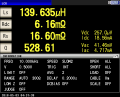
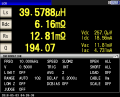
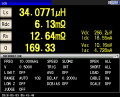
--- Then too (Re: pot cores gapped via spacers) the gap represents a breach of the 'shielding', as it were -- the cross section of a conductive fastener so exposed thence constituting a (loosely-coupled) 'short circuit turn'...Many thanks! How truly a practical demonstration/illustration is worth a veritable "metropolitan library's worth" of verbal explanation!Here are some measurements showing the effect of gaps in the magnetic path of a pot core.
Exactly!Of course, the proper way to make such an inductor is to use cores with the appropriate ground gap
Right again!The cost would probably be unacceptable for your project.
(The Test Team being --albeit genuinely hard workers-- rather 'light' spenders!) -- But then, from a practical standpoint, it may be just as well inasmuch as future projects will likely require 'experimentation' with gap length...FWIW Amidon associates carries/offers their equivalent (pc-3019-77). Price: $4.75 apiece + shipping (in hobbyist-friendly quantities)The core that HP shows in this post: https://forum.allaboutcircuits.com/...-and-construction.113504/page-66#post-1229800
was made by Ferroxcube. It is made of 3c8 material which is an obsolete material no longer available as new
Please note that the cores used in our prototypes (including the core shown in my post) bears both markings "3019" and "3c8". While I cannot locate data on the Ferroxcube number, my examinations have shown said cores to be compliant with Amidon pc-3019-77 specifications -- hence my presumption of 'equivalence'.Indeed! I've literally pallets of the 'beasties' (cartons of shell-halves, cartons of bobbins) --- Thus 'tis a matter of expedience 'ruling the day' (Re: supplying the Alpha testers)so I assume HP got it from a surplus dealer.
But then they (the cores) are reasonably suited to the proposed applicationBy way of elaboration -- Several (probably four) inductors so constructed will be combined to form a single 'feed' inductor applicable to various Royer power-oscillator topologies presented throughout the 'tutorial series' -- Thus its function is that of a 'choke', a 'decoulper' and a 'switching-transient mitigation current buffer' (granting that said functions enjoy significant 'overlap' [NPI]) -- Practically speaking the inductor exhibits greater (operating-frequency) Q --and a much greater DC/LF saturation threshold-- than typical of a 'choke' -- (note that liability to parasitic resonance{s} is not a significant concern as regards the proposed application).I'm not sure I understand exactly where this inductor will be used since HP hasn't published the complete schematic. It was referred to as a "choke" in some earlier post, which to me would not seem to require a very precise or stable value. But if it will be used in a tuned circuit that's different.
While indeed the precision and stability requirements Re: the application under discussion (±5% and ±0 .23% per °C/°K respectively) scarcely justifies the 'degree of catechism' seen here - we (Ahem... Iwhich to me would not seem to require a very precise or stable value.
) have a penchant for making a lesson of 'best practice' at every opportunity -- A proclivity excused in this instance, perhaps, by a genuine requirement of highly-stable ferrite pot-core inductors in future projects (practice may not 'make perfect' -- but it can't hurt)!That wants looking into! -- Many thanks!Two materials not on your list have always been available to me because they are used in class H silicon steel transformers--Nomex and Kapton.
Hmmm... I believe I've some polyimide transformer 'bunting' kicking aroundSincerely, Thank you! -- I know I speak for the entirety of the development team with my pledge of extension of the selfsame courtesy to you!I just have to agree to disagree.
Inasmuch as the required electrical/magnetic parameters are 'knowns', circuit detail is irrelevant at this juncture... As a possible point of interest, we've posted several examples of such circuits (various Royer topologies and variants thereof) to AAC fora over the years...I called it "mission statement" when "schematic statement" would have fit better
)FWIW The only entries currently (or ever) 'hidden' from public view are certain obsolete presentations, 'format-test scratch pads' and the 'inductor construction discussion' - Nor do our motives owe to any desire for 'secrecy' -- merely preclusion of (reader) misapprehension owed to OUR changes of approach, typos and (gasp!) errors!This whole thing has gone between a "top secret/ eyes only"
(pending completion/proofing) -- For all that, please note that the Tutorials remain wholly in public view throughout all stages of development!@shortbus I relate to your dubiety! - But then even I("soap opera on line".
) am powerless to alter the 'rising generations' (i.e. 'Centennials' and 'Millennials') seeming disdain for personal privacy and, not infrequent, abandonment of basal modesty -- Still... The fact remains! Culture is in flux! I can accept it and work with it --or-- risk alienating a significant percentage of our target demographic over so trifling and pervasive a matter as 'generational culture gap' - I choose the former! --- All of which is to say, I hear ya! -- But what the heck? It works -and- much as they report enjoying this (ultra-causal) thread - so do we receive overwhelmingly positive feedback Re: the very formal tone of the Tutorials and presentations! -- Thus it seems the preference is for casual interactive venues but strictly formal instructional material The following is neither offered nor intended as a rationalization for fashioning reluctance-gap spacers of PTFE! -- But, rather, a 'here's why we think we're we're stuck with it' -- You may rest assured - Our minds are wide-open to suggestions including other (untested-by-us) thermoplastics...) is significantly lower than other (tested) substances over the operational temperature range.Given time, I'm certain you are correct! -- Hence my preference for a mineral substance (e.g. mica) or a non-thermoplastic polymer (e.g. phenolic or celluloid should their 'special annoyances' be 'skirtable').... My personal concern here is that, even if you're able to make it work for you, with time it will definitely give way and
creep under pressure, so any washers that you make will be squashed and deformed like good 'ol mexican tortillas, and the screws involved might come loose.
--- In short, while I am genuinely gratified by your interest and curiosity and most grateful to any and all wishing to offer feedback and suggestions -- we need to keep the focus on the present topic if we're ever going to move on to 'the good stuff' Thank you for understanding!
My calling it "top secret" was only with regard to skipping from the LOPT to a pot coil with NO reference to what the pot coil was going to do in the circuit and where it even came from. Even a simple "block" diagram showing how the individual components inter act would be a revelation to those of us not "in the know" or "in the loop" or what ever you want to call it.FWIW The only entries currently (or ever) 'hidden' from public view are certain obsolete presentations, 'format-test scratch pads' and the 'inductor construction discussion' - Nor do our motives owe to any desire for 'secrecy' -- merely preclusion of (reader) misapprehension owed to OUR changes of approach, typos and (gasp!) errors!
Again I have to agree to disagree. The plastic shim stock, that will allow a consistent gap to be selected, has been proven in industrial use to withstand much higher temps than that. without change in thickness or to degrade.Although, as you point out, PTFE's resistance to plastic deformation compares unfavorably to many other thermoplastics (e.g. hard Nylons, etc.) such appears to be the case only up to Ca. 60°C beyond which PTFE is far superior to other (tested) thermoplastics in all relevant respects - moreover PTFE's 'coefficient of expansion' (granting that said term is dubiously applied to such substances
And sometimes they don't tell the whole story ... so yes, there are materials out there that can easily outperform and outlast what's stated in their datasheets ... and the other way around. I.E., I had a hard time selecting an adequate material for a piece of string that I needed to submerge in FeCl3, and its datasheet said that nylon was an excellent material for that application ... and nope, it didn't perform as promised ...Again I have to agree to disagree. The plastic shim stock, that will allow a consistent gap to be selected, has been proven in industrial use to withstand much higher temps than that. without change in thickness or to degrade.
Shortbus I totally respectfully disagree! Cuz _real problem_ is just what we're saying which is how to make spacer for coreIt has ended up being one of the dreaded "20 questions" threads to find out what the real problem is
! Circuit doesn't come into it at this point cuz we already know exactly what we need electrically, magnetically and thermally! We also know what environmental insults it has to withstand (by which I mean ionizing radiation and oxidizing gasses which I mention more abt later on here).! So anyhow that's why @Hypatia's Protege showed u those _skeleton_ driver/psu circuits on her post even though circuit is totally unimportant to solving spacer problem! So I say that's just another excellent example of advantage of thread being in off-topic and so having latitude to accommodate wide range contributor preferences!Shortbus I say trying to follow rhyme and reason of (on-topic) topic order on this thread w/o reading through latest version of tutorial is prolly as hard as trying to understand end of oldtime movie _Space Odyssey_ w/o first reading the bookMy calling it "top secret" was only with regard to skipping from the LOPT to a pot coil...
!! So anyhow, shortbus, plz remember Tutorials are totally coherent and linear! But this thread not so much! Cuz main purpose of thread is bringing Tutorials together eclectically (basically from like _all sides_ simultaneously) Also demands of our offline lives can sometimes cause _fragmentation_ of our participation on here too! Now that's just honest explanation not excuse! So all I can do is ask for patience abt that and totally promise that the Tutorials themselves will be totally comprehensive, coherent, linear, complete, formal and I say best of all concept based! Shortbus wasn't it clear inductor is for LOPT test exciter and proper driver circuitsskipping from the LOPT to a pot coil with NO reference to what the pot coil was going to do in the circuit and where it even came from.
? Cuz if not, OUR BAD! So, btw LOPT testing is last _chapter_ of LOPT rebuilding tutorial. (So right now chapter has title but no _body_).Shortbus circuit description will be presented and properly discussed when we're on topic of circuitsEven a simple "block" diagram showing how the individual components inter act would be a revelation to those of us not "in the know" or "in the loop" or what ever you want to call it.
! Cuz right now including that as part of mainstream discussion would be total distraction from current topic which is just component construction (which I know is totally boring but vry necessary)! Anyhow like ppl can see from looking on HP's reply we definitely respond to requests for additional info! Also HP emailed Theo and me the .ASC files for schematics of simplified driver circuits on her (HP's) post so if anyone's interested just ask and we'll post them right here on thread! So if ur wondering why we need request instead of just spontaneously posting them it's cuz we don't want to give impression we're suggesting those exact circuits! So they're definitely more explanatory than _block diagram_ but way too generic to suggest for practical applications! Also proper presentation of circuits needs 2b in context of theory of operation, practical limitations, frank safety warnings and like that!Shortbus I totally guarantee you that Core and Alpha teams as a group don't have any more _advance_ or _inside_ info (on anything related to tutorials) than anyone just following along here on threadyou, the inclusive you of your group, not you personally HP, need to step back and look at this from the perspective of those in the forum who have stuck with you from the start.
The only ppl who have _extra info_ are those who ask! No matter what team they're on or even whether they're on team!Shortbus we're EXTREMELY grateful for (and to) our loyal AAC friends and readers! So to anyone feeling left out u need to PLZ speak up cuz that's not our intention at allstep back and look at this from the perspective of those in the forum who have stuck with you from the start.
! But I say it's just recognition of the realities of contemporary society (ppl don't learn or participate if they don't pay attention and they won't pay attention if we insist on thread being too uninviting compared to what they're used to)! So anyway at least HP and I definitely agree that it's working! But we want and need it to be comfortable environment for interested ppl of all generations and backgrounds! So all I can say is when u want bigger picture plz just ask! So just for record! Our scope will broaden as subject shifts toward science (electronics)! So Shortbus I totally promise ur not alone! All this being mired in mundane _handiwork_ and 100% _tangible world_ dreck is getting me down too!Shortbus tnx! Easy machined plastic that can handle temp range w/o permanent deformation or excessive softening or expanding is perfect! Just so you know _shim stock_ is already on our queue of materials to be physically evaluated! (how we got to polyimide _Kapton_ so fast is cuz HP had a sample salvaged from line frequency transformer she rewound a few years ago)The plastic shim stock, that will allow a consistent gap to be selected, has been proven in industrial use to withstand much higher temps than that. without change in thickness or to degrade.
.Electrician so far HP's force and temp tests on polyimide bunting look vry goodTwo materials not on your list have always been available to me because they are used in class H silicon steel transformers--Nomex and Kapton.
!!)Cmartinez I totally agree! Cuz I keep learning that the hard wayMy point is, datasheets are very good references and starting points to start experimenting with, but the only way to know for sure if something really works is to test, test, test...
! And not just with material properties either! Sometimes even with electronic components So like ur saying _silver lining_ is sometimes performance is way better than specification! and so totally understandably make mad dash for horizon w/o backward glance, I have suggestion:!
Well this is absolutely none of my business, no denying that! But because you openly broached the subject and because what I have to relate is of a positive nature, I really think it's appropriately expressed in public view. Although I have only sketchy knowledge of your contact with JC on the public fora and, of course, no knowledge of anything that might have been said in private correspondence, I can say with absolute certainty that @Jazz2C likes you! How do I know? Because he said so while comparing you to his father. Seems he was moved by your declaration that he'd be lost "in the real world" outside his lifestyle of a wealthy playboy. Well.. It's not my place to publish JC's Bio but you should know he lost his dad to health problems when he was 16@theodoravain , me and JC had more differences than I think you know about. PM me if you want to discuss it more, because my views on all of this got me in trouble before here. Thus the deletion of around 6 pages of my content in the thread.
JC often laments not accepting the wisdom of his words during his life. @shortbus I've known JC since before his dad's passing. We're not genetic relatives but our relationship, in every meaningful respect, is "big sister/kid brother". JC solemnly honors his dad's memory! He wouldn't compare you to him trivially! Please don't misinterpret my motives! I'm not playing peacemaker! I saw a misunderstanding, I had to clear it up. That's it! Please don't feel "put on the spot".TIHIDI?(to follow the EHT-Indicator TIHIDI mini-tutorial).
How many guesses do I get?Yeah, well.. That depends what their spending on, doesn't it?(The Test Team being --albeit genuinely hard workers-- rather 'light' spenders!)
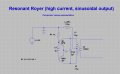
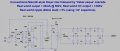
Here's a point in need of clarification! The "Vabar cascade" circuit is not to be confused with the "Vabar magnifier" coil! For all you closet masochists now reading, HP briefly (in my oppoinion inadequately) describes the latter here.Depicted below is a 'generic' Mazzilli-Royer oscillator followed by a modified Vabar cascade
Well then? Now that we know what a modified Vabar cascade looks like, is a glimpse of the genuine article out of the question?a modified Vabar cascade
I can vouch for that! It's need to know OR want to know (either way) but don't be angry when we're unable to release information we don't have! As per Julie, the tutorials are linear but the development process isn't! As a hypothetical example, the ideal LOPT P:S impedance ratio will be obvious from the outset but because ideal seldom equals optimal, primary winding conductor form (for example litz vs. strap vs. single filament magnet wire) might be in abeyance pending experimentation).Shortbus I totally guarantee you that Core and Alpha teams as a group don't have any more _advance_ or _inside_ info (on anything related to tutorials) than anyone just following along here on thread
So since ppl reading for first time could easily have impression from title that this thread is extent of THE instructional material
Sweet!From now on plz link current version of Tutorial on top of all your posts to this thread