Facebook
 Google
 GitHub
 Linkedin

theodoravain
- Joined Mar 21, 2018
- 34
Don't sweat it, HP! Nobody was expecting you to sacrifice DaytonKind friends
Please be advised that I will not likely be available for significant participation on this project prior to May 21 2018

Thanks!
Don't sweat it, HP! Nobody was expecting you to sacrifice DaytonKind friends
Please be advised that I will not likely be available for significant participation on this project prior to May 21 2018
Theo that's exactly right! We're totally willing to help ANYONE with honest interest and legit questions! But we recommend minimum of HS level math and science background for like _best experience_So yeah! Electronics beginners should be welcome but not invited.
In my opinion establishment of an unambiguous baseline is nonoptional!
So is that unambiguous enough for youit is certainly correct that I wish the tutorial to be accessible to all sincere, interested readers having demonstrated said 'qualities' via acquisition of the basal 'prerequisites' by any means whatever -- Said prerequisites being; secondary (aka 'high-school') level physics, fundamental math skills (i.e. 'through' vector algebra) and a 'working knowledge' of basic electronics -- A 'low bar' indeed! Howbeit, IMO, a workable starting point!
?


Another good possibility, but the hole's id needs to be between 4 and 5mm, which is too small for a forstner bit, I thinkHow about using appropriate size Forstner bits?
https://www.lowes.com/search?searchTerm=forstner+bit
Cmartinez tnx! UR totally correct cuz that's exactly what happens! A lot of times it ends up looking more like low velocity bullet wound in soft tissue than open circular bore!Like all materials, PTFE is elastic and can be plastically deformed, but in this case it is especially so. When you cut through any material, the force exerted on its surface while the cut is taking place distorts the material in the inner layers. Think of it this way, how can you cut a perfectly orthogonal cube of jell-o using just a knife? The answer is that it's close to impossible.
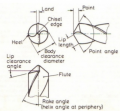
What's happening is that the ordinary two-flute, spiral drill bit being used to drill through it is tearing the material upwards as the bit penetrates it. Now, drill bits are only really sharp at their lips. So once the material is drilled through, the circle's edges are not really being cut through by the lips, but are rater being teared off by the flute's heel's. That's why the finished hole comes out distorted.
See this diagram so you may have a clearer picture of what I'm talking about.

Cmartinez HUGE THANKS! So that's perfect cuz we'll also be making spacers for FBTs and drive splitting transformers! So having selection from multiple IDs is vry niceAnd another option would be a step drill bit, which not only complies with our requirement of a chiseled-tip and straight cutting edge, but has the added advantage of having multiple diameters to choose from when cutting sheet material:
!Cmartinez I totally agree! Cuz I know It's definitely beyond my ability getting ID punch exactly concentric to OD punchfor the amateur building this thing it would be not just hard but also a waste of time and money
!Cmartinez just as side question, cuz based on what you're saying if anyone knows you willI've owned a signage business for more than 20 years now, and have extensive experience regarding the cutting and machining of plastics.
! So plz say if there's any easy way of drilling acrylic _glass_ w/o cracking it? Cuz no matter how slow and careful I am it always cracks! So is there like special bit or other tool for that?Use a cork boring tool for the ID:Another good possibility, but the hole's id needs to be between 4 and 5mm, which is too small for a forstner bit, I think
Electrician Tnx! So If I'm understanding description on linked pages it's basically hollow punch? Cuz if so as long as there's good selection of sizes (second link shows six punches but doesn't give sizes) it could be vry easy newbie-friendly way to get perfect clean IDUse a cork boring tool for the ID:
https://www.sciplus.com/CORK-BORING-TOOL-SET-3954-p
https://www.walmart.com/ip/Deluxe-Cork-Borer-set-of-6/123740490
! But I say if it fits bill we have perfect opportunity to show critics we're not snobs after all!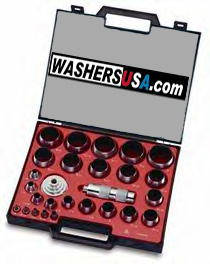
The set from Walmart is described down the page: "This chrome-platted set includes 6 cork borers: sizes 4 to 10mm". What is needed for this project would be a 4 mm (or 5 mm?) and a 12 mm (which this set lacks). So if the 4 mm is the only useful one in either set, the cheaper set would be the one to buy.Electrician Tnx! So If I'm understanding description on linked pages it's basically hollow punch? Cuz if so as long as there's good selection of sizes (second link shows six punches but doesn't give sizes) it could be vry easy newbie-friendly way to get perfect clean ID
Shortbus all I can say is I don't have any problems with this post (by which I mean post I'm now responding to) so totally sincere TNX for thatI hope I'm still able to post in the thread
!Shortbus it's mainly cuz its elastic and plastic properties are basically constant (so it holds its thickness under compression) over wider temperature range than most other (non-brittle) materials. So o/c mica would be perfect material for rel-gap spacers but it's totally harder to form than PTFEWhat is the fascination with the teflon?
and also vry hard to source in wide range of uniform thicknesses.Shortbus that's not issue cuz sheet PTFE is available from thickness of _teflon pipe seal tape_ all the way to 5cm plates. So other reasons for us using PTFE are ease of sourcing in small quantities and also since we have uses for it in other areas of projects where chemical (mostly O3 and N2O resistance), electrical and _radio-stability_ properties are important, we decided it's less burdensome for readers to just suggest fewest number of different materials needed to cover range of applications even though that means materials are sometimes like _over-qualified_ in certain uses (which is definitely NOT case with Rel-gap spacers)!if it is because it is available in 0.001 inch thickness there are other solutions that go as low as 0.0005 inch thickness.
Shortbus I say you might be surprised cuz gap length has major effect on AL (and so inductance and saturation current threshold! So since u sound interested here's summary of some fundamental magnetic relationships copied from HP's (hidden cuz in-progress) blog entry.I may be wrong but can't see where a 0.001" gap is going to make a difference in the magnetics of this.
Now from above quoted formulae u can see that AL (and so L) vary in inverse linear proportion to Rel gap length (so o/c Imax varies in direct linear proportion). Also it's important to know that even though no spacer doesn't actually give zero gap length, minimum equivalent gap is still extremely small! So going from ungapped to even vry, vry small gap is still huge ratio causing huge change in parameters!HP's inductor design blog entry said:General relations:
μ0 = 4π⋅10^-7
μe = (le⋅μr)/(le+g⋅μr)
AL = (Ae⋅μe⋅μ0)/le
Imax = Φmax⋅N/L
Φmax = Bmax⋅Ae
Special considerations specific to the described application:
μr ≈ μi (Justification: owing to the relatively low flux densities involved).
Bsat ≈ Bmax (Justification: owing to modest ΔI/ΔT transitions inherent to the described application).
Where:
Ae=Core cross-section area (effective) [square meters]
AL=Inductance Factor [Henrys per N^2]
Bmax=Maximum flux density [Teslas]
Bsat=Saturation flux density [Teslas]
g=Reluctance gap length [Meters]
Imax=Saturation current [Amperes]
L=Inductance [Henrys]
le=Magnetic path length (effective) [Meters]
N=Integral turn count [Turns]
μe=Effective permeability [H/m]
μi=initial permeability [H/m]
μ0='Magnetic Constant' (i.e. permeability of free space) [H/m]
μr=Relative permeability [H/m]
Φmax=Maximum flux [Webers]
Shortbus actually chosen spacer thickness is 250um so abt 0.01" (sry if I made typo somewhere earlier on thread! I'm not vry accustomed to thinking in inchesSo I'm assuming your going to use many of these 0.001" washers to get where you need to be.
) giving effective 500um rel-gap which is vry good trade-off of inductance and saturation current threshold! So we use just single piece spacer which is like _best practice_ to assure uniform thickness! I just wanted to explain why selection of Rel gap is important design decision! .Shortbus tnx! So I don't know w/o researching it but I'm skeptical it has same or better electrical, thermal and chemical properties as PTFEThe material is called, "plastic shim stock". It is available almost anywhere that sell tools or even bolts to industry in every part of the world. It can be bought in assortments or single thicknesses.
? So I'll definitely have a look cuz ease of forming is big deal for team (and so ultimately readers in _the wild_)Cmartinez I say price ≤ $500 would prolly be acceptable to them (AT and other readers) but a lot of ppl are just too mean to pay more than that for like _one off_ use. Unfortunately vendor at link is playing _request quote game_ instead of just forthright statement of their price so that earns them automatic boycott from me! But huge Tnx for heads-up cuz you've put me on track of excellent productThis tool will punch the washer that you want in a single operation, OD and ID. I doubt it's going to fall into the "affordable" category (I don't know what the price is) ... but it's definitely worth having information about.
!Cmartinez big time thanks for that! Cuz I'd gone to exclusively using polycarbonate even in applications where acrylic is better choiceTo answer your question about acrylic. To drill it effectively without cracking it, again, you need to use the sandwich technique. Place a piece of acrylic on top of the material you're planning to drill, and another one at the bottom, then press them tightly against each other. Drill the three layers together using as high RPMs as possible (about 4,000 rpm should be ok). The top and bottom layers might crack, but not the middle one.
! So now thanks 2u I can properly rebuild my 'UGE 1.5 meter Wimshurst genny! (I say @Jazz2C will be vry happy too!)Cmartinez it's like I said to Shortbus; mica would be better if it's available in small qtys in a range of uniform thickness sheets AND there's easy way to form itis PTFE absolutely necessary?
!Electrician Tnx! Cuz those other sizes can come in handy for other things too! So convincing HP to suggest Walmart is going to be vry hard sellThe set from Walmart is described down the page: "This chrome-platted set includes 6 cork borers: sizes 4 to 10mm". What is needed for this project would be a 4 mm (or 5 mm?) and a 12 mm (which this set lacks). So if the 4 mm is the only useful one in either set, the cheaper set would be the one to buy.
And Theo says she's running for fallout shelter when HP sees this! But I say IF IT WORKS IT WORKS! So I know HP will come around! Being totally serious I say fact that we're just asking ppl to order it (not physically visit discount house) is like sweet enteric coating on bitter _Walmart_ pill! So seriously big TNX!
Then what's the problem?Although the resultant spacers are quite satisfactory for the intended purpose
Yeah, well.. If you ask me, what you're in need of is Anafranil. Well then, @HP? Who knows? Maybe your obsession with perfection is paying off? I like the info and idea sharing happening here! Not because it'll produce more "aesthetic" spacers (though I've no doubt it will) but because simplification of "busywork" creates room for greater emphasis on electronics!I seem to be in need of further insight/advice and/or shown 'the error of my ways' is an 'aesthetic' result to be produced...
SMH! I swear it! You and I live in two different worlds! Well.. You won't get this so let's spell it out: Regarding the Alpha Team I cannot but wholly agree. But really! You wildly underestimate the self perceived "penury" of most "other readers" (remember them? Your ultimate audience?). Julie, really! Forgive my saying it. You and @HP require a greater understanding of your "target readership's" practical situation. Otherwise, as I've repeated many times, I know you've accurately divined their collective "intellectual lives", however!I say price ≤ $500 would prolly be acceptable to them (AT and other readers) but a lot of ppl are just too mean to pay more than that for like _one off_ use.
Oh! yes indeedy! (sic) I'll be here! "new kid on the block syndrome" and all.ETA So I might not be able 2b back on here for a couple days but @theodoravain promises to check thread and be available for questions and comments
Seems promising.. Tell me though, do Forstner bits incorporate a pilot feature or device? I see, maybe, a central "barb"?and perhaps a 1/2 in Forstner bit for the OD.
Here's an interesting discussion regarding that subject worth reading.Then what's the problem?
They have a sharp concentric tip that's helpful at guiding the tool, but that gives you absolutely control on the inner diameter. So no, I don't think Forstner bits are applicable to this situation.do Forstner bits incorporate a pilot function?
Hey yeah! <<@HP required reading!Here's an interesting discussion regarding that subject worth reading.
>>Yeah I think I get it.. There'd be a small hole at center of the PTFE disk yet no obvious way of accurately aligning the "ID cutter" with it. It's a shame ID-sized Forstner bits aren't available.So no, I don't think Forstner bits are applicable to this situation.
'Seems promising.. Tell me though, do Forstner bits incorporate a pilot feature or device? I see, maybe, a central "barb"?
Thanks!
I'm not going to be in this thread long again I guess, because I am going to disagree right off the bat. Not based on something in a data sheet somewhere but from real life experience. Teflon/PTFE is not as you portray it at least not mechanically. It is used in many situations for its ability to distort and conform to uneven and rough surfaces, its lack of non-comprehensibility. It's use as a gasket between two parts and re usability in that use. It compresses and distorts to seal, but doesn't deform and hold that deformity it springs back to allow reuse in the same joint.Shortbus it's mainly cuz its elastic and plastic properties are basically constant (so it holds its thickness under compression) over wider temperature range than most other (non-brittle) materials. So o/c mica would be perfect material for rel-gap spacers but it's totally harder to form than PTFE
Then if that is the case my other idea comes into play, one that I was reluctant to give because I thought it would be too expensive, but evidently not. Having one of these I know they work. But didn't buy one because of the price I made one exactly like the store bought one. https://www.mcmaster.com/#shim-stock-punches/=1cnilrh The 9 punch set is what I have. Again I used McMaster as just a reference they can be found other places at better prices.Cmartinez I say price ≤ $500 would prolly be acceptable to them (AT and other readers) but a lot of ppl are just too mean to pay more than that for like _one off_ use. Unfortunately vendor at link is playing _request quote game_ instead of just forthright statement of their price so that earns them automatic boycott from me! But huge Tnx for heads-up cuz you've put me on track of excellent product
Again I have to disagree this time with C.Cmartinez big time thanks for that! Cuz I'd gone to exclusively using polycarbonate even in applications where acrylic is better choice
Having made 100s of guards and shields over my career of 50+ years mostly out of Plexi then when that was outlawed Lexan, I can't recall ever cracking it when drilling a hole. The trick is to do a 'pilot hole', a small first hole that is around the same diameter as the web thickness of the larger hole you want. For really large holes say 1/2" or bigger you may need to do this a couple of times. This takes away the pressure exerted on the very tip of the drill when using a larger drill. And let the drill do it's thing, cutting. Don't force it through the part, if you need to use much force you need to sharpen the drill. In all of the holes I've drilled over the years I've never had to "sandwich" the plastic to keep it from cracking.You can get away with this? It got me in a lot of trouble in this thread for even trying to say that. Even JC called me part of the "austerity group"!SMH! I swear it! You and I live in two different worlds! Well.. You won't get this so let's spell it out: Regarding the Alpha Team I cannot but wholly agree. But really! You wildly underestimate the self perceived "penury" of most "other readers" (remember them? Your ultimate audience?). Julie, really! Forgive my saying it. You and @HP require a greater understanding of your "target readership's" practical situation. Otherwise, as I've repeated many times, I know you've accurately divined their collective "intellectual lives", however!
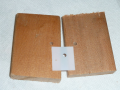
After looking through my various specialty drills, I realize that what I was remembering as the thing we need is a "brad point drill": https://www.homedepot.com/p/DEWALT-High-Speed-Steel-Brad-Point-Drill-Bit-Set-6-Piece-DW1720/202279646?keyword=brad+point+bits+4pcs.&semanticToken=21040+++>++++st:{brad+point+bits+4pcs.}:st++cn:{0:0}++bit+{product}brad+{productName_nostem}+brad+point+{productName_nostem}+point+{productName_nostem}++4pcs.+{rest}+'
I just got back home after a weekend away and had a look at one of my Forstner bits. It won't do for the OD without some work with a small grinder.
It would remove the entire disk of material. This would be ok for the ID but not for the OD; darn it.
It's after midnight here, but I'll look into this some more tomorrow.