EHT power supply design and construction

Thread Starter

Aleph(0)

Joined Mar 14, 2015
597
I'm late to this because of a computer malfunction. As some one who spent his entire adult life as a die maker/machinist, no person would use a digital caliper for "precise" measuring. No matter what your measuring, a caliper whether digital, dial, or the older vernier style, would not be used for something"precise". A caliper is used for "rough" measurement not "precise". They can be too easily over tightened on the material being measured to make them "precise". A micrometer is the instrument to be used for "semi-precise" things like this, there are other methods for "precise" measurement that I won't go into.
Shortbus I agree with what you're saying cuz thimble clutch on micrometer assures right clamping pressure on each use:) Also I know from bad experiences that electrostatic ALEs in calipers are too fussy abt moisture and slight contamination to be as accurate as just no backlash screw micrometer! So I say HP should edit tutorial to just use micrometer in first place instead of using caliper and double checking with micrometer! TNX:)!
 
Last edited:
Shortbus I agree with what you're saying cuz thimble clutch on micrometer assures right clamping pressure on each use:)
ATTN: Aleph(0) -- While it is, of course, a 'torque clutch' of sorts - the correct nomenclature for said feature (in the context of micrometers) is 'ratchet' -- Not to dot your "I"'s and cross your "T"s howbeit inasmuch as there is a slight learning curve Re: said instruments (vernier micrometers) - I feel a 'zero ambiguity' policy is warranted...

Best regards
HP:)
 
I'm late to this because of a computer malfunction. As some one who spent his entire adult life as a die maker/machinist, no person would use a digital caliper for "precise" measuring. No matter what your measuring, a caliper whether digital, dial, or the older vernier style, would not be used for something"precise". A caliper is used for "rough" measurement not "precise". They can be too easily over tightened on the material being measured to make them "precise". A micrometer is the instrument to be used for "semi-precise" things like this, there are other methods for "precise" measurement that I won't go into.
I say HP should edit tutorial to just use micrometer in first place instead of using caliper and double checking with micrometer!
Many thanks @shortbus and @Aleph(0)!!! --- Indeed there is something to be said for 'getting it right' the first time!:oops: -- Flagged for correction:)

Best regards
HP
 
Last edited:

#12

Joined Nov 30, 2010
18,224
the correct nomenclature for said feature (in the context of micrometers) is 'ratchet'
Is it?
I've seen a lot of torque limiting machines. Some of them just slip, some of them make a ratcheting sound. To me, a ratchet is a non-reversing function, as on a winch, a ratchet wrench, or a medieval rack.:D In a battery operated drill, it's just a sound indicating how the excess energy is released. The drill clutch works in reverse with equal force, clicking, and applicability. Does a micrometer clutch do a, "hard" reverse like a true ratchet? (I don't own one.)

Maybe @shortbus can chime in as a machinist?
 
I would like to comment on that thing called a Rongeur. It looks like it has massive mechanical advantage. I have never seen anything like that as a Tradesman/Craftsman.
FWIW I am advised that Radio Shack formerly sold a tool (pictured below) that, although quite different in construction, nonetheless offered much of the non-medical utility of rongeurs... --- Sadly, said item is no longer available:(


Best regards
HP
 
It's called a nibbler. I have one.:)
If you are aware of a source for said item I could avoid much needless annoyance of 'impecunious' EHT hobbyists:)

The Rongeur seems to not be a bypass cutter, merely an excellent gripper/crusher.
Correct! FWIW The principal application of (Stille-Luer) rongeurs is 'cutting' of living (or otherwise undesiccated) osseous tissue - which being somewhere 'between' ceramic and hardwood from a 'materials' standpoint...

Best regards
HP:)
 
Last edited:
@shortbus @#12 @Jazz2C @Aleph(0) and all interested parties:cool:

Re: The tutorial --- Please be advised that I've incorporated the suggested edits -- Relevant text quoted below for convenience --- Many, Many thanks!:):):)

Recommended implements:
Note 1: The reader is assumed to be in possession of standard electronics/basic ‘hand’ - tools...
Note 2: The reader is advised that 'workarounds'/'alternates' are possible for the following - please let us know should you have any questions...

⇒Dremel Moto-Tool or Equivalent
⇒Locking forceps
⇒Micrometer (Vernier) Range = 0-25mm / Res=1um {metric} -OR- Range = 0-1" / Res= 1/10,000" {imperial}
⇒Nitrile Exam Gloves
⇒Scalpels or 'X-ACTO' set
⇒Sims Uterine Curette (#3 sharp, fenestrated) -- Example: Sklar 90-5423
⇒Stainless Picks (non-magnetic)
⇒Tweezers (‘splinter’)
⇒Welder's Gloves (Supple varieties preferred for maximum dexterity)
---Emphasis added ---

Step 2-13) Fashion and place reluctance gap spacers
Note: Reluctance gaps will be incorporated to reduce liability to saturation (in all cases) and to leave the transformer compatible with 'flyback' topology should same be desired --- That said, this series prefers forward transfer paradigms (as explained in the introduction to this tutorial).

Note: The (.95mm) reluctance gap spacers salvaged from the disassembly process are shown in the "component identification image" for completeness of presentation only --- Based upon core material properties and desired output current, optimal operation requires development of reluctance gaps consistent with the inequality: 0.25mm < Gap < .5mm -- To this end 0.4mm (0.015" nominal) PTFE sheet stock will be used.

Tasks:
1) Cut two small disks of PTFE having maximum major axes slightly less than that of the form piece 'ends'...
2) Check actual spacer thickness with a mechanical vernier micrometer (Resolution = 1 um -OR- 1/10,000 inch) note that a 'metric' instrument offers slightly finer resolution (inasmuch as 0.0001"=2.54 um)
3) Very lightly smear one side of each spacer with electronics grade RTV.
4) Place each spacer (RTV side down) flat upon each form piece end (inside each polyolefin sleeve).
5) Via firm tamping with a pencil eraser or similar implement assure that the RTV film 'tacks' the spacers to the form piece ends...

Image showing representative spacer and measurement of thickness:
vvvvvvvvvvvvvvvvvvvvvvvvvvvvvvvvvvvvvvvvvvvvvvvv
http://forum.allaboutcircuits.com/attachments/airgapmic-jpg.101728/
--Emphasis added--

Best regards
HP
 
Is it?
I've seen a lot of torque limiting machines. Some of them just slip, some of them make a ratcheting sound. To me, a ratchet is a non-reversing function, as on a winch, a ratchet wrench, or a medieval rack.:D In a battery operated drill, it's just a sound indicating how the excess energy is released. The drill clutch works in reverse with equal force, clicking, and applicability. Does a micrometer clutch do a, "hard" reverse like a true ratchet? (I don't own one.)

Maybe @shortbus can chime in as a machinist?
Perhaps HP has never seen a micrometer with a slip clutch. I have a couple of micrometers, one with a ratchet and one with a slip clutch:

https://vid.me/SzN3

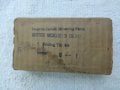
The one with the clutch is described on the box as having a "friction thimble":

P1000290.JPG
 

shortbus

Joined Sep 30, 2009
10,050
About the 'torque clutch', the electrician got it right, most makers call them a 'friction thimble'. When starting my learning for the trade back in high school we were taught not to use the friction thimble but to learn the correct feel of the part/material being measured by moving the mic(micrometer) over the part. But the thimble does make it easier to get a closer measurement for some one not used to using a mic. Never saw a mic with a ratchet thimble.
 

shortbus

Joined Sep 30, 2009
10,050
Shortbus that's all I can find for less than like $100 but that's ok cuz a $40 ratchet thimble micrometer is more accurate than more expensive caliper:)
That may be on the new ones. Haven't bought or used a mic that wasn't a minimum of 20 years old. The first set (1 -3 inches) I bought was in 1966 when starting my apprenticeship mics with carbide spindle faces don't wear out. I own several sets of 1-3", two sets of 1-6", and one set of 6-12".
 
Ok... Now that we've solved the problems of cost and accuracy (Re: 'thickness gauges') Sans --I'm pleased to note-- need of compromise!:) --- It seems the remaining tasks concern:

-Formatting (specifically, editing for consistent, appropriate use of 'bolding')
-Linkage of (appropriate) text to glossary/expansion list
-Addition of a caveat as to the marked (avian) toxicity of fluoropolymer pyrolysis products.
-'attaching' images for automatic (and, hence, reliable) display

Am I missing anything??????

Best regards
HP:)
 
Aleph's email message said:
HP plz show suggestion on AAC for measuring full voltage across split EHT outputs on single meter movement cuz grounding one leg of meter just bypasses half of PSU
--Edited to remove invalid characters--

Please be advised that this is the last time I'll honor off-list requests with on-list responses! --- Inasmuch as you flatly refuse to take the most simple and direct approach toward solution of your connection difficulties (i.e. use of a dedicated non-security critical system/ISP for causal browsing/socialization) you have only yourself to blame for the inconvenience! -- 'Nuff said!

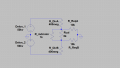
Assuming I correctly understand your request, the circuit illustrated below should satisfy your requirements -- That said - 'unambiguous' monitoring of split supplies is best realized via a dual indicator arrangement! -- Moreover, inasmuch as each output is single-ended, application of balanced metrics to same is 'overkill' -- Why do you insist upon direct measurement of the differential EMF?

Please note that Rcal is best realized via a 10kΩ 'rheostat connected' potentiometer... -- Under no circumstances attempt to calibrate the unit via adjustment of the ground-plane requiter resistors (i.e. R_ReqA and R_ReqB)!!!

SplitEhtInd.png

Best regards
HP
 

Thread Starter

Aleph(0)

Joined Mar 14, 2015
597
Under no circumstances attempt to calibrate the unit via adjustment of the ground-plane requiter resistors (i.e. R_ReqA and R_ReqB)!!!
HP is that cuz you want gnd currents to cancel?

'unambiguous' monitoring of split supplies is best realized via a dual indicator arrangement!
You mean cuz it's good idea to see what's happening on each side even if load is just common mode:confused:?

Why do you insist upon direct measurement of the differential EMF?
HP it's cuz I'm just interested in what load is seeing with assumption that PSU is working properly:)!
 
HP is that cuz you want gnd currents to cancel?
Correct -- Ideally there should be zero ground current attending the node corresponding to the 'junction' of the 'requition' resistors. (You will please pardon the 'DIY' inflection:oops:)

You mean cuz it's good idea to see what's happening on each side even if load is just common mode:confused:?
HP it's cuz I'm just interested in what load is seeing with assumption that PSU is working properly:)!
A) -- The function of metrics is obviation of assumption!:cool:
B) -- While the load may be floating, the 'split' PSU is not! -- An 'asymmetrical' ground fault in an (ostensibly) floating load will result in unequal loading of the PSU 'channels' -- Said condition will not be obvious via the above described indicator...

For example -- Given a reading of 70 kV; Each channel may indeed be supplying |35|kV (as assumed) -OR- Due to unequal loading secondary to 'eccentric' ground leakage in the load, the channels may be supplying EMFs of disparate magnitudes - the sum of which equal 70kV

Hence, granting even the (highly dubious) assumption of PSU integrity - reliance upon a single indicator (as described) is to ignore potential load issues! -- Got it?

Best regards
HP:)
 
HP I know exam gloves are for working with RTV so latex gloves work for that too and can be easier to source for some ppl
Why do I loathe latex? -- Let me count the ways!;)

1) Many people are sensitized to latex.

2) Although latex barrier materials are indeed effective against RTV silicone compound - They are rapidly deteriorated by many solvents and exhibit rather limited 'shelf-life' -- So I thought to start the readers off on 'solid footing' for the series as a whole!:)

3) Nitrile barrier gloves are not that hard to find!:rolleyes:

Best regards
HP:)
 
Last edited:
Top