Facebook
 Google
 GitHub
 Linkedin

i salute the community!
while continuing my work on signals and systems, I got stuck at a point. .
the chart below : sin(80nt), that is, it belongs to [sin(80\pi t)].
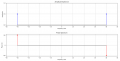
What happens to the phase graph when the signal sin(80πt) is multiplied by -j?
I know that j causes a +90° phase shift, but how does the phase graph change with -j? What should be the new phase values?
while continuing my work on signals and systems, I got stuck at a point. .
the chart below : sin(80nt), that is, it belongs to [sin(80\pi t)].
What happens to the phase graph when the signal sin(80πt) is multiplied by -j?
I know that j causes a +90° phase shift, but how does the phase graph change with -j? What should be the new phase values?