Facebook
 Google
 GitHub
 Linkedin

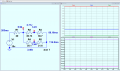
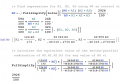
Hi,While not definitive, I've explored the values for R1 from 13 Ω (it's trivial to show that R1 must be no less than 12.2 Ω) up to 1 MΩ in 1 Ω steps. For each value I calculated the nominal values (to something like 14 sig figs) for the other three resistors. I then rounded those to the nearest integer value. I then determined the maximum error in the three voltages and kept only those that were no more than 5 mV. I only found one. If I only required the results to match within 10 mV, after rounding to three sig figs, there were 23 solutions.
But I can't say that this approach truly looked at all viable solutions. It rounded each resistor value independently to the nearest ohm, but it's possible that the error introduced by rounding one or two of them in one direction might have been better offset by rounding another in the "wrong" direction. It wouldn't be to hard to modify my script to fully explore the small region around each nominal solution -- I think looking at all combinations of the floor and ceiling values (so eight combinations) would likely do it. While I think it's possible that this might reveal additional solutions, I would bet against it, if I had to place a bet.
As for the question of whether stopping at 1 MΩ potentially rules out any solutions, I think a careful analysis could be done to establish an upper bound for the resistor values such that changes could no longer move the parallel combination of the network enough to have any impact of significance. I'm pretty sure that 1 MΩ is well beyond that limit, but I'm not positive. Based on a quick survey of the behavior, I think the upper bound is probably closer to 2 kΩ.
Yes that's interesting too.
Yeah I know it is hard to be sure that a search is truly definitive so I started to look for a regular proof such as an algebraic proof.
I am not sure what you mean by an upper bound, is that for all four resistors?
The only upper bound I could find was for the sum of two of the resistors in one series string, such as R2+R3. The upper bound is positive infinite unless we allow negative values, which I do not think we should consider. That means that R2 and R3 will both be a ratio of infinity like:
R2=a*inf
R3=b*inf
and a and b are the correct ratios to still provide that 3.23 volts at the divider junction.
This places the required total parallel resistance solely on the values of R0 and R1.
The proof I started to look for, where all the resistors are whole numbers in Ohms, might look something like this...
If we have two fractions for two of the resistors:
R2=A/3 and R3=B/3
it seems we must have A and B such that they are both evenly divisible by 3. For example A=6 and B=12. If there is any deviation from that, then one of them must be non whole, and that would prove that there are no pure integer solutions.
This is what I think we run into with this problem. The expressions for R2 and R3 can not be modified once we get that far, so A and B must be related in that certain way.
As to your second post and the equation:
248·R0 - 346·R1 = 0
I am not sure that is a good way to descibe the situation because we are looking to solve for resistor values, either R0 or R1 there, and that is not a solution. A solution would be for either R1 or R0. Solving that for R1 we get:
R1=(124*R0)/173
and we see that fraction 124/173 kick in, and I think that may be key to proving there is no pure, exact integer solution.
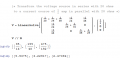
The solutions for the other two (knowing R0) are even stranger than that. They both have the same denominator but different numerators, and the numerators are not related. I won't rule anything out just yet though.