DIY I-V Curve Tracer

Thread Starter

MrChips

Joined Oct 2, 2009
34,629
I was thinking about the member who was starting out experimenting with crystal radio sets. They wanted to learn about the differences between different types of diodes.

See discussion on crystal radio construction here:
https://forum.allaboutcircuits.com/threads/my-shortwave-radio-questions-and-discussion.184242/

So, just for fun I created this simple I-V curve tracer last night in within a couple of hours.
The design is fairly straight forward, a 555-timer circuit and a couple of op-amp ICs, plus an oscilloscope in X-Y mode.

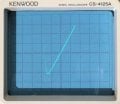
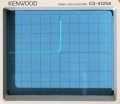
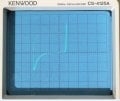
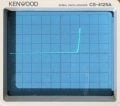
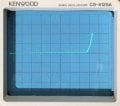
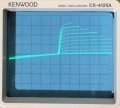
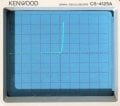
Here is a sequence of photos to demonstrate what to expect.

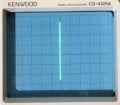
The horizontal or X-axis is voltage V across the device.
The vertical or Y-axis is device current I.
Hence the slope of the line represents I/V which is 1/R.
Thus, a low resistance will have a steeper slope.

The scale on the X-axis is approximately 1V per division.

Short Circuit
Curve Tracer - short.jpg


Open Circuit
Curve Tracer - open circuit.jpg


100-ohm resistor
Curve Tracer - 100 ohms.jpg

1000-ohm resistor
Curve Tracer - 1k ohms.jpg

From the resistance I-V curves, it is easy to determine that the Y-scale is 5mA/DIV.
 

Thread Starter

MrChips

Joined Oct 2, 2009
34,629
I have intentionally omitted commentary on each experiment. Each one warrants some discussion and is filled with learning opportunities. I am going to include this discussion at a later date.
 

Thread Starter

MrChips

Joined Oct 2, 2009
34,629
I love curve tracers, but in this particular case I love even more your CS4125. My first oscilloscope is the CS4025 and I still have it. Need to "unbury" it from somewhere.
I suppose I selected this oscilloscope because I wanted to demonstrate that you don't need an expensive high bandwidth scope to do this. Secondly, I think an analog display with vector stroke traces looks better than a modern DSO for this application.
 

DickCappels

Joined Aug 21, 2008
10,661
Analog scope traces make me feel nostalgic -they have a certain kind of beauty that is digital scopes I have seen cannot match. I think it is the fact that the velocity of the beam at every instance modulates the intensity that is part of this beauty.

Indeed the analog XY mode beats the vast majority of DSOs.
On the other hand it seems that even the least expensive digital scopes are capable of what only very expensive analog scopes can do, and that is support variable image retention all the way to infinite retention.

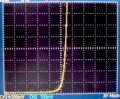
1652954548081.png

Current as a function of voltage for a infrared LED. Horizontal axis is 200 mv/ division
and the vertical axis is 1 ma per division. The knee is seen to be pretty sharp at 1 volt (about 15 Ω).
In the case of this measurement, the oscilloscope was adjusted to place the origin in the
lower left hand corner of the screen.

This trace above was made with a "manual sweep", a potentiometer adjusts the voltage, meaning that the operator can set the voltage to anything within the range and then measure voltage and current with a DVM for precise measurements. Infinite retention of the scope allows the display of the entire curve.

This is particularly useful for observing self-heating effects on components where such pronounced effects occur.
 

Ian0

Joined Aug 7, 2020
13,097
I have a simpler curve tracer.
connect the component in series with a suitable value resistor across the output of a 230V isolating transformer.
connect the earth clip to the junction of the component and the resistor.
connect the Y probe to the other end of the resistor and the X probe to the other end of the component, and select XY mode, and Y invert.
 

vijverwcl

Joined Mar 3, 2026
1
I was thinking about the member who was starting out experimenting with crystal radio sets. They wanted to learn about the differences between different types of diodes.

See discussion on crystal radio construction here:
https://forum.allaboutcircuits.com/threads/my-shortwave-radio-questions-and-discussion.184242/

So, just for fun I created this simple I-V curve tracer last night in within a couple of hours.
The design is fairly straight forward, a 555-timer circuit and a couple of op-amp ICs, plus an oscilloscope in X-Y mode.

Here is a sequence of photos to demonstrate what to expect.

The horizontal or X-axis is voltage V across the device.
The vertical or Y-axis is device current I.
Hence the slope of the line represents I/V which is 1/R.
Thus, a low resistance will have a steeper slope.

The scale on the X-axis is approximately 1V per division.

Short Circuit
View attachment 257892


Open Circuit
View attachment 257893


100-ohm resistor
View attachment 257894

1000-ohm resistor
View attachment 257895

From the resistance I-V curves, it is easy to determine that the Y-scale is 5mA/DIV.
I would like to request if it would be possible to share the schematic of the i-v curve tracer you built, it would be much appreciaited.

@MrChips
 
Last edited by a moderator:

BobTPH

Joined Jun 5, 2013
11,465
Looking at post #4. Can a digital scope even do that? I suppose some might have a mode where multiple traces are combined, is that the case?
 

atferrari

Joined Jan 6, 2004
5,001
I got some acceptable results using the persistence control (OWON) but not as nice with and old analog.
Using it to write text on the screen had to deal with the Z axis as well to turn it completely OFF during the retrace path between dots.
 
Top