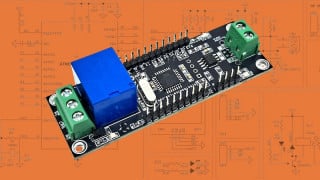
Curve tracer build failure.

Thread Starter

Paul_Alexa

Joined Jul 16, 2022
28
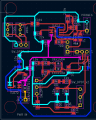
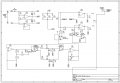
I found a design for a curve tracer online that I have adapted for my needs and available parts. I have built this exact schematic on a breadboard, using through hole parts and only one filter circuit. On the breadboard it works as expected. For the breadboard I got it working by using an LM 358 to get the split supply and an TL074 as the op amp. For the SMD build I used only TL072 while keeping everything else the same.

I have checked the supplies of all op amps. I have checked for broken traces, misplaced parts and all other "reasonable mistakes"
When I probe U2's pin 1 I was expecting a roughly 700 mv Sine wave. I get a square wave that is not bipolar. This suggests to me that there is an issue with the power supply or the filter circuit. What unsettles me is the fact that the THT version on the breadboard is working.

My question is: Is there a reasonable mistake that I have made somewhere that can be fixed without scrapping the whole design or should I just throw it out and replicate the through hole version?
Thank you. This is my first time ever doing SMD.
 

Attachments

MrChips

Joined Oct 2, 2009
34,628
Never scrap a build and start over again. You could very well make the same mistake again.
There is much more that you can learn by trying to trouble shooting and tracing the fault.

AAC Curve Tracer.jpg

Trouble shoot the circuit by checking for functionality.
Break the circuit into functional blocks and check each block on its own.

Begin by checking for power in.
Next check one op amp stage at a time. Input a test signal at the input and examine the output of the op amp.
 

MisterBill2

Joined Jan 23, 2018
27,184
Also, try writing an explanation of just how each circuit functions and what it does for the curve tracing. THAT will often get one to the problem. If it worked on the breadboard, but not here, then something is different.
A square wave that is not bipolar suggests that you do not have the split supply working. And try an LM358 as the power supply splitter again. You can use both sections in parallel.
 

Aejazwani

Joined Oct 6, 2020
3
The split supply doesn’t seem to be behaving properly, so maybe that’s why we’ve got a non-bipolar square wave. It worked on the breadboard so check the power supply voltages in your SMD version again. If you haven't already tried to use the LM358 out for the split supply then try it again, it worked before. Another thing you will want to do is running each section of the circuit separately to isolate the issue.
 

MisterBill2

Joined Jan 23, 2018
27,184
In addition to the advice in posts #3 and #4, usually, verifying that the power supply voltages are correct is a good first step in seeking the cause of incorrect operation of a circuit.
ALSO, in the power supply section, connecting an input of the unused section to the negative 15 volt line does not seem like a good choice at all.
 

sparky 1

Joined Nov 3, 2018
1,218
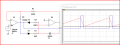
The power supply in the schematic is ok. The 30V can be regulated, the following is just a concept example.
The output, the second waveform for an op amp design is simply a sawtooth waveform at rate to display on an
oscilloscope in XY mode of operation. The blue trace the left side gives mark and space. The red trace on right shows the
linear ramp where the voltage increases gradually. Trim the circuit, this is an of example of a sawtooth circuit made with
op amps. The sawtooth waveform should be sufficiently shaped and adjusted to the oscilloscope to give a precise measurement.

sawtooth waveform.png
 
Last edited:

Thread Starter

Paul_Alexa

Joined Jul 16, 2022
28
Hello everybody and thank you for the valuable advice.

I have decided to proceed as follows:

1. Remove U1 from the SMD version
2. Use the known good split supply from the breadboard version to power the SMD version.

Now, at pin 1 of the SMD version I get a bipolar square wave, which is an improvement that suggests that there is something wrong with my split supply. What is nice is that now I am ample to compare both circuits on the fly. The breadboard version shows a sine wave here.
After finding out multiple deficiencies in my circuit I have decided to try again. For example, right after clearing the schematic up I have found out that I am switching between the filters wrong. I also remember that when I was first working with the circuit I calculated the feedback resistors and remember that I had to tweak the values to get it working. The wrong feedback resistor values always gave me a square wave.

I shot myself in the foot by not keeping proper documentation of my project. From now on I will draw waveforms at various test points on the schematic and use the Kicad net color function which will make my job easier. Also, from now on I will only do layouts that make sense from a logical standpoint. I have already begun work on a new PCB

The truth is that posting here, where people actively understand, helped me vent a little and I managed to correct the layout and I made the choice to revert to the originally used parts ( I had tl072s laying around and that was the motivation for using them initally)

Thank you all !
 
Top