Facebook
 Google
 GitHub
 Linkedin
HI Everyone, I'm current a lab assistant and have a few questions as to an interpretation of GAIN.
I have 2 transistors that have similar specifications and I'd like to compare the Hfe s .
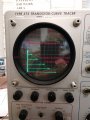
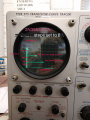
The first is a 2N3553 FROM TI and the 2nd 2N3553 RCA that we had in my college lab.
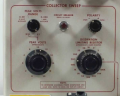
horizontal voltage is 10 voltage per division
vertically the current is 10 mA per division
number of step is set to 7
I did not turn the collector supply . The collect supply stayed in the same position for both transistors.
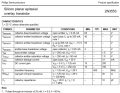
The Gains (Hfe) are different . The RCA hfe is 36 at step 1 and TI hfe is 22 at step 1. Both meet the specifications called out in the datasheet.
I am not too concerned that the transistors are good. I want to know about the Hfe curves .
Both have a frequency response test condition and should be tested at 50 Mhz. The 575 is DC only so I don't have the ability to test at the frequency.
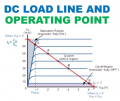
My question is , Why does the TI part appear more response to increases in base current ? Why does the TI transistor have more 'steps' ? Is there any inference or insight some can offer as to why the TI part has more characteristic curves than the RCA part for the exact same settings and test
conditions ? Is the TI transistor more linear or " controllable " as the GAIN increases ? Does that make is easier to bias the TI transistor ?
Any advice or insight to the curves would be greatly appreciated.
I have 2 transistors that have similar specifications and I'd like to compare the Hfe s .
The first is a 2N3553 FROM TI and the 2nd 2N3553 RCA that we had in my college lab.
horizontal voltage is 10 voltage per division
vertically the current is 10 mA per division
number of step is set to 7
I did not turn the collector supply . The collect supply stayed in the same position for both transistors.
The Gains (Hfe) are different . The RCA hfe is 36 at step 1 and TI hfe is 22 at step 1. Both meet the specifications called out in the datasheet.
I am not too concerned that the transistors are good. I want to know about the Hfe curves .
Both have a frequency response test condition and should be tested at 50 Mhz. The 575 is DC only so I don't have the ability to test at the frequency.
My question is , Why does the TI part appear more response to increases in base current ? Why does the TI transistor have more 'steps' ? Is there any inference or insight some can offer as to why the TI part has more characteristic curves than the RCA part for the exact same settings and test
conditions ? Is the TI transistor more linear or " controllable " as the GAIN increases ? Does that make is easier to bias the TI transistor ?
Any advice or insight to the curves would be greatly appreciated.