DC/DC Converter sourcing help

Thread Starter

rpschultz

Joined Nov 23, 2022
808
I need a +/- 15v dc supply (100mA), powered from a +9vdc source. Application is guitar pedals. 90% of guitar pedals work off 9v, and the vast majority of 9v power supplies output 9.2-9.6vdc. My application has op amp rails at + and - 15v.

The easy answer is a Traco TEC 3-0923. Supply from 4.5-13.2v. But they cost $15.26 on Mouser.

Other options:

1739290120089.png

The mornsun used to be cheaper, not so much now with additional tariffs.

Two Questions:
1) Is it bad to run a 12v nominal supply at 9.2-9.6v, at the lower end of it's range?
2) Any suggestions at something that might be closer to $10 each instead of $15?
 

Thread Starter

rpschultz

Joined Nov 23, 2022
808
You should reevaluate this design decision. It suggests you might be using an very old design. With modern chips, there is little need to supply such headroom.
OK, I'm listening. It would simplify things. I'm somewhat copying the industry leader in this regard. Grace Designs instrument preamps (Felix, Alix, Bix) are phenomenal, considered THE best for acoustic guitar. Quote from someone at Grace Designs: We currently use OPA1652, OPA1672, or OPA1642 for Felix and Alix. Felix runs at +/-18V while Alix and Bix run at +/-15V.

What I have designed is very similar to the Alix, a single channel preamp with a lot of tone shaping (filtering) knobs. Alix sells for $750. ALiX instrument preamp / DI - Grace Design (see specs below).

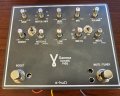
My design uses TL074's for all the filtering and an NE5532 as the initial preamp. The below circuit was my first prototype, I found a few mistakes and am gearing up for next PCB print. The DC/DC converter (Traco TEC 3-0923) is on the underside of the small board, converts +9v to +/-15v.

IMG_6396.jpg

View attachment IMG_6397.jpg

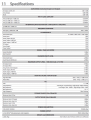
Alix Specs:
1739454895388.png
 

boostbuck

Joined Oct 5, 2017
1,034
Aion FX also has a few pedals that use a DC/DC converter to get +/- 15v.
L5 Preamp / Lab Series® L5 - Aion FX
There you go:
" The L5 Preamp is a pedal conversion of the preamp of the Lab Series® L5 guitar amplifier, a Moog-designed solid-state amplifier from the late 1970s ... ..."

Copy it by all means, but 30 - 40V headroom is extraordinary in these days, a result of early op-amp restrictions.
 

Thread Starter

rpschultz

Joined Nov 23, 2022
808
Ok. But It think Grace Designs is a better example. Best acoustic guitar preamps currently available. There’s gotta be a good reason.
 

eetech00

Joined Jun 8, 2013
4,704
OK, I'm listening. It would simplify things. I'm somewhat copying the industry leader in this regard. Grace Designs instrument preamps (Felix, Alix, Bix) are phenomenal, considered THE best for acoustic guitar. Quote from someone at Grace Designs: We currently use OPA1652, OPA1672, or OPA1642 for Felix and Alix. Felix runs at +/-18V while Alix and Bix run at +/-15V.

What I have designed is very similar to the Alix, a single channel preamp with a lot of tone shaping (filtering) knobs. Alix sells for $750. ALiX instrument preamp / DI - Grace Design (see specs below).

My design uses TL074's for all the filtering and an NE5532 as the initial preamp. The below circuit was my first prototype, I found a few mistakes and am gearing up for next PCB print. The DC/DC converter (Traco TEC 3-0923) is on the underside of the small board, converts +9v to +/-15v.

View attachment 342474

View attachment 342475

Alix Specs:
View attachment 342478
I think this unit is actually powered by an internal linear power supply, in which case it can supply +/-15v. 9VDC is provided as an output power source, maybe to power other pedals.
 

LowQCab

Joined Nov 6, 2012
5,101
Ok. But It think Grace Designs is a better example. Best acoustic guitar preamps currently available. There’s gotta be a good reason.
.
Nope, sorry, there doesn't have to be a good reason, except maybe being able to create
a bunch of talk between people who believe more Money equals superior "performance".

A Pre-Amp can easily be built that runs off of a single 9-Volt Battery that can not be distinguished
from a ~$3000.oo custom-made, "superwamodyne" Pre-Amp running on ~30-Volts.
That is, if the comparisons are done "Double-Blind".

People talk themselves into all sorts of crazy "beliefs", especially Musicians.

What you're using as a Pick-Up(s),
or Microphone(s), ( or both ),
and their positioning,
and the Room this is all in,
and who's turning all the Knobs,
and who's playing the Instrument,
can all make a massive difference.

Then repeat all this upon Play-back.

The Room-Treatment,
and the Engineer,
and the variety of effects at his disposal that he is competent at working with,
are the things that make the biggest difference.

When was the last time You changed your Strings ?

Been there, done that, and wore-out the T-Shirt.

Modern Audio-Op-Amps are so good
that they are difficult to measure with the best Test-Equipment available.
.
.
.
 

MisterBill2

Joined Jan 23, 2018
27,180
The one real benefit of using +15,-15 VOLTS SUPPLY IS A LOT MORE HEADROOM., The Second big advantage is never having the 9 volt battery go dead at the wrong time. Certainly a lot can be done with 3.3 volt opamps, but why waste the time?? And sacrifice the headroom??
 

MisterBill2

Joined Jan 23, 2018
27,180
No one uses 9v batteries anymore.

But, please describe MORE HEADROOM, in more technical detail. Thanks!
OK, and that is a good question. For starters, most opamps can not output a greater voltage than their supply voltage. In addition, on quite a few opamps. the response is less linear as the output approaches the supply voltage limit.
So "headroom" is the level distance between the peak operating output voltage and the maximum possible output voltage. And sometimes that is qualified at some distortion level.
So the exact definition of "headroom" varies a bit depending on who is using it, but the meaning is quite similar.
 

LowQCab

Joined Nov 6, 2012
5,101
No Amplifier, or Mixer, or subsequent Effects-Box,
is designed to accept more than around ~3-Volts Peak to Peak at it's Input.

Using 10 times that much Voltage is no advantage whatsoever,
and could easily turn into a serious liability instead.

Shove 30-Volts into one of the Inputs of an IC running on ~9-Volts and see what happens.
.
.
.
 
Top