Current Sensing Filter Circuit

Thread Starter

Vihaan@123

Joined Oct 7, 2025
220
1767013248848.png
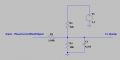
The main task is to find out the filtering what are the frequencies allowed and not allowed. I thought of the circuit the input signal will be sinusoidal current and it will be passed through a shunt resistor of 2.2mOhm and it will be passed through this circuit the output is given to opamp. The input will be then an analog singal. Initially i forgot about the opamp and assumed the capacitor will get charged by the current flowing through it. But when opamp came to my mind then no current will be flowing through the opamp input so i am assuming that the current will not flow through C1 and it does not get charged. Is my logic correct? But that does not seem to be right, how filtering take place with this capacitor?
1767014387676.png
 

MrAl

Joined Jun 17, 2014
13,667
View attachment 361303
The main task is to find out the filtering what are the frequencies allowed and not allowed. I thought of the circuit the input signal will be sinusoidal current and it will be passed through a shunt resistor of 2.2mOhm and it will be passed through this circuit the output is given to opamp. The input will be then an analog singal. Initially i forgot about the opamp and assumed the capacitor will get charged by the current flowing through it. But when opamp came to my mind then no current will be flowing through the opamp input so i am assuming that the current will not flow through C1 and it does not get charged. Is my logic correct? But that does not seem to be right, how filtering take place with this capacitor?

View attachment 361305
Hi,

What is the input waveform?
Is it a voltage?
 

Thread Starter

Vihaan@123

Joined Oct 7, 2025
220
May be some of the information i have not provided properly the output of the circuit in the initial post is going to the positive side of the opamp, the negative side is the ground and it is negative feedback opamp.
 

MrAl

Joined Jun 17, 2014
13,667
May be some of the information i have not provided properly the output of the circuit in the initial post is going to the positive side of the opamp, the negative side is the ground and it is negative feedback opamp.
You REALLY have to show the ENTIRE circuit or we will be here for weeks :)
 

Ian0

Joined Aug 7, 2020
13,097
It will behave as a simple first order RC filter. The —3dB frequency will be 1/(2πRC), where R is the combination of all three resistors in parallel.
 

Thread Starter

Vihaan@123

Joined Oct 7, 2025
220
It will behave as a simple first order RC filter. The —3dB frequency will be 1/(2πRC), where R is the combination of all three resistors in parallel.
Can you please tell me how do i derive that it is combination of 3 resistors in parallel as i am observing some of the high frequency signal is missed.
 

Ian0

Joined Aug 7, 2020
13,097
Use Thévenin's theorem. The three resistors can be represented as a single resistor and a single voltage source.
It is a low-pass filter, so you are correct that the high-frequency signal will be missing.
 

MrAl

Joined Jun 17, 2014
13,667
Yes it is voltage.
Hi,

Ok so then I take it that the input is just a voltage that changes. Is it a sine wave or square or other or arbitrary?

As Ian said, it's a low pass filter with DC bias. In more general terms, it is an RC network with two input sources, and since none of the sources go open circuit it's just a two-source RC network. You can use superposition to solve it treating vc0 as a third source, or any other method you prefer like Nodal Analysis.

I also assume that the op amp connection is an INPUT to the op amp and not an output, which means we can usually assume infinite input impedance without further information.
 

ronsimpson

Joined Oct 7, 2019
4,645
One way to find the frequency response it to use LTSPICE. It looks like you have it.
V2 is a signal its value is AC 1.
Now just change C1 until you get what you want.
Assuming the OP-amp does not load down "out".
Load, Run the attached file then click on "out". Note you are down 2db at DC.
1767030063728.png
 

Attachments

Thread Starter

Vihaan@123

Joined Oct 7, 2025
220
The Cutoff frequency is
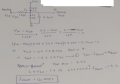
1/Reff = 1/R1 + 1/R2 + 1/R3 = 1/1690 + 1/22000 + 1/10000 = 5.91*10^-4 + 0.45*10^-4+1*10^-4 = 0.000736
Reff = 1358;
f = 1/(2*Pi*R*C) = 1 / (2*Pi*1358*4.7*10^-9) = 24KHz. So, it will basically filter all the signals above 24KHz. I try Thevenin.
Is it a sine wave or square or other or arbitrary?
It is sine wave.
I also assume that the op amp connection is an INPUT to the op amp
Yes it is input to opamp
 

Thread Starter

Vihaan@123

Joined Oct 7, 2025
220
Use Thévenin's theorem. The three resistors can be represented as a single resistor and a single voltage source.
It is a low-pass filter, so you are correct that the high-frequency signal will be missing.
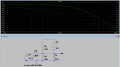
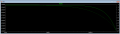
Why the theoretical calculation is not matching with the simulated result, i get 24KHz as -3dB frequency but that does not match with simulation. What mistake i am doing can you help please?
 

Ian0

Joined Aug 7, 2020
13,097
Yes. If you want 300kHz cutoff, 100pF will be
View attachment 361359View attachment 361356
View attachment 361357

I used 100pF will it be ok? I am thinking if i don't use any capacitor what will happen since the capacitor value is so less.
I don't see why not. I don't know what you mean by "three shunt topology" and if you are using a shunt that only produces millivolts of output, you don't need an attenuator (but you do need Kelvin connection).
If the output goes to an A/D then you should filter at half the sampling frequency.
 

Thread Starter

Vihaan@123

Joined Oct 7, 2025
220
The three-shunt topology is 3 shunt resistors for 3 currents, the voltage will be passed through the circuit in initial post, the output of that will go to the +ve side of the opamp. The offset circuit is for positive and negative currents (initial post circuit). The opamp gain is 8. The sampling frequency is 20KHz. At present not using the kelvin connection.
 

Ian0

Joined Aug 7, 2020
13,097
The three-shunt topology is 3 shunt resistors for 3 currents, the voltage will be passed through the circuit in initial post, the output of that will go to the +ve side of the opamp. The offset circuit is for positive and negative currents (initial post circuit). The opamp gain is 8. The sampling frequency is 20KHz. At present not using the kelvin connection.
Then you should filter at 10kHz.
I would suggest using a differential amplifier configuration and the Kelvin connection, then you can avoid any attenuation, and any error caused by resistance between the ground side of the shunt and real ground.
 

MrAl

Joined Jun 17, 2014
13,667
Why the theoretical calculation is not matching with the simulated result, i get 24KHz as -3dB frequency but that does not match with simulation. What mistake i am doing can you help please?
Hi,

This is the same as the other example. It's a low pass filter so the reference is not 0dB.
There is some initial cut at f=0 so you have to look at the -3db point that is below THAT amplitude.
If at f=0 the cut is -1db, then you won't see the actual -3dB point of the filter until -4dB, for example.
The -3dB cutoff point is 3dB down from the zero-frequency cut. For the general LP filter that may or may not be at f=0 so it has to be calculated for each filter.

For a high pass filter the reference is usually the cut at infinite frequency.
For a bandpass the reference amplitude is (not surprisingly) at the center frequency.

Simulations usually show 20*log(Vout/Vin) where log() is the base 10 logarithm which assumes that Vin=Vout at f=0 and that is not always the case.

The problems you are running into are common so no need to worry.
 
Last edited:
Top