Facebook
 Google
 GitHub
 Linkedin

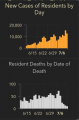
I watch the "daily cases" vs. various locales almost daily -- from an academic POV. Both inside the US and around the world.Compare Sweden ("use common sense"):
View attachment 211966View attachment 211961
To US (lockdowns):
View attachment 211965View attachment 211963
It was said early on that lockdowns would only "flatten the curve." They were not expected to decrease the long-term impact. It will be months before we know which was right.
I am pretty good at detecting patterns in data. So far, I am completely bemused at how "random" the curves seem.
It's hard for me not to suspect that the reported data is not being massaged prior to reporting. The most obvious is that of China:
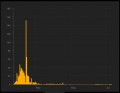
Who (pun intended) actually believes the most populous country in the world capped their infection rate to less than ~5K infections per day -- then, within a month, completely eliminated the virus from its population?
My home base (Florida) looks like this:
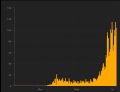
As far as I can surmise (and data seems to indicate), Wuhan should behave like a "standard" flu -- albeit one in which no one at the start had prior immunity. But we don't have flu here in the summer! The heat, humidity, and sunlight pretty much destroy viruses -- and Wuhan is no exception. I suspect that fear -- people staying home in the cool, dry A/C -- is responsible for driving the numbers up.
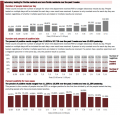
The good news is the death rate does not seem to be tracking the infection rate:
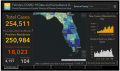
This tells me that we've been under-detecting (under-reporting?) actual Wuhan infections from the beginning (or we've been doing a really good job protecting our old-folk in their old-folks homes!).
What's most interesting is that most of the early reporting had shown -- nearly consistantly -- that 5-10% of those tested were positive for Wuhan. Recently, that number has jumped considerably:
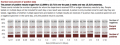
This tells me either they are better targeting the likely infected for testing, or b) the tests have either gotten more sensitive or less reliable.
An alternative explanation is that Wuhan has evolved to become simultaneously more contagious and less deadly.
So much of this just doesn't make sense yet, and I suspect that none of us are seeing the real (un-massaged data).
It feels almost like someone wants us to be afraid.
Last edited:




 .
.