Changes in Multimeter reading on applying increasing contact probe pressure.

Thread Starter

mojizs

Joined Aug 23, 2023
15
clean your probes and the contact surface on the resistance you are measuring. You might even have to sharpen the probes to obtain somewhat consistent readings, and as crutschow suggests, make sure you have the probes in the same place (and with similar pressure) for each measurement.

Measurements like what you are attempting are difficult to make repeatability. One technique that helped with a similarly impossible measurement problem is to take many measurements and then average them. This would then be useful in comparing with the average of several future readings.
I will redo the steps as you suggested. I understand like you and crutschow suggest on being consistent in placing the probe in the same spot and with a similar pressure which we are trying our best to. I wanted to understand the theory behind the pressure affecting the measurement. Could you possibly help me understand more on that particular parameter?

I agree, averaging the measurements is a good choice to store the data adequately and compare them in future readings.
 

Thread Starter

mojizs

Joined Aug 23, 2023
15
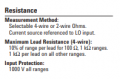
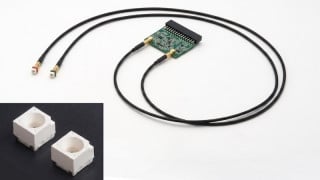
For measuring resistances that small, you probably should be using a different probe, such as the Keithley 5805, which makes a true four-point measurement and is specifically designed for measuring circuit board traces.
Thank you for that suggestion. Could you help me understand more about the difference between because I am not familiar with the probe design schematics and how to choose the right one?
 

crutschow

Joined Mar 14, 2008
38,536
I wanted to understand the theory behind the pressure affecting the measurement. Could you possibly help me understand more on that particular parameter?
A 4-probe Kelvin measurement should be quite insensitive to probe pressure, since the purpose of that measurement technique is to minimize the affect of any probe resistance.
The supply probes generate a constant-current for the measurement independent of resistance, so the probe and contact resistance should have little affect on the measurement, and the measurement probes have no significant current going through them, so their resistance should also have little affect on the measurement.

Thus any variation in the measurement of low value resistances is likely due to slight differences in where you place the measurement probe, not with variation in probe pressure.
 

Thread Starter

mojizs

Joined Aug 23, 2023
15
Thus, any variation in the measurement of low value resistances is likely due to slight differences in where you place the measurement probe, not with variation in probe pressure.
I completely agree and have been noticing it in the measurements I take. I was although, despite what you said, oddly experienced the changes in measurement values when simply varying the amount of pressure I put. I could only start imagining that maybe the pressure added is actually exposing a larger contact area to the component/specimen which is why changes are observed. I have not concluded this so far.
Averaging them out is a reasonable to handle such differences and will continue to do so.
I guess I am just musing over it too much unnecessarily.
 

WBahn

Joined Mar 31, 2012
32,898
A 4-probe Kelvin measurement should be quite insensitive to probe pressure, since the purpose of that measurement technique is to minimize the affect of any probe resistance.
The supply probes generate a constant-current for the measurement independent of resistance, so the probe and contact resistance should have little affect on the measurement, and the measurement probes have no significant current going through them, so their resistance should also have little affect on the measurement.

Thus any variation in the measurement of low value resistances is likely due to slight differences in where you place the measurement probe, not with variation in probe pressure.
As I said before, the particular probe that the TS is using (the K-5808) is NOT making a true four-wire measurement; each probe is single pin. The current source and voltage sense contacts are made at the base of the probe tip, so the measurement includes both the resistances of the probe tips and the resistance of the contacts with the circuit since all four are in the path of the voltage sense contacts carrying the full current.
 

crutschow

Joined Mar 14, 2008
38,536
As I said before, the particular probe that the TS is using (the K-5808) is NOT making a true four-wire measurement; each probe is single pin.
Good point.
I didn't look at the probes carefully to see that, which is certainly a source of measurement error.

If they have just two probes, then each probe should have two spring-loaded electrodes side-by-side to make contact with the item being measured.
 
Last edited:
Top