Amateur Electrician Photos

Tonyr1084

Joined Sep 24, 2015
9,744
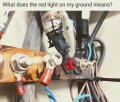
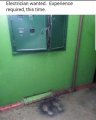
It is both a visual and tactile indicator alerting the home owner of a potential hazardous condition. Visual in that it can be viewed by a person with basic normal vision; and for those with visual impairment using the sense of touch will indicate a fault condition. There is a third indicator for those who may fail to check these conditions on a regular basis and that's the sense of smell. This new indicator is also capable of producing an odor detectable to those who neglect checking systems on a regular basis. It is purposely designed to smell like a burning home. However, at that point it's usually an indicator that a major fault has occurred and the homeowner needs to take immediate action to protect life and property.

Some operators of this sort of warning light have reported an auditory indication that has been described as a crackling sound similar to that of pine logs in a fire. Experts suggest that if any of the above issues are discovered it is advisable to dial your local emergency number and have the issue investigated at once.
 

MisterBill2

Joined Jan 23, 2018
28,062
It is both a visual and tactile indicator alerting the home owner of a potential hazardous condition. Visual in that it can be viewed by a person with basic normal vision; and for those with visual impairment using the sense of touch will indicate a fault condition. There is a third indicator for those who may fail to check these conditions on a regular basis and that's the sense of smell. This new indicator is also capable of producing an odor detectable to those who neglect checking systems on a regular basis. It is purposely designed to smell like a burning home. However, at that point it's usually an indicator that a major fault has occurred and the homeowner needs to take immediate action to protect life and property.

Some operators of this sort of warning light have reported an auditory indication that has been described as a crackling sound similar to that of pine logs in a fire. Experts suggest that if any of the above issues are discovered it is advisable to dial your local emergency number and have the issue investigated at once.
I did come across a similar situation with a friend for whom I had done some electrical work on their house. She called quite unhappy that all at once the new outlets had quit working, and also the refrigerator was not running. So I went to investigate, and started checking outlets. Then I asked if there were any more, because the breaker was on and I had not found any problem. She said Yes, one more behind the microwave oven, but it sparks. Indeed. When her kitchen walls were tiled, the crew had removed the outlet and when they put it back there were 3 wires under one screw. And this was the first outlet in the string. The outlet was burned in half, and the wire insulation was burned off for a couple inches, and the wallboard had heat damage. Fortunately there was enough wire to cut off the damaged part and use an adequate wire nut to make a proper connection, adding a lead for the outlet connection. The very heavy duty wire nuts have been an adequate fix for two years now and so she is happy. But that one certainly could have had a worse ending if the wall had ignited.
 

Tonyr1084

Joined Sep 24, 2015
9,744
It is both a visual and tactile indicator
I actually found such an indicator in a Chevy Geo, a car that was GIVEN to me. At night you'd turn the lights on and most often they'd come on. However, sometimes you had to step on the clutch pedal to get the lights to full brightness. One evening after dinner I started the car but the lights wouldn't come on at all. So like any GOOD man, I opened the hood and saw a bright white indicator on the radiator cross bar. Like a fool I touched it. Yup! It was indicating a fault for sure. After I was done swearing I tapped it with a pair of pliers and the lights came on. Drove the car home and the next day I re-terminated ALL the body grounds. This one bright indicator was the last ground point to rust out and fail. So I've both seen and touched this sort of indicator. Although admittedly it never made any crackling sounds, nor did it smell like a burning house. That Geo was the worst car I've ever owned. Fortunately I didn't BUY it. The previous owner felt pretty much the same way I did about it.
 

Tonyr1084

Joined Sep 24, 2015
9,744
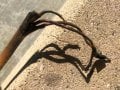
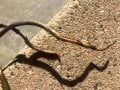
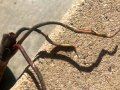
Changing the light switches in the kitchen. Two lights, both operated from independent switches at each end of the kitchen. Wife (and I) want to be able to turn both lights on and off from either end of the kitchen. So I've been rewiring for a three-way setup. This is what I removed.

Back story on the wiring: There used to be a two bulb ceiling fixture that were rated for two 60W bulbs. The previous owner put two 100W bulbs in the fixture. This is what happened. The insulation was so brittle that I actually cut my thumb on some of the insulation. Just moving the wires around resulted in flaking of the insulation - exposing copper and making ripe conditions for a fire. Leave alone the fact that there could have been an electrical fire, I've had to patch the drywall because it too was scorched.

IMG_1216.jpg IMG_1217.jpg IMG_1218.jpg
 

Reloadron

Joined Jan 15, 2015
7,908
Back story on the wiring: There used to be a two bulb ceiling fixture that were rated for two 60W bulbs. The previous owner put two 100W bulbs in the fixture. This is what happened. The insulation was so brittle that I actually cut my thumb on some of the insulation. Just moving the wires around resulted in flaking of the insulation - exposing copper and making ripe conditions for a fire. Leave alone the fact that there could have been an electrical fire, I've had to patch the drywall because it too was scorched.
Copper is a wonderful conductor of current and also a wonderful conductor of heat. Tony, you are fortunate to have found that when you did. My wife's cousin was not as lucky and as a result of some poorly done work had to replace a large part of her house.

Ron
 

Tonyr1084

Joined Sep 24, 2015
9,744
200 watts divided by 120 VAC = 1.67 amps. The wire is 12 gauge. Certainly not done because of excess current. No, it was due to those incandescent bulbs in a poorly insulated light fixture that cooked the wire insulation over time. No telling how long it would have continued to last if the old fixtures were not replaced with pendant and fluorescent fixtures.

I've known about this situation for quite some time. Knowing I wasn't overheating the ceiling I wasn't overly concerned about a fire. The only thing that made me nervous was handling those lines and the potential of fracturing insulation and exposing copper to touching ground or neutral. Today that problem no longer concerns me. I've spent two days in the attic running new wires from the breaker box to the switches to the fixtures. Tomorrow I build the boxes for my new LED fixtures. Going to be good weather for woodworking in the garage. I DO however have some walls to patch. Over the breaker panel and where the old double gang box was coming loose; and the one hole at the ceiling for snaking the wire through the joist. (hole already there)
 

SamR

Joined Mar 19, 2019
5,528
You do need to heed the watt ratings on light fixtures. Just because you could screw in a 100W bulb doesn't mean the fixture can handle the heat of it. All that has changed with LED so it's a new ballgame now. I assume all lightbulbs sold are UL rated(?) here in the USA but with the Global Economy who knows what anything is rated for if at all or if the rating means anything at all. The US, CAN, and EU have fairly well-regulated rating testing and standards but... Over the years I have found many heat-damaged wires in light fixtures.
 

Reloadron

Joined Jan 15, 2015
7,908
200 watts divided by 120 VAC = 1.67 amps. The wire is 12 gauge. Certainly not done because of excess current. No, it was due to those incandescent bulbs in a poorly insulated light fixture that cooked the wire insulation over time. No telling how long it would have continued to last if the old fixtures were not replaced with pendant and fluorescent fixtures.
Yes, and a fixture rated for 60 watts is running 100 watts. Something starts to give, like where the wire is connected to the terminal. Than that junction begins to warm up and the resistance starts to increase. Then like a downhill snowball the problem grows over time. The AWG 12 copper wires start conducting heat away from the source and down the wires. This is how fires start and it is also why the NEC is fussy about how overhead lighting fixtures are placed. Nobody wants to smell smoke in their home.

Part of my job was to give safety lectures and in my office, on a shelf, was a collection of fried parts like lamp sockets, wall sockets and all sorts of toasted items I saved over the years. I even had the technicians doing electrical outlet pull test on all of the 120 VAC outlets in the facility. When an outlet failed a pull test it was replaced. The company was very electrical safety conscious. While we were not a hospital or patient care facility I modified a form like this one to suit our purposes. The local fire department inspectors loved it. :) Weak outlets were a big problem.

Ron
 

JMW

Joined Nov 21, 2011
138
Dear Folks,
I saw the on Quora today - pix of electrical connections done by amateurs... thought you all would get a kick out o
Remember AG fuses for automobiles? I recall that one fellow needed something in a hurry. The "something" turned out to be a .22 Short. If he had used a .22 Long that had been fired all would have been well,,,,,,,,,,,he didn't
 

Tonyr1084

Joined Sep 24, 2015
9,744
Saw a hot plate made using a piece of paper and a pencil. Drew a hot plate pattern on the page then applied power to it. Wasn't me. Really! Funny though, the paper erupted into flames nearly immediately. I think it was done more as a show of some sort rather than someone trying to do some lite cooking.
 
Top