Aether based gravity

MrAl

Joined Jun 17, 2014
13,704
Can I say that the manifestation of gravity is brought about by displacement of anti-gravity?
Hi,

I think you would have to elaborate a bit more for anyone to really understand what you are trying to say. Could be interesting, but more info is needed.
 

MrAl

Joined Jun 17, 2014
13,704
I am going to go with a version of the bowling ball on a trampoline analogy.
To me, the typical illustration depicts a single plane of something sinuous that stretches across the universe. Every point in space down to a few Planck units would be occupied by a matrix of these threads.

In the form of a preposition, it would be anything that strives against it.
Hi again,

I did not see this reply before i posted my first reply.
After seeing this new reply though i can say that you did not really provide much more information.
You basically stated one of the simplified analogies for the spacetime bending explanation of gravity, which i believe everyone here already knows, and you then went on to state that anti-gravity was anything that goes against gravity, but that doesn't provide any more additional information either.

You really need to explain what you mean in much more detail, as fully as possible. An example would be good too.
As i said, this could turn out to be interesting, but without the detail it's hard to know what you are thinking.
 

MrAl

Joined Jun 17, 2014
13,704
Hello again,

Another thing that peaked my interest was the idea that the universe could be 'evolving'. I read about this some time ago.
But with that the meaning is similar to how the earth is evolving, with the possibility of global warming and ice melting and ocean water rising, etc., etc.

We have such an incredibly limited view of the universe not only in distance but also in time. Distance wise, we only can see what our telescopes can resolve over the vast dimensions of space. Time wise, we've only been looking for at best 1000 years except in the simplest of ways, and only maybe the last 200 years with more advanced equipment.
If the universe can change in ways we have not yet discovered, when we look 1000 years from now we may see things completely different. We already seem to know some things, like the universe is expanding, which places limits on things we can actually do, and we did not know that some 200 years ago. What would change over the next 200 years, and I don't really mean what we could see that we did not see yet (although that is also a possibility of course) but what I am really getting at is what could actually *change* that we could not possibly see or know about at the present time in the year 2023 for example.
We know there have been changes with the earth over the last million years or something like that such as the gravitational field and direction, oxygen levels, etc. Imagine what could be changing in the entire universe. This could make physics and cosmology a forever evolving body of knowledge as well with no real Theory Of Everything, only temporal theories.
 

BobTPH

Joined Jun 5, 2013
11,515
Well, if you are talking about the universe as a whole, connectedness requires a time scale of over 10B years. So it is not likely we could see it.
 

MrAl

Joined Jun 17, 2014
13,704
Well, if you are talking about the universe as a whole, connectedness requires a time scale of over 10B years. So it is not likely we could see it.
Hi,

Not sure what you mean by connectedness, but to give you an extreme example...
What if the universe suddenly (over say a month or a year) broke into two distinct parts, where we lose visual contact with a distant part that was easy to see with a telescope. We would have two universes, but we'd still live in only one and would no longer be able to see that other part or travel to that other part.
It might be that the larger it gets, the more prone to splitting it becomes.
This is just an example though just off the top of my head.
Also, possibly a new form of energy that emerges.
 

Frank Bolleri

Joined Sep 23, 2023
77
What a fascinating discussion you have started.

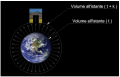
Returning to gravity, have any of you ever thought that conceptually if the volume of a celestial body grew ("inflated") at a certain rate, causing the correct "push" from the surface to the objects (or people) hosted in the surface itself (e.g.: 9.8 m/s^2 for Earth), the effect will be indistinguishable from "true" gravity?
Obviously assuming that the celestial body does not explode into a thousand pieces in making this expansion...

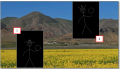
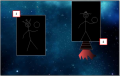
Here is the idea in a sequence of images, the first two of which are the usual representation of Einstein's famous equivalence principle, which you will have already seen a thousand times (but I drew these original ones!).

Screenshot 2023-10-21 at 16.33.09.png

Screenshot 2023-10-21 at 16.33.27.png

So, 1=4 and 2=3 (free fall) - nothing new.

But then we focus on equivalence of 1=4:

Screenshot 2023-10-21 at 16.33.48.pngScreenshot 2023-10-21 at 16.40.00.png

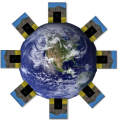
And we imagine it all around the world:
Screenshot 2023-10-21 at 16.34.04.png

So (sorry for italian in the labels, but I think the idea is clear...):
Screenshot 2023-10-21 at 16.34.24.png

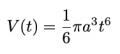
Some years ago, I had also tried to look for the formula for the "volume at certain time of a sphere whose radius increases with constant acceleration", in which you could enter the acceleration and time to know the volume reached:
Screenshot 2023-10-21 at 16.24.05.png
But then I didn't move forward :)
 

Frank Bolleri

Joined Sep 23, 2023
77
You can propose all kinds of non-existent physics. It does not interest me, though.
Sure... but I'm not saying reality it's like that.
I'm just saying that if the radius of a sphere had that behavior and the sphere didn't explode (like a baloon), it would be equivalent.
 

MrAl

Joined Jun 17, 2014
13,704
What a fascinating discussion you have started.

Returning to gravity, have any of you ever thought that conceptually if the volume of a celestial body grew ("inflated") at a certain rate, causing the correct "push" from the surface to the objects (or people) hosted in the surface itself (e.g.: 9.8 m/s^2 for Earth), the effect will be indistinguishable from "true" gravity?
Obviously assuming that the celestial body does not explode into a thousand pieces in making this expansion...

Here is the idea in a sequence of images, the first two of which are the usual representation of Einstein's famous equivalence principle, which you will have already seen a thousand times (but I drew these original ones!).

View attachment 305506

View attachment 305505

So, 1=4 and 2=3 (free fall) - nothing new.

But then we focus on equivalence of 1=4:

View attachment 305507View attachment 305509

And we imagine it all around the world:
View attachment 305508

So (sorry for italian in the labels, but I think the idea is clear...):
View attachment 305510

Some years ago, I had also tried to look for the formula for the "volume at certain time of a sphere whose radius increases with constant acceleration", in which you could enter the acceleration and time to know the volume reached:
View attachment 305503
But then I didn't move forward :)
Hello,

Actually yes I did. I thought about it back in the 1980's and mentioned it on this forum at least one or two times in the past.
For it to work, the earth and everything on it would have to grow at an ever increasing rate.
I think it fails the surface area vs volume test though. If the volume grows the surface area has to expand also. I don't remember how this test works it had been mentioned to me after I suggested it would be an interesting alternative but that was 40 years ago. Maybe it can actually pass I can't remember what became of it now.

There is a certain physical mechanical problem that comes up in control theory where when you use the electrical/mechanical analogy it works, but you have to have a fictitious platform that has to keep moving and accelerating. It acts as the reference plane so you can use that one analogy I think it was the current/force analogy. There is another analogy that you don't need such a plane, but it's interesting that the current/force analogy works as long as you include that moving plane. It serves as the 'base' of the mechanical system in the same way that the earth or a stationary table top serves as the base normally. So you would build this system on top of a bench or table, but using the current/force analogy you have to have the table constantly moving and accelerating in the direction of the apparatus. That's something like gravity also.
 

Frank Bolleri

Joined Sep 23, 2023
77
Hello,

Actually yes I did. I thought about it back in the 1980's and mentioned it on this forum at least one or two times in the past.
For it to work, the earth and everything on it would have to grow at an ever increasing rate.
I think it fails the surface area vs volume test though. If the volume grows the surface area has to expand also. I don't remember how this test works it had been mentioned to me after I suggested it would be an interesting alternative but that was 40 years ago. Maybe it can actually pass I can't remember what became of it now.
Yes.. I would say that we don't see buildings crumbling every day because their pillars become further and further away - so that can't be the mechanism. That's what I meant by "Obviously assuming that the celestial body does not explode".

What seems interesting to me about the analogy I have proposed is that it is derived from the application of the principle of equivalence and I believe that the "direction of the push" interpretation is correct.

In the sense that when you sit on a chair, you are not pushing on the chair.
It is the chair that pushes against you - and what we feel as "weight" is the manifestation of the body's inertial resistance.
The force comes from the floor, it doesn't go towards the floor.

This can be seen very well in my representation and, even if the mechanical principle of the expansion cannot exist, from what I understand, "the push from below" is the current vision of gravity.

Some years after I make these thinking and pictures, I get this video on Youtube (I try to link it with start at time=08:25)


and this other (I try to link it with start at time=05:11)


MrAl

Joined Jun 17, 2014
13,704
Yes.. I would say that we don't see buildings crumbling every day because their pillars become further and further away - so that can't be the mechanism. That's what I meant by "Obviously assuming that the celestial body does not explode".

What seems interesting to me about the analogy I have proposed is that it is derived from the application of the principle of equivalence and I believe that the "direction of the push" interpretation is correct.

In the sense that when you sit on a chair, you are not pushing on the chair.
It is the chair that pushes against you - and what we feel as "weight" is the manifestation of the body's inertial resistance.
The force comes from the floor, it doesn't go towards the floor.

This can be seen very well in my representation and, even if the mechanical principle of the expansion cannot exist, from what I understand, "the push from below" is the current vision of gravity.

Some years after I make these thinking and pictures, I get this video on Youtube (I try to link it with start at time=08:25)


and this other (I try to link it with start at time=05:11)

Well in my version everything expands and that means all the distances expand, left, right, up, down, etc. The volumes necessarily expand also.
Maybe a problem though is that would mean space would have to be expanding at the same rate in order to keep things like planets away from each other or else eventually their surfaces would collide. That would probably happen quickly too because the surface of a planet would have to be moving faster and faster in order to maintain the constant 'force' on objects resting on the surface. I suppose that could happen too though.

In a lot of classical physics gravity is taken to be an acceleration. On earth, it's considered to be a constant like 9.8m/s^2. It is also taken to be directed downward, like where things are falling. In control theory it doesn't matter how you do it because everything can be taken as a differential quantity where you only have to consider the movement of the object as if it were falling.

Related to gravity is of course mass, and mass is related to inertia. Have you considered inertia and what causes it or the mechanisms behind it?
 

xox

Joined Sep 8, 2017
936
In the sense that when you sit on a chair, you are not pushing on the chair.
It is the chair that pushes against you - and what we feel as "weight" is the manifestation of the body's inertial resistance.
The force comes from the floor, it doesn't go towards the floor.
More specifically, both the atoms in your body and the Earth generate a gravitational tensor field which pulls each toward the other. Of course the planet is much bigger than you and so it seems that you are the one being pulled. If you go skydiving, you feel weightless because there is little resistance (other than air) to this field and, since all fields seek equilibrium, you free-fall.

Back to the chair analogy, another thing to consider is that energy can overcome gravitational fields (as I am sure you are well aware). Send your chair in any direction with enough velocity and suddenly (assuming you have avoided obstructions) the gravitational field seems to disappear. Congratulations, you are now orbiting the Earth in your armchair, completely weightless!
 

Frank Bolleri

Joined Sep 23, 2023
77
Well in my version everything expands and that means all the distances expand, left, right, up, down, etc. The volumes necessarily expand also.
Maybe a problem though is that would mean space would have to be expanding at the same rate in order to keep things like planets away from each other or else eventually their surfaces would collide. That would probably happen quickly too because the surface of a planet would have to be moving faster and faster in order to maintain the constant 'force' on objects resting on the surface. I suppose that could happen too though.

In a lot of classical physics gravity is taken to be an acceleration. On earth, it's considered to be a constant like 9.8m/s^2. It is also taken to be directed downward, like where things are falling. In control theory it doesn't matter how you do it because everything can be taken as a differential quantity where you only have to consider the movement of the object as if it were falling.

Related to gravity is of course mass, and mass is related to inertia. Have you considered inertia and what causes it or the mechanisms behind it?
About the expansion: when I had thought about it, I had also tried to correlate the Hubble constant of the expansion of the observable universe, under two aspects that integrated:
a) the effect you say
b) the fact that if the expansion is accelerated, there are points in which the relative speed of a celestial body (such as the earth) approaches the speed of light and the phenomenon of "mass increase" begins to appear (relativistic mass ), which I had imagined as a possible "engine" for the expansion of the body itself.
But then I gave up, because 1) I'm not capable of dealing with the necessary mathematics 2) because it seemed like an imaginative and probably wrong lead.

On inertia: I have embraced the relativistic vision according to which inertia manifests itself when a body is forced to deviate from its geodesic trajectory in spacetime.
However, I had made some comments in the past.
I will go look for them and, if of interest, I can try to translate them and send them.
 

BobTPH

Joined Jun 5, 2013
11,515
I will be more impressed when one of you takes your “expanding space” model of gravity, does the math, and shows that planetary orbits are the same as predicted by Newton.
 
Top