4017 Frustration

Thread Starter

electrongod1

Joined Sep 8, 2018
30
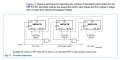
Hi all. Im sure there is a very simple solution to the problem but it eludes me. Buildling a very simple chaser sircuit with 12 leds, a cd4060 for 2hz singal to 4017s. signal goes from 4060 output pin 3 to clock pin 14 of first 4017. from there it goes from cary out pin 12 of first 4017 to pin 14 of second 4017. Both 4017 pins 13 and 15 are grounded. there are 10 leds connected to first 4017 starting at pin 3 (Q0) and ending at pin 11 (Q9). The second 4017 has leds connected to pins 3, and 2 respectavly. When i power on, leds connected to 4017 #1 Function as planned. No leds connected to 4017 #2 do anything until after 10 cycles of 4017 #1 on the 11th cycle, led on 2nd 4017 lights for 1 cycle. On the next cycle led 11 turns off and led 12 turns on, then the whole cycle repeats itself. What am i missing? Do i need gates for such a simple circuit. Been fighting this for two days. checked and recheckecke wiring and ground continuity and even replaced 4017 #2. Any help would be appreciated!
 
Last edited:

MisterBill2

Joined Jan 23, 2018
27,371
What you need to know is that with the 4017, one of the ten outputs IS ALWAYS ACTIVE! This means that for a count of twelve, then rollover, it is more compicated. Actually, quite a bit more complex. The CD4017 is not at all simple to set up for counting to twelve.
 

MrChips

Joined Oct 2, 2009
34,716
If you are trying to cascade two CD4017 Johnson counters, you have to not use Q9 of the first stage and Q0 of the next stage. The first stage will be held at state Q9 while the subsequent stages are counting. Q0 will stay high while the next counter is held in the reset state.
 
This is a common mistake people make when trying to cascade 4017s, the carry out cannot be used for this purpose. What you need is some other logic, there are many examples on the internet.
 

MrChips

Joined Oct 2, 2009
34,716
This is a common mistake people make when trying to cascade 4017s, the carry out cannot be used for this purpose. What you need is some other logic, there are many examples on the internet.
Exactly. You have to hold the first counter in a fixed state while gating the clock into the second counter.
 

Ian0

Joined Aug 7, 2020
13,123
Try a different approach. Use a 4-bit binary counter and reset it on 12 (when Q2 AND Q3 both go high). Then decode the output with a 4514 or 4515. If you use a counter with a parallel load, such as a 40193, 40161 or 40163 it's a 2-chip solution.

Or if you reset your 4060 when Qn AND Qn-1 both go high, then connect Qn, Qn-1, Qn-2 and Qn-3 to your 4514/4515, you need one fewer IC. (you can achieve the AND gate with a diode and a resistor)
 

WBahn

Joined Mar 31, 2012
32,779
Hi all. Im sure there is a very simple solution to the problem but it eludes me. Buildling a very simple chaser sircuit with 12 leds, a cd4060 for 2hz singal to 4017s. signal goes from 4060 output pin 3 to clock pin 14 of first 4017. from there it goes from cary out pin 12 of first 4017 to pin 14 of second 4017. Both 4017 pins 13 and 15 are grounded. there are 10 leds connected to first 4017 starting at pin 3 (Q0) and ending at pin 11 (Q9). The second 4017 has leds connected to pins 3, and 2 respectavly. When i power on, leds connected to 4017 #1 Function as planned. No leds connected to 4017 #2 do anything until after 10 cycles of 4017 #1 on the 11th cycle, led on 2nd 4017 lights for 1 cycle. On the next cycle led 11 turns off and led 12 turns on, then the whole cycle repeats itself. What am i missing? Do i need gates for such a simple circuit. Been fighting this for two days. checked and recheckecke wiring and ground continuity and even replaced 4017 #2. Any help would be appreciated!
A lot of it comes down to what is it that you are trying to accomplish? If you are trying to learn how to use a 4017, then using something else won't accomplish that. But if you are just trying to make some kind of LED chaser, then using a different approach may be the way to go.

Also, if all you want is a chaser for some reason, then there are LOTS of LED chaser circuits on the Internet (and some of them actually work). But if your goal is to understand how to design a chaser, that's a completely different critter.

Also, there isn't a single "simple chaser" -- lots of variations, so you need to clearly understand (and communicate to us) exactly what you want your simple chaser to do. Without that information, telling us that something functioned as planned doesn't tell us much.
 
There is an old application note (AN) IIRC from National Semiconductors, with several examples of CD4017s connected in sequence.

They were pretty well explained.

BTW show a schematic. That bla bla bla is boring. Nobody reads that.
 

Thread Starter

electrongod1

Joined Sep 8, 2018
30
Please provide a schematic of exactly how you have everything hooked up. It can be handdrawn or thrown together in Paint.
Thanks to other very helpful posts, I have eliminated the carry out idea and now moving toward using a gate idea. I will provide a drawing as soon as I update my design. Thanks for your help.
 

Thread Starter

electrongod1

Joined Sep 8, 2018
30
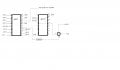
Finally here is my updated chaser circuit. Now leds 1-10 cascade as planned while led #12 stays on, On the 11th cycle, 1-10 Chase fine and after #10 lites up on its last cycle 11 and 12 alternately blink rapidly. This goes on for a few cycles and reverts to 1-10 chase while #12 stays on.Chaser.jpgs to 10-10 chasing normally while #12 Stays on. I guess im getting closer. Thanks for any help.
 
Last edited:

Thread Starter

electrongod1

Joined Sep 8, 2018
30
Really, A detailed description of a system's desired functioning is very useful toward creating the requestedoperation. AND certainly a complete schematic is required.
All im looking for here is a 12 led cascading circuit that chases in 1 second intervals. My ultimate goal is building a clock with 60 RGB leds.
 

Ian0

Joined Aug 7, 2020
13,123
The simple solution is to use a microcontroller.
No - you can do it with two 4017s. First one to provide the units and drive the anodes, second resets on 6 to provide the tens and drive the cathodes via an ULN2003. Then wire the LEDs as a matrix.
(But I'm not sure what the other two colours do)
 

MrChips

Joined Oct 2, 2009
34,716
No - you can do it with two 4017s. First one to provide the units, second resets on 6 to provide the tens. Then wire the LEDs as a matrix.
(But I'm not sure what the other two colours do)
TS wants to build a clock that has 60 LEDs.
An MCU is still the simplest solution.
 
I'm reaching out to TonyR1084 to see if he has the schematic. If he'll allow me I'll post it for you. But yes, you can step through 100 LED's. The secret is the first counter runs the LED's. The second one runs 10 transistors that provide ground to each group of 10. And it can all be handled by a single resistor since only one LED is ever lit at any given moment. Of course the 555 circuit needs its share of discrete components.
 

Ian0

Joined Aug 7, 2020
13,123
I'm reaching out to TonyR1084 to see if he has the schematic. If he'll allow me I'll post it for you. But yes, you can step through 100 LED's. The secret is the first counter runs the LED's. The second one runs 10 transistors that provide ground to each group of 10. And it can all be handled by a single resistor since only one LED is ever lit at any given moment. Of course the 555 circuit needs its share of discrete components.
Seems like we have the same circuit.
 
Top