Facebook
 Google
 GitHub
 Linkedin

Now that's going to be pretty darn cool. 
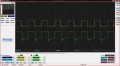
OK, it's no wonder you're seeing lots of noise. Looks like you're running digital signals without using ribbon cable, or twisted (shielded) pair with differential transceivers. You are suffering from the dreaded "crosstalk". The signals on adjacent wires are being inductively coupled, so everything has boatloads of noise on it. This is a an unhappy situation, as you will have a good bit of re-thinking to do.
If your runs are short, you might be able to get by using multi-conductor flat ribbon cable, alternating ground-signal-ground-signal-etc. If your runs are more than a foot or so, you're going to have to go to twisted pair and transceivers on either end of the cabling.
Unless they are low-speed signals.
For power/ground, you need heavy gauge wire.
[eta]
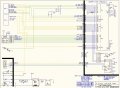
It would help to have a complete schematic of your system, and you will need to note which are the high-speed digital lines.
OK, it's no wonder you're seeing lots of noise. Looks like you're running digital signals without using ribbon cable, or twisted (shielded) pair with differential transceivers. You are suffering from the dreaded "crosstalk". The signals on adjacent wires are being inductively coupled, so everything has boatloads of noise on it. This is a an unhappy situation, as you will have a good bit of re-thinking to do.
If your runs are short, you might be able to get by using multi-conductor flat ribbon cable, alternating ground-signal-ground-signal-etc. If your runs are more than a foot or so, you're going to have to go to twisted pair and transceivers on either end of the cabling.
Unless they are low-speed signals.
For power/ground, you need heavy gauge wire.
[eta]
It would help to have a complete schematic of your system, and you will need to note which are the high-speed digital lines.
Last edited: