Temperature analysis is the way to go. The old way suggests not using the tools available.
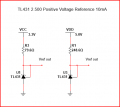
The TL431 programmable zener has a voltage divider. The TL431 2.5V Reference does not.
The temperature affects precision, with the TL431 the tolerance should be specified to determine
the best course to take.
The TL431B Below output 2.5000 V 10mA is dissipating 25.1mW power. Provided your voltage source is stable to 5.0000V
If you run at 5V 5mA Vref = 2.4968V 6.25mW R=1k 2.4968 still listed as typical voltage, works for tolerances in the specs of TL431C
This is reasonable for TL431 precision without the help of a transistor. Warm but not hot. determining best choice for an application, h
To get a negative voltage out of an op amp, you have to give it a power supply with a negative voltage.
If you choose +/-5V supply an op amp can output a negative voltage with -6mA current or less.
If I apply 380Ω load to the 10mA 2.500Vdc Reference the voltage drops from 2.500Vdc to 2.497Vdc
approximately 4mV and offset possibly less.
Hello,I need to supply My Vdd 400mA , I need to supply Vg1 and Vg2 at most 4mA
The load is a very dinamic thing we cant be sure what load my PMA5-83-2W+will create on the circuit.
I need to supply the Vdd with 12V and 400mA
What is the proper way to test the ability to Source current for the VDD.
LTspice files are attached. https://www.minicircuits.com/pdfs/PMA5-83-2W+.pdf
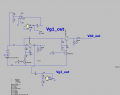
Hello, I have re-arranged the circuit and added marks(in the attached file), given Vdd output i need 400mA and 12V to supply it with.
So i just put the 12/0.4=30ohm load and i saw its going to the load.
Is there some more tests you reccomend to see if its going to work well?
Increase the load current and monitor the voltage until it drops.
That will tell you how much design margin you have.
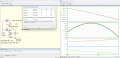
You can change the Rload2 resistor value by having it vary with time.
For example using R=31-(time*10) as the resistor R value will cause Rload2 to go from 31Ω to 1Ω during a 3s simulation time (instead of the 2ms you used).
I see no purpose for U2.
You can connect R6 directly to V1.
Just increase the value of R6 to keep its current value the same.
Hello Crutschow,The current issue is very important.
When i supply Vg1 i need -2.5V and at most 4.5mA so my PMA device needs to be 2.5/0.0045=555 ohms.
TL431 can supply much more current and if it will see less then 555ohms then it could supply more then 4.5mA and burning it.
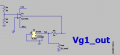
How can i prevent such situation described in the photo below.

 Facebook
 Google
 GitHub
 Linkedin