why would my signal from a piezoelectric device changes while using a voltmeter and electrometer?

Thread Starter

P. Rajagopalan

Joined Sep 19, 2017
3
When we apply a force to a piezoelectric material it produces some potential difference.

I was measuring with Keithley nanovoltmeter and Keithley electrometer 6514.

I am getting different output in both the devices when applying the same force to the piezo.

Please let me know which one is correct and why??
the change is not small and its from 10 to 100 times
 
You did not mention the nanovoltmeter model, but the input capacitance and Input Z will likely be lower. I looked at the 2182a.

Guarded measurements with the electrometer will get the input capacitance down to 2 pF of a factor of 10 doing the measurements without guarding.

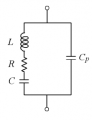
Besides that I have no idea what the equivalent circuit of your material is?
 

Externet

Joined Nov 29, 2005
2,624
A piezo element generates a very weak power. High in voltage, ultra low in current capability. Any loading measuring it will bring the voltage down considerably, as said above ^
 

wayneh

Joined Sep 9, 2010
18,087
In other words, in this application, the impedance of the meter matters because it affects the measurement of the tiny power you are trying to measure. In most day-to-day applications, the meter impedance - which is very high - does not matter.
 
I'd do a guarded and non-guarded measuremnt and see if it;s related to capacitance.

Then parallel the input capacitance with 2 (guarded) or 20 pf (unguarded) of the electrometer to equal the nanovoltmeter capacitance

In theory, the Electrometer should be a better instrument.

BUT, if your using coax cables, they have a capacitance per foot which could be swamping things.

There's a lot of stuff to watch out for. I've set up systems to measure about 2 pA. It got messy in that realm.
I did a trick to get better numbers by putting it in coulomb mode and diving by time (even that's not easy). I left out details.
 

Thread Starter

P. Rajagopalan

Joined Sep 19, 2017
3
In other words, in this application, the impedance of the meter matters because it affects the measurement of the tiny power you are trying to measure. In most day-to-day applications, the meter impedance - which is very high - does not matter.
well, the impedance of nanovoltmeter is around 10 G ohm and Electrometer has around 200 T Ohm. Both are very large values. I have read that above 10 M ohm input resistance the values do not change much as it draws very very less current in both the cases. So considering my case If I am getting 5 V peak to peak in electrometer/Voltmeter there is no point according to above theory that I'll Get 10 to 100 times less voltage unless the piezo itself offers such a High impedance which is usually not the case.

Ps: the voltmeter is always connected in parallel
 

Thread Starter

P. Rajagopalan

Joined Sep 19, 2017
3
You did not mention the nanovoltmeter model, but the input capacitance and Input Z will likely be lower. I looked at the 2182a.

Guarded measurements with the electrometer will get the input capacitance down to 2 pF of a factor of 10 doing the measurements without guarding.

Besides that I have no idea what the equivalent circuit of your material is?
upload_2017-9-20_10-39-27.png this looks like the ideal equivalent circuit of Piezo device. I have no idea about the values in my case
..
 
The difference in capacitance of the instruments are vastly different and remember that the voltage across a capacitor can't change instantaneously.

How about measuring it a scope with a compensated probe? The 1 M || 20 pf becomes 10M || (nearly zero cap) with a x10 probe.
 
Top