why is this transformer called an inductor?

MrChips

Joined Oct 2, 2009
34,829
Inductance, inductor - it's all semantics.
Same thing with resistance, resistor, capacitance, capacitor.

Every piece of metal, whether in the form of a chunk of metal, a straight wire, or a coil, has resistance, capacitance, and inductance. So is it a resistor, capacitor, or inductor?
 

WBahn

Joined Mar 31, 2012
32,887
so then it's back to the question of whether it's bro-ism that just won't die or a legit illuminati style conspiracy to maintain a mechanism of exclusivity. There isn't any "mechanism" in scientific or technical documentation for using words that are not thoroughly defined. Or in other words, you can't just use a naming convention unless it's in the dictionary to get a peer-reviewed paper published, and this same peer-review process is supposed to be required for any textbook used in a professional education setting. Or in other words, unless it's defined in a dictionary recognized by the professional education system and cited in the sources, you can't use that word. That means either there is a definition hidden away somewhere and published nowhere that google can find, or else the professional peer-review process is just missing that one and it's just an error that has persisted for two generations. either way it's not some thing to brush off, it's a serious problem.
How on Earth did someone manage to convince you of that piece of nonsense?

While lots of "dictionaries" exist, almost all or merely publications written by someone (or some group) trying to be helpful, but any "definitions" it contains are no more official than the ones in this thread.

There are official definitions for many terms, within certain contexts, such as the definitions of the SI units and units of measures derived from them. Organizations like NIST also publish official definitions of some terms and concepts. But there is nothing that requires that everyone must abide by those terms and use only those words, including in peer-reviewed papers or textbooks or education. There are plenty of times that I have wished there were.

We coined the use of the term "hallucinations" in our first publication in 2007 on concurrent coding theory to refer to seemingly legitimate messages generated spontaneously through the interaction of components of different deliberately transmitted messages and/or system noise. We used that term in a couple dozen peer-reviewed publications and others, referring to our work picked up using it. We were completely unaware of any similar use at the time, it was just something I came up with during a lunch conversation and that we decided fit. We coined a number of similar terms, such as a message being autohallucinogenic if the necessary elements to produce a hallucination were contained within a single legitimate message.

When the term "hallucinations" appeared in the mainstream related to LLMs a few years back, I couldn't help but wonder if someone that had seen our work (a distinct possibility since my colleague was heavily involved in the field of AI at one time and still dabbles in it) and adopted it. But it would also be quite reasonable for someone to come up with it on their own for the same reason I did. Turns out, the use of hallucination to describe results that appear reasonable but are not based on any actual information goes back at least to the 1980s and computer vision.
 

vandveuser16776

Joined Feb 21, 2026
230
I believe that the education system should pace up and is lagging behind, but not seeing so much "conspiracy" EVERYWHERE like here " illuminati conspiracy" or in common-base amp. BTW i just posted a link to a video that was releases a few days back. Thought would be relevant and informative in here as well
 

vandveuser16776

Joined Feb 21, 2026
230
You are misunderstanding how a transformer works.
A transformer does not have "inductors".
It has one inductor with one magnetic field that can have a different inductance values depending upon the relative value of the primary and secondary winding turns.
Why is that difficult for you to understand?
Can that be said about 3-phase transformers, where there are 3 primaries? There would be at least 3 coupled inductors by my understanding
 

Danko

Joined Nov 22, 2017
2,169
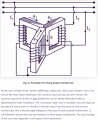
but here in this picture is an example of what is unmistakably a transformer, which depending on windings will result in a different or similar voltage, yet the book describes it not as a transformer but an inductor. Even in classes I've taken the instructor is empty handed with reasonable answers that can apply in a logical sense with this question.
What you show us in post #1, is not transformer, but is multi-windings power inductor (see attachment).
 

Attachments

Last edited:

Thread Starter

tsmspace

Joined Mar 16, 2026
110
You are misunderstanding how a transformer works.
A transformer does not have "inductors".
It has one inductor with one magnetic field that can have a different inductance values depending upon the relative value of the primary and secondary winding turns.
Why is that difficult for you to understand?
because each coil of wire in a transformer is an inductor.
 

MisterBill2

Joined Jan 23, 2018
27,587
The purpose of the core is to conduct the magnetic flux from one side of the airgap to the other.
It is probably rather difficult to magnetize air. And while certainly air is very useful, a low frequency transformer without a ferromagnetic core will not be very efficient. The most efficient transformers that I have used did not have air gaps in any part of the core. Some devices do use air gaps to avoid magnetic saturation of the core. Usually that is to avoid the distortion that it would cause. Itcan also be used to adjust the inductance, for tuning resonant circuits. I have seen an old electric organ that used adjustable inductance transformers as the frequency determining elements. It needed to be re-tuned yearly, and whenever it was moved. And every time a tube was replaced.

And, addressing the random words thrown around recently, "INDUCTANCE" is the measurement unit conveniently used to describe the property of actual, physical, INDUCTORS. We really do need to pay attention to the specific meanings of words. AND, CERTAINLY, many words DO HAVE SPECIFIC MEANINGS. (I an fully aware that this assertion horribly offends some folks.)

Way to often, in other areas and writings, but not often on this site, I come across writing with totally incorrect words used, for the simple reason that the writer has no concept of what they are presenting. Sometimes they just "do not look right." Other times it takesa bit of "stop and think" to realize that something does not make any sense.
 
Last edited:

Thread Starter

tsmspace

Joined Mar 16, 2026
110
I've looked at everyone's responses. I also think i remember some things and here is what I think I understand:

it is a transformer in the sense that you cannot say it is not a transformer, because it is one. The components official name is also not "inductor", calling it "inductor" is short-hand. The correct term for the component is "power inductor". Not all "power inductors" have a single coil/winding/conductor. The transformer type "power inductor" is specifically different from the "power transformer" type transformer. A "power transformer" is a very specific kind of transformer which is used to couple circuits to or within the electrical grid. Some transformers are for audio isolation and impedance matching. And some transformers are used as "power inductors" in power supply circuits.

I think I recall a conversation I had many years ago that one of the reasons why these transformers are called "power inductors" is that "power transformer" was already taken by the time they were "invented" for switching power supplies. This was probably just speculation at the time, and no sources were cited or available.

So, the component IS a transformer, but because it doubles as the power inductor in addition to its job as a power coupler, it is easier to just label them all with the same variable. It is not correct to say it is not a transformer, but it is correct to say that it is a specific kind of transformer called "power inductor".

The "power inductor" does not store energy because "power transformers" cannot. The reason that a "power transformer" does not store energy is that it is continuously connected to a current that alternates constantly to equal positive and negative voltages slower than the transformer is able to discharge this voltage. The "power inductor" stores current because the circuit it is used in, and the engineering that makes the component different is to improve the attributes that benefit this role. A "power transformer" used in a circuit as a "power inductor" would still work, although not as efficiently. The circuit switches the "power inductor" charge on and off, but while off the discharge path is closed in the direction of charge and current is only able to flow in the same direction it flowed while the charge was on, which is why the "power inductor" stores a charge rather than simply coupling a current. There is nothing in the physical design of the "power inductor" that makes it able to do this while a "power transformer" cannot, because both components would function similarly if used in the circuit, however a "power inductor" is more specifically designed for the task, and therefore performs better.

a "power inductor" is a single discrete component, although it may be composed of parts which may be a core, an inductor, another inductor, etc.
 

MrChips

Joined Oct 2, 2009
34,829
Maybe you should take this up with the IEC.

And while you're at it, you can ask them their position on Italy's prime minister's request to change the unit of electrical potential to "volta".
 

crutschow

Joined Mar 14, 2008
38,530
because each coil of wire in a transformer is an inductor.
Of course.
But that inductance is negligible compared to the inductance caused by a magnetic core.
It has nothing to do with the subject of this thread.
current is only able to flow in the same direction it flowed while the charge was on, which is why the "power inductor" stores a charge rather than simply coupling a current.
Where do you come up with that strange idea?
A capacitor stores a charge,
An inductor can "store" a current, but not charge.
For someone who seems rather pedantic about the definition of an inductor vs. a transformer, you certainly are imprecise about some of your other definitions. :rolleyes:

But at this point you seem to be acting more or less as a troll about the subject, so I will leave this Rabbit Hole to you, and others who may want to continue.
 

Thread Starter

tsmspace

Joined Mar 16, 2026
110
Maybe you should take this up with the IEC.

And while you're at it, you can ask them their position on Italy's prime minister's request to change the unit of electrical potential to "volta".
hashtag pluto's a planet . also, "dwarf planet" means "small/miniature planet" , not "not a planet"
 

Thread Starter

tsmspace

Joined Mar 16, 2026
110
Of course.
But that inductance is negligible compared to the inductance caused by a magnetic core.
It has nothing to do with the subject of this thread.
Where do you come up with that strange idea?
A capacitor stores a charge,
An inductor can "store" a current, but not charge.
For someone who seems rather pedantic about the definition of an inductor vs. a transformer, you certainly are imprecise about some of your other definitions. :rolleyes:

But at this point you seem to be acting more or less as a troll about the subject, so I will leave this Rabbit Hole to you, and others who may want to continue.
does charge only mean voltage? really an inductor doesn't store the current right? it stores a magnetic field, which it converts back to electrical current right?
 

crutschow

Joined Mar 14, 2008
38,530
does charge only mean voltage?
Stored charge on a capacitor causes a voltage on the capacitor terminals.
The only thing it has to do with current is that current is a moving charge.
an inductor doesn't store the current right? it stores a magnetic field, which it converts back to electrical current right?
Not really.
The current in an inductor generates the magnetic field which stores the magnetic energy that is proportional to the current squared and the inductance.
No current, no field.
To change the field, you must change the value of the current.
You can't "store" a magnetic field without having moving charges (current).
The stored magnetic field of a permanent magnet is generated by the aligned spin/movement of the electrons around the atoms in ferromagnetic materials.

But note that the current-induced magnetic field in a transformer is not stored energy, but is simply used to transfer energy from the primary to the secondary windings.
If you look at the direction of the current in a transformer you will see that the secondary load current goes in opposite direction from the primary current, basically cancelling the field from the primary.
The only energy stored in an (ideal) transformer's magnetic field is from the magnetizing current, not the load current.
 
Last edited:

nsaspook

Joined Aug 27, 2009
16,330
does charge only mean voltage? really an inductor doesn't store the current right? it stores a magnetic field, which it converts back to electrical current right?
Sure, it stores electrical energy in the form of a magnetic field (part of the single EM field). Individual electrons don't carry electrical energy in the circuit.
 

vandveuser16776

Joined Feb 21, 2026
230
I have lost the train of communication but the #1 post still needs to provide context. As one member mentioned, in flyback topology, the main energy storage is the air gap. You look at the thing and think" hmm, it is one bundle, so must be one thing" but in this case, the inductors are really separated, which makes them no-transformer. Think of it as a radio station and your pocket radio's loopstick antenna. Do you see the two as two parts of a transformer? Just because the wires are stacked up, it does not make them one thing. I have not seen the question nor the answer you gave, so it is ALL assumptions before seeing the test paper. You can show the actual test question or ask other professors, but I have a feeling they all are going to disappoint you. Again , context matters! What was the topic? What was the objective the lesson?
 
Top