I am good in 8/32bits Microchip MCU's programming and assume to use AI and Machine Learning. But I may use STM32WB15CC (320k/48k) in WLCSP 49 3.3x3.4x0.6 P 0.4 mm with Bosch BMG250 (2.5 x 3.0mm) Low noise, low power triaxial gyroscope.
I am good in 8/32bits Microchip MCU's programming and assume to use AI and Machine Learning. But I may use STM32WB15CC (320k/48k) in WLCSP 49 3.3x3.4x0.6 P 0.4 mm with Bosch BMG250 (2.5 x 3.0mm) Low noise, low power triaxial gyroscope.
Good luck finding the BMG250. They are obsolete by Bosch. I've used several of their IMU products but it seems they are leaving the market.
My latest IMU project used a PIC32MK with the BNO086 which is a former Bosch product now made by CEVA. It works very nicely but the device firmware is not directly register based. It uses a middle-ware level for most application functions but does have a simplified UART interface.
I did the same a few years ago with Arduino Pro Mini ATMega328P 3.3V and 6DOF MPU-6050 3 Axis Gyro With Accelerometer Sensor Module For Arduino. See MPU6050 Orientation Tracking – 3D Visualization.
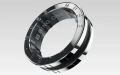
That expensive ring might track your health but do nothing about it. Then you die.
My body tracks my health then my medications make suitable adjustments to my health.
When I exercise, my heart rate automatically speeds up. When I rest, my heart rate automatically slows down.
I did the same a few years ago with Arduino Pro Mini ATMega328P 3.3V and 6DOF MPU-6050 3 Axis Gyro With Accelerometer Sensor Module For Arduino. See MPU6050 Orientation Tracking – 3D Visualization.
Great! Experience makes it easier. What exactly do you want to build? For a practical device a good set of hardware/software requirements is a must have.
Accelerometers measure acceleration. As such, you might expect an accelerometer to measure the acceleration of the sensor relative to the space around it, and that if the sensor is standing still it should read 0g. This is not entirely accurate. On the earth’s surface an accelerometer that’s not moving will register a reading of 1G (9.81m/s), straight upwards. So what’s going on here? Accelerometers work by measuring the movements of small internal structures caused by accelerating the sensor in a particular direction. When an accelerometer is stationary on earth’s surface, the sensing part of the accelerometer (as with everything else) wants to fall at 1G towards the centre of the earth. However, it is being held up by the casing of the accelerometer by an equivalent 1G in the other direction. Thus, the equivalent measured acceleration is 1G away from the ground. The only time an accelerometer will register 0G in all directions is if it is in freefall in a vacuum.
That expensive ring might track your health but do nothing about it. Then you die.
My body tracks my health then my medications make suitable adjustments to my health.
When I exercise, my heart rate automatically speeds up. When I rest, my heart rate automatically slows down.
Great! Experience makes it easier. What exactly do you want to build? For a practical device a good set of hardware/software requirements is a must have.
Building a ring sized unit from scratch (chip level PCB design and programming) would be a lot more fun.
I am not a beginner. Hardware and software design is no problem for me.
For example, working prototype of GPS/LoRa Micro Cat Tracker embedded in a cat collar (PCB width 12 mm). The problem was just that build in SONY GPS in S76G chip had not sufficient sensitivity to process GPS wire dipole antenna signal. Although I designed and built the 40 dB GPS amplifier, I am now testing u-Blox MIA-M10Q GPS Receiver controlled by ATSAMR34 MCU/LoRa.
I am not a beginner. Hardware and software design is no problem for me.
For example, working prototype of GPS/LoRa Micro Cat Tracker embedded in a cat collar (PCB width 12 mm). The problem was just that build in SONY GPS in S76G chip had not sufficient sensitivity to process GPS wire dipole antenna signal. Although I designed and built the 40 dB GPS amplifier, I am now testing u-Blox MIA-M10Q GPS Receiver controlled by ATSAMR34 MCU/LoRa.
OK. We both can handle the job, so what's the actual question about the ring design as the hardware and software design for fall-detection functionality (I've already investigated several methods) are easy. The practical integration into a ring sized practical device seems to be the true issue.
OK. We both can handle the job, so what's the actual question about the ring design as the hardware and software design for fall-detection functionality (I've already investigated several methods) are easy. The practical integration into a ring sized practical device seems to be the true issue.
Pretty close to what I thought. Standard SMD stuff in a ring sized and shaped package. Knowing that doesn't help much to integrate the parts into a usable product.

 Facebook
 Google
 GitHub
 Linkedin




 .
.