Where does my tankless hot water heater get its power?

cmartinez

Joined Jan 17, 2007
8,877
I have to agree with others that for a tankless go gas unless you have newer home with a 200+ amp service feeding it.

I've met too many people now who went tankless electric and were less than thrilled with the real life working capacity they produced. Fair warm shower for a man is too cold to not get an ear full from the wife every time they use it and if anyone is taking a shower and any other hot water drain starts up like a wash machine, dishwasher or even sink whomever's in the shower gets the cold end of the stick for it.

Same with even doing a good hot bath given most electric tankless units can't keep up with more than 2 - 3 GPM and hold any decent temperature which again if the wife can't have her hot bath and fill the tub in less than 5 minutes to damn near boiling hot you're gonna hear about it.
I have a friend in Tx who bought a tankless electric water heater... same problem with its lack of capacity to handle a real-life shower.... he bought another one and plugged it in series with the first one... problem solved... though I haven't asked him about his electricity bill yet... :confused:
 

tcmtech

Joined Nov 4, 2013
2,867
I have a friend in Tx who bought a tankless electric water heater... same problem with its lack of capacity to handle a real-life shower.... he bought another one and plugged it in series with the first one... problem solved... though I haven't asked him about his electricity bill yet... :confused:

WOW! And you guys have a good ground temperatures of ~70F or better in most areas. Around here the #1 problem with tankless heaters is our 38 - 45F seasonal ground temps. It's just too big of temperature differential for them to work well with at any volume of flow above 1 - 2 GPM unless the unit is of unusually large capacity.

The thing is I don't buy the claimed energy savings sell point simply because I have a conventional electric water heater and it can sit for 4 - 5 days before loosing too much heat to be a problem. Standby wattage consumption is not high enough to cost justify the suposed savings of what a tankless costs above and beyond a normal water heater.

When I put my new water heater in a few years ago it cost around $350 and it was one of the better units whereas the tankless unit that would have the best chance of supplying the water volumes I would use would have cost $800 - $900 and took a dedicated power feed larger than the old house has for itself, 150 amp for the heater alone Vs 100 for the house, which would have cost me a few hundred more to install even with doing all the work myself. :(
 
Last edited:

wayneh

Joined Sep 9, 2010
18,180
Around here the #1 problem with tankless heaters is our 38 - 45F seasonal ground temps. It's just too big of temperature differential for them to work well with at any volume of flow above 1 - 2 GPM unless the unit is of unusually large capacity.
Huh, I never thought these things were meant to do the whole job. I thought the benefits were that 1) they allowed you to turn down your water heater temp a bit, to reduce losses there, 2) they increase the effective capacity of your water heating system and 3) they give you the benefit of immediate and regulated hot water at the shower. I'd like that last one - my shower is 2 floors up and diagonally opposite my water heater. It takes several minutes running before I can get in.
 

GopherT

Joined Nov 23, 2012
8,009
Huh, I never thought these things were meant to do the whole job. I thought the benefits were that 1) they allowed you to turn down your water heater temp a bit, to reduce losses there, 2) they increase the effective capacity of your water heating system and 3) they give you the benefit of immediate and regulated hot water at the shower. I'd like that last one - my shower is 2 floors up and diagonally opposite my water heater. It takes several minutes running before I can get in.
Nope, the big companies advertise them as on-demand hot water and a complete replacement for a tank. My family members in Europe all converted to the Bosch units in the early 2000s and they love them and only have one (where the old tank stood).

Ground temps (and therefore, cold feed water temp) is near 15C, so heating to 40C for their showers is no problem. I could easily see colder ground temps causing these units to get overloaded.
 

cmartinez

Joined Jan 17, 2007
8,877
WOW! And you guys have a good ground temperatures of ~70F or better in most areas. Around here the #1 problem with tankless heaters is our 38 - 45F seasonal ground temps. It's just too big of temperature differential for them to work well with at any volume of flow above 1 - 2 GPM unless the unit is of unusually large capacity.

The thing is I don't buy the claimed energy savings sell point simply because I have a conventional electric water heater and it can sit for 4 - 5 days before loosing too much heat to be a problem. Standby wattage consumption is not high enough to cost justify the suposed savings of what a tankless costs above and beyond a normal water heater.

When I put my new water heater in a few years ago it cost around $350 and it was one of the better units whereas the tankless unit that would have the best chance of supplying the water volumes I would use would have cost $800 - $900 and took a dedicated power feed larger than the old house has for itself, 150 amp for the heater alone Vs 100 for the house, which would have cost me a few hundred more to install even with doing all the work myself. :(
Just talked to my friend again. He says that he used to have an electric tank unit before replacing it with a couple of electric tankless connected in series ... he says that his monthly bill went down by at least $50.00 dlls
 

wayneh

Joined Sep 9, 2010
18,180
Nope, the big companies advertise them as on-demand hot water and a complete replacement for a tank.
I guess they've realized that the only people that can justify the purchase are those choosing an alternative system instead of an add-on nicety.
 

tcmtech

Joined Nov 4, 2013
2,867
Just talked to my friend again. He says that he used to have an electric tank unit before replacing it with a couple of electric tankless connected in series ... he says that his monthly bill went down by at least $50.00 dlls
It's all relative and rather subjective given hot water usage is not a single constant one size fits all usages equation. Neither is power usage and cost per KWH.

I've helped people change out old water heater with new units of both gas and electric and for many to old units had so little insulation that the sides were warm to the touch in normal operation whereas the new units, like mine, can be set at maximum temperature and still be cool to the touch on the outside. For people with old inefficient water heaters the new ones made for noticeable bill reductions.

A few years ago I went from a propane to electric and didn't see enough of a monthly power consumption addition to be worth it staying in my mind. Maybe $15 - $20 at worst but then I only pay ~ 13 - 14 cents a KWH and don't do 3 - 4 burning hot showers and 1 - 2 loads of laundry plus dishes every day either. As is my normal electric bill runs between $90 and $120 depending on season and amount of shop use. I consider that pretty reasonable even with an electric water heater, stove and dryer plus ~2 KW of shop lights, welder, 105 amp plasma cutter and a 15 HP air compressor with 5 HP backup that all get used pretty regularly. :cool:
 

debe

Joined Sep 21, 2010
1,419
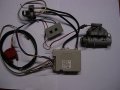
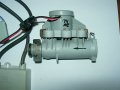
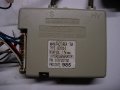
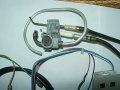
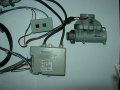
I know this is a fairly old thread, but I recently found one of these Bosch HW systems in the local scrap yard & salvaged the electronics more for curiosity. Yes if you run water through the hydro generator it does indeed fire up the electronics. Heres some pictures of the salvaged components.BOSCH.1.JPG BOSCH.2.JPG BOSCH.3.JPG BOSCH.4.JPG BOSCH.5.JPG
 
Top