Facebook
 Google
 GitHub
 Linkedin
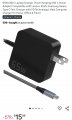
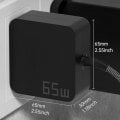
I'm trying to design a cheap, simple power supply. It's for an educational workshop I'll be leading later this year on DIY synthesizers for beginners. The power supply should take a single power source and then step down to produce three different voltage levels: +12V, -12V, and +5V. For the initial power supply, I'm planning to use a wall charger or power bank with a USB-C PD trigger. Most USB triggers can be easily configured to output specific voltage levels ie. 5V/9V/12V/15V/20V, and with EPR in USB PD 3.1/3.2, available voltage increased to 28V/36V/48V, provided the charger can provide the needed power (100W-240W). I'm trying to figure out if my circuit will work with a standard 45W charger providing 20V, or if it'll require a 100W charger for 28V.
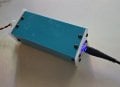
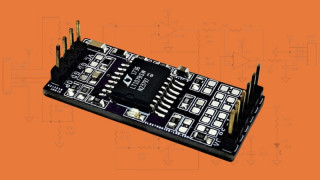
In my prototype, I'm using dual TPS5430 step down converts to derive +12V and -12V from the USB trigger. I found a cheap premade board called XL5430 that does this, and it works fine (tested with a multimeter, I was typically reading about +11.9V and -12.1V which is less than ideal but probably good enough!). I'm also using a MP1584EN buck converter to derive the +5V signal. I'm not sure if the signal will be cleaner/better if I wire the MP1584EN up to the USB trigger directly, or if it would be better to wire it to the +12V output of the XL5430. I'm guessing than the latter would risk introducing more noise/ripple, but it might be less prone to overheating.
The real question I have is: will this circuit be more reliable if the USB trigger is configured for 20V, 28V, or something else?
It's important that this circuit is A) easy to build for beginners, B) low-cost, and C) able to provide stable voltage, especially on the +12V and -12V rails.
According to the datasheets, the MP1584EN's input voltage range is 4.5V to 28V, and the TPS5430's input voltage range is 5.5V to 36V, however the description for the XL5430 states that it's input voltage range is 6V to 28V. I was also considering potentially replacing the MP1584EN with a different component such as the LM2596 which has an input voltage range up to 40V.
Thanks for and clarity you can bring to this subject!
In my prototype, I'm using dual TPS5430 step down converts to derive +12V and -12V from the USB trigger. I found a cheap premade board called XL5430 that does this, and it works fine (tested with a multimeter, I was typically reading about +11.9V and -12.1V which is less than ideal but probably good enough!). I'm also using a MP1584EN buck converter to derive the +5V signal. I'm not sure if the signal will be cleaner/better if I wire the MP1584EN up to the USB trigger directly, or if it would be better to wire it to the +12V output of the XL5430. I'm guessing than the latter would risk introducing more noise/ripple, but it might be less prone to overheating.
The real question I have is: will this circuit be more reliable if the USB trigger is configured for 20V, 28V, or something else?
It's important that this circuit is A) easy to build for beginners, B) low-cost, and C) able to provide stable voltage, especially on the +12V and -12V rails.
According to the datasheets, the MP1584EN's input voltage range is 4.5V to 28V, and the TPS5430's input voltage range is 5.5V to 36V, however the description for the XL5430 states that it's input voltage range is 6V to 28V. I was also considering potentially replacing the MP1584EN with a different component such as the LM2596 which has an input voltage range up to 40V.
Thanks for and clarity you can bring to this subject!