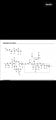
What kind of active cuircuit can be this powerful ?

Thread Starter

Zorrow333

Joined Apr 15, 2025
28
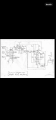
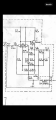
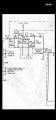
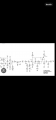
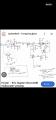
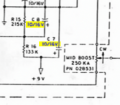
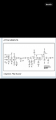
This cuircuit I am told can voltage boost. I have no Idea myself. The original cuircuit that is attached first seems to have been kind of covered up. I was told it did not make sence. The others are people trying to understand it. Its supposed to be able to voltage boost 9 volts to 72 volts. Any help would be appreciated. The first cuircuit I cut in 2 pics after the original to see it better. In 3 places it sats + 10/16 v along with 3 capacitors. That would be interesting to know what it means.
 

Attachments

Papabravo

Joined Feb 24, 2006
22,058
There is one, and only one immutable rule of such circuits. Power out will ALWAYS be less than power in. In some cases, it will be much less. Almost anything else you can imagine should be possible. I don't know why this would surprise you.
 

panic mode

Joined Oct 10, 2011
4,864
should highlight detail you find confusing, it saves time trying to answer.
those are polarized capacitors and highlighted marking means 10uF/ 16V.
it does not mean that voltage there is 16V, it means that capacitor is rated to operate as expected in circuits up to 16V.
not sure where you saw "72V". lots of circuits (all circuits) used in guitar effects use distortion. common way to introduce distortion is clipping. clipping occurs when signal is amplified, but some nonlinear circuit (diode, Schmidt trigger etc) or limited supply voltage are at work. and please try posting better (much better) images. those are next to unreadable.


1744847574652.png
 
Last edited:

Thread Starter

Zorrow333

Joined Apr 15, 2025
28
should highlight detail you find confusing, it saves time trying to answer.
those are polarized capacitors and highlighted marking means 10uF/ 16V.
it does not mean that voltage there is 16V, it means that capacitor is rated to operate as expected in circuits up to 16V.
not sure where you saw "72V". lots of circuits (all circuits) used in guitar effects use distortion. common way to introduce distortion is clipping. clipping occurs when signal is amplified, but some nonlinear circuit (diode, Schmidt trigger etc) or limited supply voltage are at work. and please try posting better (much better) images. those are next to unreadable.


View attachment 347259
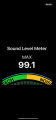
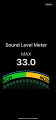
Thank you sir, that was just an answer like that I was looking for. Thank you indead. Not sure you can trust this cuircuit diagram However as others have counted on it and found other Numbers. There is got instance a reference to 1n on the other diagrams which is a lot lower on this one but there is a whole lot more differences in the interpretations of this active cuircuite. See below. And when I once measured 99,1 decibel with this guitar and 33 decibel with another guitar I got really curious why the difference was so extremely High. Thanks
 

Attachments

Thread Starter

Zorrow333

Joined Apr 15, 2025
28
If you want to see a simple circuit that increase voltage, look up Joule Thief.
Thank you for your advice. I am not really interested in that just find out why this guitar is so loud. It was just something that interested me. But Thank you for your advice.
 

Thread Starter

Zorrow333

Joined Apr 15, 2025
28
There is one, and only one immutable rule of such circuits. Power out will ALWAYS be less than power in. In some cases, it will be much less. Almost anything else you can imagine should be possible. I don't know why this would surprise you.
Because some say power out is 72 volt while power in is 9 volt. Or its coming from a 9 volt battery. I am not good in this thats why I asked for some help to analyse the cuircuit. When I get 99, 1 decibel with this guitar and 33 decibel with a normal electric guitar at the exact same settings on the amp I got a bit confused. But maybe thats whats to be expert ed from an all active guitar with active electrinics and 25 DB boost vs a normal passive Humbucker guitar
 

Thread Starter

Zorrow333

Joined Apr 15, 2025
28
should highlight detail you find confusing, it saves time trying to answer.
those are polarized capacitors and highlighted marking means 10uF/ 16V.
it does not mean that voltage there is 16V, it means that capacitor is rated to operate as expected in circuits up to 16V.
not sure where you saw "72V". lots of circuits (all circuits) used in guitar effects use distortion. common way to introduce distortion is clipping. clipping occurs when signal is amplified, but some nonlinear circuit (diode, Schmidt trigger etc) or limited supply voltage are at work. and please try posting better (much better) images. those are next to unreadable.


View attachment 347259
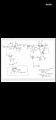
Here is a better schematics and believe me those from Fender are not possible to find in better resolution other wise I would off course had sent them as clear as possible. This one has a IN5817 diod which can handle 20 volt. So I would guess they would put it there for a voltage doubling of 9 volts.
 

Attachments

Papabravo

Joined Feb 24, 2006
22,058
Some basic units of measurement. Power is measured in watts, not volts. You can compute power in different ways, but they are equivalent. Power is the product of voltage and current. Power does not come from the circuitry of an amplifier it comes from the power supply to the amplifier. Big amplifiers require big power supplies.
 

Thread Starter

Zorrow333

Joined Apr 15, 2025
28
Some basic units of measurement. Power is measured in watts, not volts. You can compute power in different ways, but they are equivalent. Power is the product of voltage and current. Power does not come from the circuitry of an amplifier it comes from the power supply to the amplifier. Big amplifiers require big power supplies.
Thank you.
 

Ya’akov

Joined Jan 27, 2019
10,226
Because some say power out is 72 volt while power in is 9 volt. Or its coming from a 9 volt battery. I am not good in this thats why I asked for some help to analyse the cuircuit. When I get 99, 1 decibel with this guitar and 33 decibel with a normal electric guitar at the exact same settings on the amp I got a bit confused. But maybe thats whats to be expert ed from an all active guitar with active electrinics and 25 DB boost vs a normal passive Humbucker guitar
Welcome to AAC.

This may seem to be picking at nits but please trust me for a moment—it is not.

The word you are using—power—means something different than you are using it for. While a lot of times in language such a complain is "mere semantics", in this case it is semantically critical.

Voitage
is not a unit of power. Power is the product of voltage (V) and current measured in amps (A). Very roughly, and not to be relied on except for a vague conceptual explanation, voltage is analogous to pressure and current is analogous to flow.

Power is measured in watts (W) and is the product of the two:

\[ W_{\mathsf{watts}}=V_{\mathsf{volts}} \times A_{\mathsf{amps}} \]
A feature of electrical circuits is that by various means—minus ever-present losses—we can trade off between V and A. So if I have 1V at 1A (which is 1W), I can adjust them so that I have 2V at 0.5A—also 1W. Or, .5V at 2A, and so on. All of these do incur a loss penalty so you will lose a little (or more, depending on how you are converting) of the 1W of power. You can think of the cost as an exchange rate, like currency. If $1.00USD is worth €.89EUR you will find you have less than that once you try to convert USD → EUR, and vice versa.

So, it is no surprise to see 9V becoming 72V because it is not power that is changing—the power remains the same, and the useful power reduces slightly, trading current for voltage.
 

Ya’akov

Joined Jan 27, 2019
10,226
I'll add one thing: the power provided by whatever is powering the circuit is where any additional energy needed is coming from. So an amplifier can increase the power provided by a small signal, but not more than the total input of power to the system.
 

BobTPH

Joined Jun 5, 2013
11,463
Just for kicks, what do you think would happen if you put 72V into the input of your guitar amp?

I suspect a decimal was lost somewhere.

Edited to add: 7.2V is just what you would expect from an amp powered by 9V. It is also what you get when 400mV is amplified by 25db. And 400mV is about what an unamplified guitar puts out.
 
Last edited:

Thread Starter

Zorrow333

Joined Apr 15, 2025
28
Welcome to AAC.

This may seem to be picking at nits but please trust me for a moment—it is not.

The word you are using—power—means something different than you are using it for. While a lot of times in language such a complain is "mere semantics", in this case it is semantically critical.

Voitage
is not a unit of power. Power is the product of voltage (V) and current measured in amps (A). Very roughly, and not to be relied on except for a vague conceptual explanation, voltage is analogous to pressure and current is analogous to flow.

Power is measured in watts (W) and is the product of the two:

\[ W_{\mathsf{watts}}=V_{\mathsf{volts}} \times A_{\mathsf{amps}} \]
A feature of electrical circuits is that by various means—minus ever-present losses—we can trade off between V and A. So if I have 1V at 1A (which is 1W), I can adjust them so that I have 2V at 0.5A—also 1W. Or, .5V at 2A, and so on. All of these do incur a loss penalty so you will lose a little (or more, depending on how you are converting) of the 1W of power. You can think of the cost as an exchange rate, like currency. If $1.00USD is worth €.89EUR you will find you have less than that once you try to convert USD → EUR, and vice versa.

So, it is no surprise to see 9V becoming 72V because it is not power that is changing—the power remains the same, and the useful power reduces slightly, trading current for voltage.
Thank you very much for your explanation. I see its been a long time since I did my Psysics tests. And as you Said this is not merely semantics. I was trying to understand something which I thought was very simple not thinking of all variables behind them.
 

Thread Starter

Zorrow333

Joined Apr 15, 2025
28
Just for kicks, what do you think would happen if you put 72V into the input of your guitar amp?

I suspect a decimal was lost somewhere.

Edited to add: 7.2V is just what you would expect from an amp powered by 9V. It is also what you get when 400mV is amplified by 25db. And 400mV is about what an unamplified guitar puts out.
No in this case it was 9 volt coming in and it would somehow voltage boost inside the cuircuit among transistors and capacitors so it was in fact 72 volt.
 
Top