What Frequency Counter Should I Buy?

joeqsmith

Joined Oct 15, 2016
63

MrChips

Joined Oct 2, 2009
34,807
As Ron says, make a list of all you features you are looking for in a universal counter/frequency counter.
Everyone has different needs.
I am a HAM and for RF detection I use an RF spectrum analyzer.
The only time I need an accurate frequency counter is when I am calibrating a 32768Hz or 60Hz oscillator for a real-time clock.
 

jpanhalt

Joined Jan 18, 2008
11,087
I know you want to save me money, but I want a frequency counter.

Help me, don't hinder me.

And I have an oscope.
I want an Cessna A37, but never got one. Sad.

I have a very old Racal-Dana 1992 counter, old, but it works. Not much difference between that and my much newer Rigol frequency generator with counter. However, if you really just need an affordable frequency counter look at the Keysight 53230A (https://www.keysight.com/en/pd-1893...digits-s-20-ps?nid=-33609.959902&cc=US&lc=engf ). It is probably decent for a beginner.
 

shteii01

Joined Feb 19, 2010
4,644
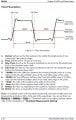
Rigol MSO1000Z 260 page manual.
This shows: period, frequency, time on, time off, duty cycle.
There are pulse stuff on next page and counter stuff a few pages later.


rigol.jpg
 

eetech00

Joined Jun 8, 2013
4,705
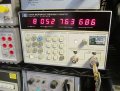
I don't know what a long timer would be to you but my counter can easily read periods in the minutes. Funny thing is a few years ago, I saw a several of these counters get tossed out. They were free and still there were very few takers. My guess, people just wanted new equipment.

Sensitivity is 25 mV rms for DC -40MHz and 50mV for 40MHz to 100MHz. The higher frequency input's sensitivity is 15mV for 5MHz to 512MHz and 20mV for 90MHz to 1.3GHz. These numbers are conservative. Attached, I measured the threshold where the counter would just start to read at 100 and 1000MHz. Then again, the noise floor of my scopes are in this range..
i'm looking for millihertz performance...

eT
 

Reloadron

Joined Jan 15, 2015
7,887
i'm looking for millihertz performance...

eT
What exactly do you mean by milli-hertz performance? Does that mean you want to accurately measure the period of signals as slow as 0.001 Hz which is 1,000 seconds in period? Earlier you mentioned audio which is about 20 Hz to 20 KHz now you mention milli-hertz? You need to get specific with what you expect the counter to measure. I want to measure frequencies in the audio range of .... I want to measure very slow AC signal periods down in the range of... The problem here is you don't know what you want to measure. How about DC to Light, would that cover it?

Since you have a scope you should understand DC (Direct) coupling of an input verse AC coupling and when to use each. Some counters suggest using the period mode for signals below a certain frequency and this is where MrChips suggested:
What he means is "Have you tried the input coupling set to DC and not AC?"

Any frequency lower than 10Hz you need to measure period, not frequency.

Any frequency lower than 10Hz you need to measure period, not frequency.
I have used counters where any frequency below 50 Hz the period mode and DC coupling was suggested. You need to do some basic reading on frequency counters and how they work, then make a list like I suggested earlier listing features you want/ need and nice to have. You have mentioned RF, Audio and now milli-hertz? So you want a counter to measure DC to light with any wave shape? Nobody can help you or make suggestions unless you can at least provide the basics of what you want the counter to do and its basic applications you have in mind.

Ron
 

eetech00

Joined Jun 8, 2013
4,705
What exactly do you mean by milli-hertz performance? Does that mean you want to accurately measure the period of signals as slow as 0.001 Hz which is 1,000 seconds in period? Earlier you mentioned audio which is about 20 Hz to 20 KHz now you mention milli-hertz? You need to get specific with what you expect the counter to measure. I want to measure frequencies in the audio range of .... I want to measure very slow AC signal periods down in the range of... The problem here is you don't know what you want to measure. How about DC to Light, would that cover it?

Since you have a scope you should understand DC (Direct) coupling of an input verse AC coupling and when to use each. Some counters suggest using the period mode for signals below a certain frequency and this is where MrChips suggested:


I have used counters where any frequency below 50 Hz the period mode and DC coupling was suggested. You need to do some basic reading on frequency counters and how they work, then make a list like I suggested earlier listing features you want/ need and nice to have. You have mentioned RF, Audio and now milli-hertz? So you want a counter to measure DC to light with any wave shape? Nobody can help you or make suggestions unless you can at least provide the basics of what you want the counter to do and its basic applications you have in mind.

Ron
Chill out Ron...:D

I only made the statement you quoted.
I don't know about all that other stuff...:confused:

But yes...I want to use a counter (instead of a stopwatch) to read the period of....say...a...15 second astable timer.
I've seen a few counters with a lower frequency range of 0.01 Hz

eT
 

Reloadron

Joined Jan 15, 2015
7,887
OK, I took a chill pill with my morning meds. :)

Yeah, so .01 Hz gives us 100 seconds and a period of 15 seconds would give us a frequency of .0666Hz which is a really slow signal and not something we use a counter to measure, not in the frequency or period modes anyway. So we look at a two channel measurement where channel 1 for example is the start pulse and channel two is the stop pulse. Channel 1 opens a gate allowing the counter to count its internal time base and channel 2 closes the gate on the stop pulse. The triggering is setup similar to a scope. The Fluke 7250A I mentioned earlier will do Time Interval just fine and as nsa spook points out you don't need much to measure time interval. You need to decide what resolution you want. I can measure out three decimal places (1/1000 sec) so it would come up 15.000 Sec. Maybe better resolution but I never tried. This is a counter/timer so long period measurements aside it also can be used as a general purpose frequency counter. They can be had in the $50 to $100 range. Here is the manual. That should give you some idea.

Ron
 

Thread Starter

erictech7

Joined Mar 23, 2015
9
I agree with MrChips.
An oscilloscope is likely better for your requirements unless you need higher precision and accuracy of the frequency.

I checked my Rigol (MSO2202A) it will read 6 digits - so I assume it will go from something like 5.00032 to 50,000 Hz. That is ok for audio freq's.

So suppose you are checking the IF freq on a radio, what is the highest IF freq used in consumer grade radios (am/fm, Ham, SW, scanner radios, etc., aside from custom built Ham gear), and to how many digits do you need.

So let's say (making one up), IF is 120.5mHz, do I need to read to 9 digits, 8, 6, or what? If checking 3.6 gHz, how many digits do I need?

Or use whatever example you see fit.

Does anybody work with logic circuits, old or new?
Or non logic chip circuits?

If so, I'd like to know what frequencies you work with in those curcuits.
 
Last edited by a moderator:

Wendy

Joined Mar 24, 2008
23,798
A stable crystal oscillator isn't hard to build WWV is a 10Mhz clock that is broadcast over the air, A free reference if you will. It is odd to me how all the technology nowadays comes together. As to the WWV signal sounds like a good project to design and build.A 10Mhz scope isn't too expensive and Lassou patterns would let you adjust to match frequencies like a dream...

You can even buy a off the shelf crystal oscillator really cheap, but that would take the fun out of it.
 
Last edited:

jpanhalt

Joined Jan 18, 2008
11,087
Also many GPS units will put out 1 Hz and 10 MHz. They can be had relatively cheaply. I use the 10 MHz to calibrate my Racal Dana 1992 counter. Whatever you get or make, you may want to check its calibration periodically.
 
Top