What does a tracking voltage regulator do?

Thread Starter

cspwcspw

Joined Nov 8, 2016
78
Hi - I'm looking at Fairchild data sheets for LM78XX (where XX is 05, 12 etc) voltage regulators. I'm trying to understand the "typical applications" circuits (purpose and operation) of this one:
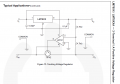
tracking_voltage_reg.png

So, if someone can help with any of these :)
a) What is the issue we're trying to solve? (is it that Vi and -Vin are varying independently / noisy ?)
b) What are the output requirements (e.g. if the specific device is a LM7812, I assume Vo is +12v, are we trying to ensure that -Vo stays at -12v?).
c) What is actually being tracked that gives rise to the name "tracking" voltage regulator?
d) Is there a component in LTSpice that is close to an LM7812, (where do I find it?) or how could I simulate the principles (if not the exact component characteristics) of this circuit?

Thanks for any advice.
 

AnalogKid

Joined Aug 1, 2013
12,055
a. Partly. The real design task is to have two outputs that exactly mirror each other, independent of whatever variations are occurring at the input (assuming there is enough input voltage to keep the output from pulling out of regulation).

b. Yes.

c. The negative output is driven to track the positive output. As the positive output varies with device aging, temperature, and output current, the negative output always is the exact opposite voltage. This might seem like an overly complex way to get there, as opposed to simply use a 7912 as the negative regulator. But if the positive output is adjustable, then the circuit really shines.

The opamp is acting as a comparator with an analog output rather than a digital output. Its output will do whatever is necessary to keep its two inputs equal. Since one is ground and the other is the arithmetic center between the two outputs (center because the two resistors are equal in value), the opamp will modulate the TIP42 base current such that that equality is maintained. So if you overload the + output and it sags down to 9 V, the - output will drop to -9 V.

d. Don't know.

ak
 

Thread Starter

cspwcspw

Joined Nov 8, 2016
78
Thanks for the help, both these responses were very helpful.

I infer that the "follower" is one-way (not symmetric). So if Vcc falls below 12v, the negative output will follow (negated, of course) (e.g. 6v, -6v). But if the negative supply cannot maintain the required negative voltage, it won't impact the positive output. So a pair of output voltages like (12v, -12v) is possible, (6v, -12v) won't happen: it will follow to (6v, -6v), but (12v, -6v) could plausibly occur.
 

AnalogKid

Joined Aug 1, 2013
12,055
Correct. That is because the 7812 is not adjustable by design. There is a sorta-kinda version of this circuit where an external influence on either output is reflected in the other. It is a fully balanced audio line driver that acts like a transformer output. Problem is that it requires a non-zero output impedance, usually 600 ohms for audio work, and that is exactly what a power supply does not want.

ak
 

OBW0549

Joined Mar 2, 2015
3,566
What does a tracking regulator do?
Simply put, a tracking regulator produces two outputs of equal voltage but of opposite polarity. Its outputs may be fixed, as in the example you showed, or variable, in which case one of the regulators sets the output voltage and the other "tracks" it. Tracking regulators are often used to generate power supply voltages for operational amplifiers (e.g., +/- 15V) and other analog components.
 
Top