Does wood attenuate radio waves? If so is there a formula for calculating the amount of attenuation of radio waves will experience when passing through a piece of wood at a givern thickness?
so would a rf signal experience greater attenuation passing through a piece of wood that is 1 meter thick, than traveling a distance of 1 meter through air?
so would a rf signal experience greater attenuation passing through a piece of wood that is 1 meter thick, than traveling a distance of 1 meter through air?
There are so many variables for RF (or any other frequency) attenuation. About the only thing that will not attenuate it is a complete vacuum entirely devoid of any other form of an electromagnetic field. Good luck finding that... The key is detecting, shielding from interference, amplifying, and filtering the RF signal into a useable format from the soup of various RF (and other frequencies) signals and noise that it is found in. That is what electronic communications is all about.
Attenuation coefficient - Wikipedia
And that is only for materials in an otherwise "empty" space. In practice, amplify as much as possible and measure the signal coming into the receiver to see how much it has been attenuated. kW's of transmitted RF signals are typically received as uW's of attenuated RF input at a distance to become usable amplified and filtered signals. At least for "Radio" signals...
everything attenuates... even empty space. if you don't believe me, just increase distance between RF sender and receiver. that distance is your "material thickness".
different materials have different absorption. and not all wood is created equal. density of wood varies greatly. get some balsa and oak
and you will be amazed at the difference... one crumbles in hand like a styrofoam, the other is tough as nail. but that is just the density.
and denser materials are harder to penetrate... by anything.
moisture content is another very significant factor. log that was submerged in water for years will behave very differently than kiln dried wood.
the point is that while many studies exist, it is unlikely that their results will be match for your wood samples.
but reading studies is good for recognizing patterns. then you have to do your own tests on your exact samples and calibrate your equipment accordingly.
so nobody is going to give you an equation where you can plug in some numbers and get result you want to see.
Even rain, drizzle or mist will have different attenuations.
Also the wood type like plywood or solid wood will have different attenuations.
As @panic mode said, the moisture in the wood has also its influence on the attenuation.
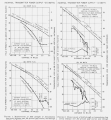
Yes, and a spectrum of frequencies for those attenuation coefficients. Normal sub-tropical forests not so bad, tropical jungle, horrible. https://nvlpubs.nist.gov/nistpubs/jres/68D/jresv68Dn8p903_A1b.pdf
Measurement of the Attenuation of Radio Signals by Jungles
We don't. Additionally it was already covered that even the attenuation of wood would depend on variables like the wood density and humidity and that is only to name a few. The same thickness of the same piece of wood day to day can vary depending on other factors like how humid is the wood?
Since you mention db if I beam 10 watts of RF Energy through 30 db of attenuation, what is my attenuated power level?
What part of all of this are you not understanding?
Certainly the signal gets weaker with distance, but that's not due to the attenuation of empty space, it's just the geometric reduction in signal as it spreads out in space.
The attenuation of wood is due to the absorption of the signal energy, which is a different thing.
Empty space does not absorb EM energy, otherwise we likely wouldn't able to see the starlight from 10 billion light-years distance.


 Facebook
 Google
 GitHub
 Linkedin