What CdS LDR to use in series with 1 M resistor for HC SR-501 PIR sensor?

Thread Starter

seanspotatobusiness

Joined Sep 17, 2016
210
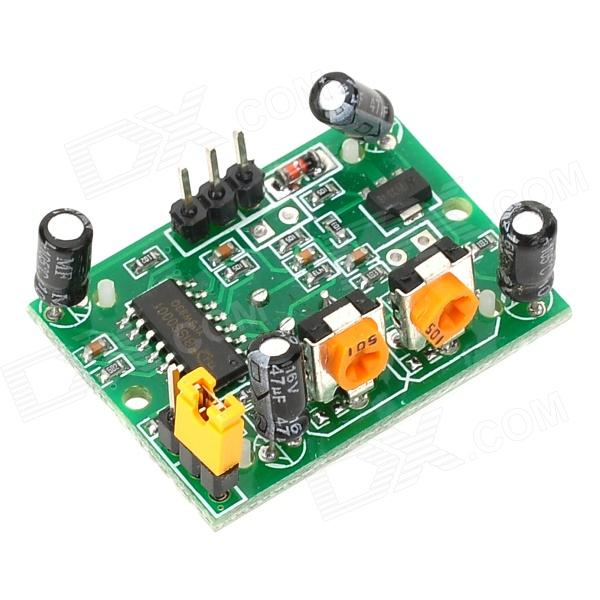
The CdS LDRs I have used have a resistance of about 50K in the dark but apparently they need to have a higher resistance to work in this circuit unmodified. According to the schematic, it's not a potential divider but apparently lowering R3 (to e.g. 120K) helps compensate in some way I don't understand? I tried desoldering R3 but somehow damaged the board because even though the pads don't appear to be shorted, they're shorted. So I'd rather use appropriate LDRs if possible. In the photograph below, the R3 resistor is the one closest to the orange and black component top right.



Dodgydave

Joined Jun 22, 2012
11,395
Lowering R3 will increase the amount of darkness required for it to work, i would increase R3 to make it work in a brighter light, ps the orange black object is d1 Diode.
 

ian field

Joined Oct 27, 2012
6,536
The CdS LDRs I have used have a resistance of about 50K in the dark but apparently they need to have a higher resistance to work in this circuit unmodified. According to the schematic, it's not a potential divider but apparently lowering R3 (to e.g. 120K) helps compensate in some way I don't understand? I tried desoldering R3 but somehow damaged the board because even though the pads don't appear to be shorted, they're shorted. So I'd rather use appropriate LDRs if possible. In the photograph below, the R3 resistor is the one closest to the orange and black component top right.


The LDRs I ordered from China have 1M dark resistance - its usually about 2M if you pay for decent quality parts.

Some IR photo diodes respond reasonably well into daylight - as the highly toxic cadmium in CdS cells becomes increasingly unpopular, many manufacturers are finding ways to get away with PDs. PDs have pretty low leakage in the dark, but the illuminated current may not be enough.

When they upgraded the security lighting at the flats, I rescued some of the outside light fittings - some had an LDR driving a bimetal strip thermal relay, some had a PD similar to the front panel remote in older TVs. The PD drives 1/2 a 358 acting as a high input impedance voltage follower. The other 1/2 358 was configured as a Schmitt trigger driving a triac.
 

AlbertHall

Joined Jun 4, 2014
12,622
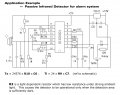
The LDR function seems to fairly secret! I did find this thread which includes some details. Note that the circuit show the connection of R3 and the LDR to pin 9 is different from your diagram. If it is wired like this then using a lower value of R3 for lower resistance LDRs makes sense. This circuit will disable the PIR when there is enough light and turn it on in the dark.
http://electronics.stackexchange.co...-controlled-by-pir-want-to-add-ldr-to-project
 

ian field

Joined Oct 27, 2012
6,536
The LDR function seems to fairly secret! I did find this thread which includes some details. Note that the circuit show the connection of R3 and the LDR to pin 9 is different from your diagram. If it is wired like this then using a lower value of R3 for lower resistance LDRs makes sense. This circuit will disable the PIR when there is enough light and turn it on in the dark.
http://electronics.stackexchange.co...-controlled-by-pir-want-to-add-ldr-to-project
In what way is it secret?

Daylight inhibit circuits are included on most PIR security lights. Not too long ago, most were made with through hole components - I have a hand trace of the circuit filed away somewhere.
 

bertus

Joined Apr 5, 2008
22,900
Hello,

In the schematic given there is a LDR on the inhibit input of the BISS0001 chip.
I will attach the datasheet of this BISS0001.

Bertus
 

Attachments

Alec_t

Joined Sep 17, 2013
15,111
According to the schematic, it's not a potential divider but apparently lowering R3 (to e.g. 120K) helps compensate in some way I don't understand?
Are you sure the schematic is correct? The circuit as shown would not give a reliable trip point, since it depends very much on the vagaries of the CdS cell and the sensitivity of pin 9 of the IC to current drawn from the pin. According to the datasheet, inhibit requires pin 9 to be <0.2 Vdd. Even if the cell were shorted, the pin 9 current would be <Vdd microamps. I'd be surprised if that could pull the volts down to 0.2 Vdd.
 
Top