Facebook
 Google
 GitHub
 Linkedin
drjohsmth said the patient must not be connected to earth ground while you (MisterBill2) said the patient should be connected to earth ground. So today I read all about it. I didn't know at first if my g.USBamp ground was connected to the casing ground. I tried to avoid using my multimeter to check to avoid static probing the electrode ground and casing, but no definite info anywhere. I eventually connected my antistatic wrist band to the water tank and probed the g.USBamp I found out the electrode ground is NOT connected to the unit casing in the g.USBamp. Did you mean a separate earth conductor must be connected to the patient to minimize noises (like capacitive coupling)??NO, the "potential equalization conductor" must connect to the patient and the equipment operator. THOSEare the sections of the system that must be at the same potential, whatever it may be. This is not guarding against mains power shocks, this is providing the same zero volts reference for all parts of the instrumentation system.
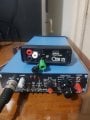
I have another bioamplifier called BMA-200 (above). The main unit has the electrode ground connected to the casing and earth ground. But they have a separate ISO-Z isolation head stage to separate the earth ground from the electrode ground (to make floating ground). BUT the ISO-Z has terrible noises added to signal because the isolator chip noises is plenty in the microvolt region. Therefore I avoid using the ISO-Z and just the main amplifier, which has very excellent signal even better than the g.USBamp.
My question. If you don't use floating or isolation in the ground. The signal would be better not only because of the lack of the ISO chips noises but because of lessened capacitive coupling due to the patient, unit and operator having same potential, is this proven??