What caused AC harmonics and why differential amplifier can't eliminate them?

Status
Not open for further replies.

MisterBill2

Joined Jan 23, 2018
27,777
For any electrical current to flow there must be two conditions: #1. A conductor for the current to flow in , and #2, a potential difference to push the charge (current) thru the conductor..That includes arcs and sparks, where the conductor is ionized air, or metal vapor.
 

Thread Starter

Secan

Joined Sep 20, 2024
205
Wear the anti-static wrist strap and connect it to a known grounding point.
If you don't have a grounding point, create your own by driving a piece of copper pipe into the ground.
For electrical compliance, the pipe has to be driven at least 8 feet into the ground. Do not use this as an electrical utility ground if it does not meet electrical compliance.
Ok, no problem about it. Only after removing the static can one safely be in equipotential with the EEG device.. or if you don't attract huge static with slippers or shoes in the first place by changing the floor.

Kindly answer #156 if you missed it, whether the birds in power lines analogy also hold if metal enclosure and floor is same potential and current is flowing and breaker not tripping. Just want to have idea although my house fully protected by GFCI even lights in ceiling.
 

MrChips

Joined Oct 2, 2009
34,964
In the top picture, the breaker will trip.
If the breaker is faulty, something will catch on fire. The person can receive a shock.

In the bottom picture, the person will receive a shock.

A GFCI must be properly installed with a connection to earth.
 

Thread Starter

Secan

Joined Sep 20, 2024
205
In the top picture, the breaker will trip.
If the breaker is faulty, something will catch on fire. The person can receive a shock.

In the bottom picture, the person will receive a shock.

A GFCI must be properly installed with a connection to earth.
I was asking what would happen if the breaker is faulty and there is continuous fault current at top case. Is the person like the bird?

Why should you install GFCI with connection to earth? It can trip if any hot touches the concrete.
 

MrChips

Joined Oct 2, 2009
34,964
I said it would cause a fire and the person could receive a shock.

If your house has no ground wiring then you don’t connect the GFCI ground and the outlet must be labelled “NO EQUIPMENT GROUND”.
 

Thread Starter

Secan

Joined Sep 20, 2024
205
I said it would cause a fire and the person could receive a shock.

If your house has no ground wiring then you don’t connect the GFCI ground and the outlet must be labelled “NO EQUIPMENT GROUND”.
I'll discuss the first case in another thread or site, someone here said if the metal enclosure and floor has same potential, there is no current encountered by the person. I'll ask this at Mike Holt forum where hundreds of electricians discuss critical matters.

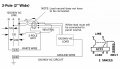
My GFCI doesn't need the ground to be installed:

2 pole gfci siemens.JPG
 

MisterBill2

Joined Jan 23, 2018
27,777
In the top picture, the breaker will trip.
If the breaker is faulty, something will catch on fire. The person can receive a shock.

In the bottom picture, the person will receive a shock.

A GFCI must be properly installed with a connection to earth.
WRONG!!!! A GFCI device senses the difference in current between the hot and neutral circuits routed thru it. PERIOD!! SENSING THAT DIFFERENCE is totally separate from any connection to actual ground! How could it be otherwise???
GFCI outlets include a ground wire connection because the code requires the outlet to have that connection.
If you are able to see and understand the circuit of an actual GFCI device, you will see that the sensing portion is a current transformer, similar, but much more sensitive, to our friend, the measurement current transformer. The difference being that both the supply and the return conductors pass thru, so that their magnetic fields cancel, and produce no output voltage at all.
 

drjohsmith

Joined Dec 13, 2021
1,623
"current flowing through wire, there is a bit resistance that is why current can flow. "

Do you believe this , or is it the damned English language

Btw . Dr of science.
 

drjohsmith

Joined Dec 13, 2021
1,623
I'll discuss the first case in another thread or site, someone here said if the metal enclosure and floor has same potential, there is no current encountered by the person. I'll ask this at Mike Holt forum where hundreds of electricians discuss critical matters.

My GFCI doesn't need the ground to be installed:

View attachment 354155
House Mains electricity is very different to human body potentials .
Just as the 100kv overhead lines are very different to your house wiring.

But in all , the birds on the 100 KV lines to the mV of the human body testing
If every thing is at the same potential , then no current can flow.

Yes we are excluding super conductors , unless you intend to freeze your subjects to around 0 degrees k , quantum.phtsics is not relevant here.
 

drjohsmith

Joined Dec 13, 2021
1,623
WRONG!!!! A GFCI device senses the difference in current between the hot and neutral circuits routed thru it. PERIOD!! SENSING THAT DIFFERENCE is totally separate from any connection to actual ground! How could it be otherwise???
GFCI outlets include a ground wire connection because the code requires the outlet to have that connection.
If you are able to see and understand the circuit of an actual GFCI device, you will see that the sensing portion is a current transformer, similar, but much more sensitive, to our friend, the measurement current transformer. The difference being that both the supply and the return conductors pass thru, so that their magnetic fields cancel, and produce no output voltage at all.
I wish I could triple like One does not seem enough..
I'm getting feeling the op is just trolling
 

drjohsmith

Joined Dec 13, 2021
1,623
I have wooden floor in my room and when I played with the EEG at night. I wear slippers. So how do I get into equi potential with the EEG unit? The moment I touched it, i am in equipotential but that is after the static flow into it damaging the circuit.
You need to be at equal potential .
The basics is bonding.
All bits need to be connected electrically together. Then there is no voltage difference and no current flows
The extension to this , bit it's not needed, is to connect to an external reference , the normal one being a good ground spike .

The key to remember , is the connecting to an external voltage is optional..

The clasic ison a helicopter , in flight it can charge up to thousands of volts , but all the nice squigie people and the electronics is still just fine as it's all connected electrically together .
But as it comes into land , a huge spike can occurs, if that goes through you or the electronics , then smoke ensues.

The other classic is a space ship
In space there is no "ground" but the occupants are fine. If they work on electronic equipment , they must wear anti static straps , so they are at the same potential as the electronics.

One more , many decades ago , as a young engineer , worked on a high voltage system , my part was a small ttl logic box, but it's reference was the 10kv , and it used 5v above the 10kv.
one certainly became very awake before walking into the 10kv room .

Ok, it's normal on earth to use "ground" as your reference ,but their is absolutely no need.
 

Alec_t

Joined Sep 17, 2013
15,132
A GFCI device senses the difference in current between the hot and neutral circuits routed thru it.
In the absence of the load Neutral (as in the post #166 circuit), it is the difference between the currents in the two hot wires which is sensed. For this difference to occur there has to be a leakage path back to the utility's Neutral, normally via the ground. If the TS has no Neutral connection and the building has no ground I don't see how such a leakage path could be present with enough leakage to trip a GFCI. Dry concrete is unlikely to be very conductive. It wouldn't provide a reliable path back to the utility's Neutral.
 
Last edited:

drjohsmith

Joined Dec 13, 2021
1,623
In the absence of the load Neutral (as in the post #166 circuit), it is the difference between the currents in the two hot wires which is sensed. For this difference to occur there has to be a leakage path back to the utility's Neutral, normally via the ground. If the TS has no Neutral connection and the building has no ground I don't see how such a leakage path could be present with enough leakage to trip a GFCI. Dry concrete is unlikely to be very conductive.
hi
getting way off the op original topic,
seems they are taking almost random bit of web info and making new questions !

Just for interest @Alec_t
and I doubt it applies to the op wire in water

but large commercial buildings for the buildings earth, not the lightning rod which has to be a separate external conductor,
the re bar of the foundations is used as the earth.
its well inside the concrete , ok it might be wet , or not,
but its found to make a better connection for mains level voltages than rods !

electricity is fun stuff, or is that just engineering is fun,
the older I got the more I learnt its important to know the models that are relevant.
 

Thread Starter

Secan

Joined Sep 20, 2024
205
In the absence of the load Neutral (as in the post #166 circuit), it is the difference between the currents in the two hot wires which is sensed. For this difference to occur there has to be a leakage path back to the utility's Neutral, normally via the ground. If the TS has no Neutral connection and the building has no ground I don't see how such a leakage path could be present with enough leakage to trip a GFCI. Dry concrete is unlikely to be very conductive. It wouldn't provide a reliable path back to the utility's Neutral.
For the past 8 years, it was very consistent. My 2 storey concrete house is old and when it rains, the water leaks from roof to the ceiling and wall and even the ground floor can wet. I put the lights in differen floors in different GFCI breakers so when one trips, the entire house lights don't go off at once. It is so consistent that when I see the ceiling dropping water in particular places, the GFCI breakers trip and you can only turn them back on after the ceiling or wall is dry.

A few times I caught old wire that short to concrete, like old outlet or wire which trips the GFCI 100% unless I change the wires. So any leakage of 5mA can trip it.

Now because millions of homes in my country never have any metal enclosure grounded, I was hoping that when hot shorts to metal enclosure, and I touched it and i become path of the current to the floor. The GFCI would trip at 5mA in milliseconds.. remember it takes 3 seconds to get electrocuted so hopefully the GFCI would trip. For thousand of other countrymen I know they never ground the metal enclosure and they never use GFCI. If you ask anyone in my country if they ground their appliances metal cases, they would say no. Anyway, so the 5mA can trip the GFCI before one gets electrocuted??
 

MisterBill2

Joined Jan 23, 2018
27,777
THAT ANSWER IS YES!! so the 5mA can trip the GFCI before one gets electrocuted!! At least, that has been my experience with an installed GFCI made by an honest company, that met the standards for sensitivity. The GFCI devices tripped before I even felt any shock.

Of course, that requires that the GFCI device is correctly installed.
 

Thread Starter

Secan

Joined Sep 20, 2024
205
THAT ANSWER IS YES!! so the 5mA can trip the GFCI before one gets electrocuted!! At least, that has been my experience with an installed GFCI made by an honest company, that met the standards for sensitivity. The GFCI devices tripped before I even felt any shock.

Of course, that requires that the GFCI device is correctly installed.

That's good. But then if I short all metal enclosure to earth. Any hot line short to metal enclosure would instantly trip the GFCI breaker without having me needing to get shock.. But since this occurs so rare in my country and nobody do it. I didn't do any actual grounding before. However, Ian0 told me the following last week in the thread:

Continous Fault Current passing through Earth ground | All About Circuits

"For shock prevention, equipotential bonding is at least as important than earthing, especially if the earth connection is high resistance. Do you have metal water pipes? Any metal window frames? If so connect these together and to your concrete and that is your "earth". It isn't necessarily earth, but it means that all the surfaces you can touch will be at the same potential. All the resistance between these surfaces and the real earth will be in parallel and will decrease the resistance to the real earth.
Connect the earth pin of your appliances to this and you will then be much safer, as if there is a fault, the case of the faulty appliance will be at the same potential as the rest of your environment.
If you can get a reasonable resistance to the actual "earth" then a residual current device (aka ground fault interruptor) will operate. "

This is the reason I was thinking about the birds in the power line as well as drohsmith equipotential. Does Ian0 above mean that even if the circuit breaker is let's say faulty (not working) and there is continuous current between the hot to metal enclosure to ground and I touch the metal enclosure with my hands and bare feet on floor, i won't feel any electricity? Not that I will try it.. especially since I already have GFCI but just thinking of the concept.

Also I don't understand what he meant by "If you can get a reasonable resistance to the actual "earth" then a residual current device (aka ground fault interruptor) will operate.". What resistance is he talking about??
 

drjohsmith

Joined Dec 13, 2021
1,623
That's good. But then if I short all metal enclosure to earth. Any hot line short to metal enclosure would instantly trip the GFCI breaker without having me needing to get shock.. But since this occurs so rare in my country and nobody do it. I didn't do any actual grounding before. However, Ian0 told me the following last week in the thread:

Continous Fault Current passing through Earth ground | All About Circuits

"For shock prevention, equipotential bonding is at least as important than earthing, especially if the earth connection is high resistance. Do you have metal water pipes? Any metal window frames? If so connect these together and to your concrete and that is your "earth". It isn't necessarily earth, but it means that all the surfaces you can touch will be at the same potential. All the resistance between these surfaces and the real earth will be in parallel and will decrease the resistance to the real earth.
Connect the earth pin of your appliances to this and you will then be much safer, as if there is a fault, the case of the faulty appliance will be at the same potential as the rest of your environment.
If you can get a reasonable resistance to the actual "earth" then a residual current device (aka ground fault interruptor) will operate. "

This is the reason I was thinking about the birds in the power line as well as drohsmith equipotential. Does Ian0 above mean that even if the circuit breaker is let's say faulty (not working) and there is continuous current between the hot to metal enclosure to ground and I touch the metal enclosure with my hands and bare feet on floor, i won't feel any electricity? Not that I will try it.. especially since I already have GFCI but just thinking of the concept.

Also I don't understand what he meant by "If you can get a reasonable resistance to the actual "earth" then a residual current device (aka ground fault interruptor) will operate.". What resistance is he talking about??
thats equi potential , if every thing is at the same voltage no current can flow , so no shock,
the problem comes when your at one potential, say you have leather shoes on, and contact the mains, then you will get a shock as there is a potential difference, and current will flow.

so i think your question is answered .
 

drjohsmith

Joined Dec 13, 2021
1,623
For the past 8 years, it was very consistent. My 2 storey concrete house is old and when it rains, the water leaks from roof to the ceiling and wall and even the ground floor can wet. I put the lights in differen floors in different GFCI breakers so when one trips, the entire house lights don't go off at once. It is so consistent that when I see the ceiling dropping water in particular places, the GFCI breakers trip and you can only turn them back on after the ceiling or wall is dry.

A few times I caught old wire that short to concrete, like old outlet or wire which trips the GFCI 100% unless I change the wires. So any leakage of 5mA can trip it.

Now because millions of homes in my country never have any metal enclosure grounded, I was hoping that when hot shorts to metal enclosure, and I touched it and i become path of the current to the floor. The GFCI would trip at 5mA in milliseconds.. remember it takes 3 seconds to get electrocuted so hopefully the GFCI would trip. For thousand of other countrymen I know they never ground the metal enclosure and they never use GFCI. If you ask anyone in my country if they ground their appliances metal cases, they would say no. Anyway, so the 5mA can trip the GFCI before one gets electrocuted??
this is a totaly new question ...
 
Status
Not open for further replies.
Top