Continous Fault Current passing through Earth ground

Thread Starter

Secan

Joined Sep 20, 2024
205
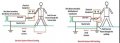
safe earthing.jpg

In my location (Asia). Our power company only supplies us with 2 live wires producing 220 Volts, without giving us any neutral wire. Our electrical system is same as in the United States except no neutral is given to us and we don't use grounding, so just imagine you use your USA 2 live wires to produce 220 Volts for all appliances even 8W lamp. Our 8W lamp is rated 220V and all appliances. We never use 110V.. This lack of grounding is simply lack of awareness and not many got electrocuted enough for government to make a push. So we don't use grounding protection in appliances. I know the risk of not having ground in metal enclosure. So we avoid metal enclosure and use plastic enclosure. In my case. I use Siemens GFCI breakers in all breakers in the main panel in my house so in the event of any leakage of currrent (like raining and the ceiling gets wet, the Siemens GFCI breaker trips). I imagine that when live wire touches metal enclosure, the GFCI breaker will trip.

My question is this.

Since I don't have any ground wire or ground electrode planted to the soil (earthing). I connected my antistatic wrist band with a rod planted to the concrete beside my bedroom. But since the concrete and soil can have plenty of fault current due to the breaker not tripping say there is live wire touching the concrete anywhere like in my neighbors, street, etc. Can the wrist band become electrified? Let's say it has 1 Megaohm inside the wrist band. If the ground connecting it has 220 volts potential, does this formula 220V/1Megaohm = 0.000022 Amp work? It means even if my wrist band is connected to the soil with 220V potential, it is safe with only 0.000022A flowing?

Also consider the case the electronics components I'm working has another potential in its own ground plane. So there is voltage difference between the earth and the circuit which can attract current. But still it is just 220V/1Megaohm = 0.00022 Amp current?

Did I miss something? In the US, you connect the wrist band to the metal enclosure or ground which is connected to the ground rod and the neutral and ground bonded at the service entrance tripping breakers. But in my case, there is missing neutral and ground and I improvise by connecting the wrist band to the concrete outside my window via nails. And so I want to make sure I don't miss something in the analysis of continuous fault current passing through the soil and concrete. Fault current exist all over the city continuously due to no breakers tripping when live wire touches the concrete, etc.

Thank you.
 

Ian0

Joined Aug 7, 2020
13,097
If you measure the voltage between incoming supply and your local earth and get somewhere between 60V and 180V on each wire then what you have is an IT earthing system, which is not allowed for power distribution in most countries.
Do you have two-pin or three-pin mains connectors? If 3-pin, then how is the earth pin wired?

For shock prevention, equipotential bonding is at least as important than earthing, especially if the earth connection is high resistance. Do you have metal water pipes? Any metal window frames? If so connect these together and to your concrete and that is your "earth". It isn't necessarily earth, but it means that all the surfaces you can touch will be at the same potential. All the resistance between these surfaces and the real earth will be in parallel and will decrease the resistance to the real earth.
Connect the earth pin of your appliances to this and you will then be much safer, as if there is a fault, the case of the faulty appliance will be at the same potential as the rest of your environment.
If you can get a reasonable resistance to the actual "earth" then a residual current device (aka ground fault interruptor) will operate.
 

Thread Starter

Secan

Joined Sep 20, 2024
205
If you measure the voltage between incoming supply and your local earth and get somewhere between 60V and 180V on each wire then what you have is an IT earthing system, which is not allowed for power distribution in most countries.
Do you have two-pin or three-pin mains connectors? If 3-pin, then how is the earth pin wired?

For shock prevention, equipotential bonding is at least as important than earthing, especially if the earth connection is high resistance. Do you have metal water pipes? Any metal window frames? If so connect these together and to your concrete and that is your "earth". It isn't necessarily earth, but it means that all the surfaces you can touch will be at the same potential. All the resistance between these surfaces and the real earth will be in parallel and will decrease the resistance to the real earth.
Connect the earth pin of your appliances to this and you will then be much safer, as if there is a fault, the case of the faulty appliance will be at the same potential as the rest of your environment.
If you can get a reasonable resistance to the actual "earth" then a residual current device (aka ground fault interruptor) will operate.
I measured about 110V between incoming supply and local earth. We only have 2 live wires connected to our service entrance and all panels. No neutral or grounding wire used anywhere inside house or building. About 3-pin. Did you mean the appliances? We have ground wire in some appliances. We can connect this to metal faucet for example. You mean if the refrigerator (the only metal appliance we have) is connected to the marble floor by wire. If the refrigerator body touched live 220V wire inside, and you touch the ref standing on bare feet outside. You won't get electrocuted?

My main concern I asked all this ist to know if my sensitive electronic devices that I touched with my hands won't be zapped by the antistatic wrist band connected to the ground with fault current flowing continuously in the earth? The 1 Megaohm resistor inside the wrist band can totally protect the electronic parts?
 

Thread Starter

Secan

Joined Sep 20, 2024
205
Yes. What type of connector do you use for the appliances?
from this list https://www.iec.ch/world-plugs
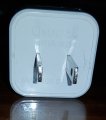
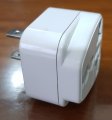
We used none of them. All our adaptor with ground has ground hole but the plug pin are only 2 (this is to connect devices from abroad with ground to our outlet)) because as I said, we never use ground in wall outlets like the bottom pic:

plug front.jpg

plug back.jpg

plug side.jpg

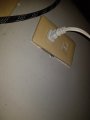
All the 3 images above are from one adapter so it can be plugged to outlets like this:

outlet.jpg


Anyway pls tell me as I've been asking for a week. I'm using EEG with the electrodes connecting to the In+ and In- of the differential amplifier. I saw this warning in the manual.


esd warning.jpg

So if I used antistatic wrist band connected to my wrist and the other end connected to wire nailed at the concrete, what is the worse that could possibly happen if there is fault current passing by in the concrete? Can it damage the EEG chip since I'm directly holding the pins (electrodes) with my fingers.
 

DickCappels

Joined Aug 21, 2008
10,661
I lived in a condo in Bangkok for a couple of years. There was no earth ground at the breaker panel, though I found that the metal parts in my sliding glass door to the balcony were at earth potential, so I had an electrician (I don' t know anything properly ground the breaker panel. He very neatly ran a single conductor from the sliding glass door frame over to the electrical panel. Boom! Everything was grounded.

When having a house built upcountry I made it a point to meet with the electrician wiring the hose and verified with a DVM that I had Line, Neutral, and Earth on my wall sockets.
 

Ian0

Joined Aug 7, 2020
13,097
Your water pipe is your best earth, especially if it is copper and runs throughout the building. Anything connected to the pipe will be at the same potential as the building, so, if your appliances have insulation, there should be no problem.
The building seems to have American type sockets (not designed for 220V) and your adaptor appears to connect British or Indian plugs.
I would suggest rewiring with 3-pin sockets as @DickCappels did, and connecting the earths to the water pipe.
 

meth

Joined May 21, 2016
298
Your water pipe is your best earth, especially if it is copper and runs throughout the building. Anything connected to the pipe will be at the same potential as the building, so, if your appliances have insulation, there should be no problem.
The building seems to have American type sockets (not designed for 220V) and your adaptor appears to connect British or Indian plugs.
I would suggest rewiring with 3-pin sockets as @DickCappels did, and connecting the earths to the water pipe.
For you yes, but me living in old building, and having a neighbor who probably has faulty heater or something, when I shower sometimes I get electricuted when I touch the metal part of the shower. Which is not nice.
 

Thread Starter

Secan

Joined Sep 20, 2024
205
Your water pipe is your best earth, especially if it is copper and runs throughout the building. Anything connected to the pipe will be at the same potential as the building, so, if your appliances have insulation, there should be no problem.
The building seems to have American type sockets (not designed for 220V) and your adaptor appears to connect British or Indian plugs.
I would suggest rewiring with 3-pin sockets as @DickCappels did, and connecting the earths to the water pipe.
Most of our water pipes are PVC although in my older home, it uses G.I. (Galvanized Iron) pipes which rusted so much I have to use sediment filters and replace every 3 weeks in all faucets just to remove the dusts. What can you say about almost rusted G.I. pipes? Can it put entire house in same potential? But won't the continuous ground fault current all over the neighborhood affect it? Also I found many of my appliances are really metal like these rice cooker and toaster:

metal appliances.jpg


I live in the Philippines where all 118 million population has no ground and uses many metal appliances. Are you saying if I somehow connected all metal enclosure of these appliances (perhaps soldering them to wire) to the concrete. And the 220V inside the appliances accidentally touched the metal enclosure and I stand on feet on floor and touch the metal enclosure I won't be shocked since the rice cooker and floor would have same potential?
 

Ian0

Joined Aug 7, 2020
13,097
You have no shortage of iron in your diet then?
Anything conductive will help, even the water in the pipe.
One thing is certain, if you are at the same potential as the device you touch, there will be no shock.
If there is a short to the case in an appliance, a fault current may flow, it most likely, will as there must be some point on the supply cables where there is a low impedance to earth*. Think carefully about where the fault current will flow, and the resistances it will flow through, and the voltage across each resistance, and where your feet will be on that network of resistances, and what potential your feet will be at when that fault current flows. That will determine whether you get a shock when there is a fault.

* IT earthing systems are single fault tolerant. If there is no fault (as is the case if you measure equal voltages on each of the two supply cables) then there can be no fault current and no shock.
When the first fault occurs, no-one notices, except that you now have unequal voltages on the supply conductors, probably with one grounded And the pthe at 230V. Then if another fault happens you will definitely have a fault current, and it could be much more dangerous without a protective earth connection.
 

Thread Starter

Secan

Joined Sep 20, 2024
205
You have no shortage of iron in your diet then?
Anything conductive will help, even the water in the pipe.
One thing is certain, if you are at the same potential as the device you touch, there will be no shock.
If there is a short to the case in an appliance, a fault current may flow, it most likely, will as there must be some point on the supply cables where there is a low impedance to earth*. Think carefully about where the fault current will flow, and the resistances it will flow through, and the voltage across each resistance, and where your feet will be on that network of resistances, and what potential your feet will be at when that fault current flows. That will determine whether you get a shock when there is a fault.

* IT earthing systems are single fault tolerant. If there is no fault (as is the case if you measure equal voltages on each of the two supply cables) then there can be no fault current and no shock.
When the first fault occurs, no-one notices, except that you now have unequal voltages on the supply conductors, probably with one grounded And the pthe at 230V. Then if another fault happens you will definitely have a fault current, and it could be much more dangerous without a protective earth connection.
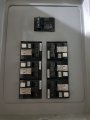
About 8 years ago I was grasping with all these issues about missing ground with U.S. electrical engineers. I couldn't convince the power company to connect the neutral to my service entrance panel. So I asked help how to install full house Ground Fault Circuit Interrupter breakers in main panel where the entire house is protected by the GFCI breakers.. I initially used GFCI receptables but these tripped when running a tooth sprayer for example or even some electric fan. After 8 years. I found the Siemens GFCI Breakers to be so robust and sensitive (it trips when rain water touch the ceiling light wire) and it never make any false trip like from tooth sprayer.


gfci breakers.jpg


I may be the only person in the country with these Siemens GFCI Breakers installed full house (actual photos of my main panel above). My question is. If the say rice cooker got the 220V inside touching the metal enclosure and I touched it with bare feet on floor. Can it trip fast enough before the current electrocutes me? You mentioned before about resistance in ground.. is it for RCD (Residual Curent Device) only? I didn't explore other issues fully because I was just testing them 8 years ago. But now know the Siemens GFCi breakers are very robust and accurate and never do any false tripping. I say accurate because I have GFCI tester plugged to any house outlet and it can trip it by connecting the test ground to the concrete floor outside and pressing "test", etc..

Datasheet-EN-2pGFCI-SIEPC-D27-CAEN.pdf

It can trip on 4 to 6mA. see specs
 

nsaspook

Joined Aug 27, 2009
16,249
About 8 years ago I was grasping with all these issues about missing ground with U.S. electrical engineers. I couldn't convince the power company to connect the neutral to my service entrance panel. So I asked help how to install full house Ground Fault Circuit Interrupter breakers in main panel where the entire house is protected by the GFCI breakers.. I initially used GFCI receptables but these tripped when running a tooth sprayer for example or even some electric fan. After 8 years. I found the Siemens GFCI Breakers to be so robust and sensitive (it trips when rain water touch the ceiling light wire) and it never make any false trip like from tooth sprayer.


View attachment 353449


I may be the only person in the country with these Siemens GFCI Breakers installed full house (actual photos of my main panel above). My question is. If the say rice cooker got the 220V inside touching the metal enclosure and I touched it with bare feet on floor. Can it trip fast enough before the current electrocutes me? You mentioned before about resistance in ground.. is it for RCD (Residual Curent Device) only? I didn't explore other issues fully because I was just testing them 8 years ago. But now know the Siemens GFCi breakers are very robust and accurate and never do any false tripping. I say accurate because I have GFCI tester plugged to any house outlet and it can trip it by connecting the test ground to the concrete floor outside and pressing "test", etc..

Datasheet-EN-2pGFCI-SIEPC-D27-CAEN.pdf

It can trip on 4 to 6mA. see specs
My solution when I lived there was an isolation transformer to create internal separately derived power for electronics and potentially unsafe appliances. More importantly daily, was the isolation transformer was a large ISOREG Ferroresonant Regulating Transformer (extra from a ship computer system) that also did a good job of keeping the AC voltage constant and clean.

https://www.solidstatecontrolsinc.c...rs/ferroresonant-transformers-white-paper.pdf
 

MisterBill2

Joined Jan 23, 2018
27,159
The main benefit of GFI circuit breakers is that no leakage fault goes un noticed, because a whole branch circuit is switched off.
So the slight leakage from the electric hot-pot causes the power to your refrigerator to switch off. And if you do not notice it, the food spoils. Or maybe the lights go out.
 

Thread Starter

Secan

Joined Sep 20, 2024
205
The main benefit of GFI circuit breakers is that no leakage fault goes un noticed, because a whole branch circuit is switched off.
So the slight leakage from the electric hot-pot causes the power to your refrigerator to switch off. And if you do not notice it, the food spoils. Or maybe the lights go out.
Usually how often does leakage occurs in appliances like electric hotpot if it is connected to ground? Is leakage of 4 to 6mA normal.l? I never encountered any leakage bec i dont have ground therefore my full house GFCI breakers never have false trip in 8 years.

Im thinking there is advantage of connecting them to ground bec if live contacts the metal case. It can immediately trip the GFCI. Without ground. I have to wait for it to trip if i touch it and become conduit to ground. Lets say the one i touched has 1A and it takes 4 to 6mA for it to trip. Will it trip so fast before the 1A pass thru me?
 

Ian0

Joined Aug 7, 2020
13,097
Usually how often does leakage occurs in appliances like electric hotpot if it is connected to ground? Is leakage of 4 to 6mA normal.l? I never encountered any leakage bec i dont have ground therefore my full house GFCI breakers never have false trip in 8 years.

Im thinking there is advantage of connecting them to ground bec if live contacts the metal case. It can immediately trip the GFCI. Without ground. I have to wait for it to trip if i touch it and become conduit to ground. Lets say the one i touched has 1A and it takes 4 to 6mA for it to trip. Will it trip so fast before the 1A pass thru me?
Equipment would fail a portable appliance test at <1MΩ, so the maximum leakage current for a functional appliance is 230uA
The usual trip current threshold for a residual current device is 30mA, sometimes 10mA or 100mA.
1A will not pass through you as you are very unlikely to have a resistance lower than 230Ω.
 

Thread Starter

Secan

Joined Sep 20, 2024
205
Equipment would fail a portable appliance test at <1MΩ, so the maximum leakage current for a functional appliance is 230uA
The usual trip current threshold for a residual current device is 30mA, sometimes 10mA or 100mA.
1A will not pass through you as you are very unlikely to have a resistance lower than 230Ω.
I'm using Siemens GFCI Breakers with trip current threshold of 4 to 6mA. I kept wondering if it can substitute for using ground. Let's say a device or a person (for sake of discussion) would have resistance of 230Ohm. Does the 1A current immediately pass thru the device or person, or does it first increase from 1mA, 2mA, 5mA to 1A? Because if it does, then it means the GFCI would trip before it goes higher than 6mA or does the 1A immediately pass through the the device or person (again for sake of discussion)?
 

MisterBill2

Joined Jan 23, 2018
27,159
My experience with tripping a GFCI device protecting an outlet that I was using is that while the current was certainly passing thru my hands and body to the ground, I never felt it or had any hint that I was being shocked. I have received shocks that ranged fro a tingle up to being thrown onto the floor, si I am quite aware of what they feel like.

In a truly isolated system , contacting one point would not result in an current and would not deliver any shock. Most distribution systems of any size are intentionally tied to "actual ground" to make that side the "neutral." The safety benefit is that it makes the hazard of contacting the other side certain and obvious.
 
Last edited:

rsjsouza

Joined Apr 21, 2014
424
This is a similar scenario in my hometown: 220V phase-neutral and no grounding, living in an apartment building. Back then we had to do whatever we could to try to create a protective ground, especially because we also had the overhead electric showers that had to be kept at the body's potential. Given our apartment building was similar to your configuration (Galvanized Iron everywhere), we could get by creating the ground by connecting it to the iron pipes. That worked very well until some renovations on the building replaced the main feeders and some water columns with PVC, severely impacting the grounding effect.

Interesting that you used GFCI breakers. They will usually trip before you can feel anything, mostly due to the normal higher resistance of the surface of the skin when compared to your internal circulation systems (arteries, veins, lymphatic system). The major problem is indeed false triggers, which can make food spoil - I personally wouldn't use it on a refrigerator circuit but would make sure its metallic enclosure would be connected to whatever pipe/ground you can have.
 

meth

Joined May 21, 2016
298
If I had your shower I would not use it until a licensed electrician corrected the problem. You are toying with death (no kidding!).
We dont have a licensed electrician where I am, and the only solution I got from an unlicensed one is to connect a PE wire from my bathroom through the window to the conductor that connects the lightning rod to the ground outside of the building. Which I am absolutely not doing :D. I think the problem begin happening when I changed the old pipes with PVC ones. Maybe it is not a current leakage from my apartment but some kind of different potentials. But it definitely feels like 50Hz. It is not strong but slightly unpleasant. It happens even if I completely disconnect the cables from the RCD that feed my apartment - So I am not the cause of this (my boiler of any kind of loop in my apartment). The only thing I can do right now is try not to touch the shower with my ba**s....
 
Top