What amperage/speed is this motor?

Thread Starter

Cyrus Mingley

Joined Apr 18, 2020
92
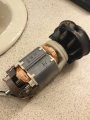
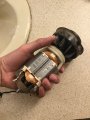
What amperage and or watts would this (universal?) motor use? It’s a weed eater motor rated at 120v but I’m not sure the draw/speed/noise of it. I have a switch rated at 120v 18amps and want to confirm this is safe to use with it. I can’t find anything online about the motor, except one product that’s a different serial number but it looks identical. I can’t find any information on it however. I’ve included some pictures of it for reference. Any help is appreciated!!
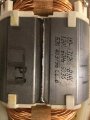
image.jpg
image.jpg
image.jpg
 

BillB3857

Joined Feb 28, 2009
2,573
The motor appears to be one from a vacuum cleaner of some sort. Those motors are usually a series wound, brush type. The speed of a series wound motor is limited by the load, otherwise, they will self destruct due to overspeeding.
 

Thread Starter

Cyrus Mingley

Joined Apr 18, 2020
92
The motor appears to be one from a vacuum cleaner of some sort. Those motors are usually a series wound, brush type. The speed of a series wound motor is limited by the load, otherwise, they will self destruct due to overspeeding.
Got it, this particular one is from a weed eater so will it do the same?
 

Reloadron

Joined Jan 15, 2015
7,887
No way to tell. It's 120 volt 60 Hz and that's about all we know. It's small so a fractional HP. Looks to be driving a pump impeller and is obviously a brush type motor. If it were run under normal load conditions and the actual current measured that may help give some rough idea. It looks to be a "universal type" design and the com could be cleaned and maybe brushes replaced. Universal design as found on many old electric drills and it will likely run on AC or DC. They run at higher speeds than for example an AC Synchronous motor. However as to current and speed no easy way to know.

Ron
 

Thread Starter

Cyrus Mingley

Joined Apr 18, 2020
92
Awesome, thank you. I planned to use it to make a homemade lathe, so what type of load am I looking at? The lathe would be more for sanding small things with a file and not so much turning a large chunk of wood.
 

Thread Starter

Cyrus Mingley

Joined Apr 18, 2020
92
No way to tell. It's 120 volt 60 Hz and that's about all we know. It's small so a fractional HP. Looks to be driving a pump impeller and is obviously a brush type motor. If it were run under normal load conditions and the actual current measured that may help give some rough idea. It looks to be a "universal type" design and the com could be cleaned and maybe brushes replaced. Universal design as found on many old electric drills and it will likely run on AC or DC. They run at higher speeds than for example an AC Synchronous motor. However as to current and speed no easy way to know.

Ron
Awesome, thank you. I planned to use it to make a homemade lathe, so what type of load am I looking at? The lathe would be more for sanding small things with a file and not so much turning a large chunk of wood.
 

MaxHeadRoom

Joined Jul 18, 2013
30,654
All series motors should always be operated with a load of some kind or otherwise stop them from exceeding the rated RPM, as mentioned, these operate in a runaway condition and it is only the load, windage or friction that limits the rpm.
IOW, with no load it will produce very high rpm with very little current.
Not a good idea on a lathe if this is the spindle, unless you monitor the rpm and control the motor this way, look up SUPERpid.
Max.
 

Thread Starter

Cyrus Mingley

Joined Apr 18, 2020
92
All series motors should always be operated with a load of some kind or otherwise stop them from exceeding the rated RPM, as mentioned, these operate in a runaway condition and it is only the load, windage or friction that limits the rpm.
IOW, with no load it will produce very high rpm with very little current.
Not a good idea on a lathe if this is the spindle, unless you monitor the rpm and control the motor this way, look up SUPERpid.
Max.
Great, thank you. Since it was a weed eater, what/how much load was stopping it from just going and going?
 

BillB3857

Joined Feb 28, 2009
2,573
Any series motor I have ever seen had a fan attached directly to the motor shaft. An old timer told me that the fan was to provide a minimum load to the motor and prevent a run-away condition.
 

MaxHeadRoom

Joined Jul 18, 2013
30,654
You most likely have blocked the end of a vacuum at some time or other, you can hear the results of the motor RPM drastically increase due to removal of load.! ;)
Max.
 
Top