Wattage in voltage devider

ISB123

Joined May 21, 2014
1,236
After doing some calculations I noticed that required heatsink would have to be pretty big and expensive if you want to supply 5V at 1A-3A.
Power dissipation of LM350 and est. temperature:

5V/1A=7W
56C+25C=81C its under 125C but not very good.

5V/3A=21W
168C+25C=193C way above max operating temp. of LM350 which is 125C.

The best heatsink at the store that is available has 8C°/W which would work "decently" at 5V-1A.
For 5V/3A you would need at least 3C°/W rated heatsink.

The best thing to do would be to use a switching regulator which are bit more complex but are very effective and should teach you more stuff than linear regulators(Could be cheaper since it doesn't require massive heatsink).

The decision is up to you if you want to build linear or switching regulator.

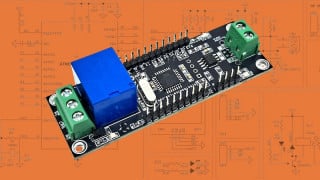
Here is a nice and cheap switching regulator with efficiency of 77%:
http://www.mantech.co.za/ProductInfo.aspx?Item=35M0329

 
Last edited:

Thread Starter

Chillum

Joined Nov 13, 2014
546
OK, well with the 2 transistor circuit the heat problem would be the same? So my only choice would be a switching regulator. If I build it just like that, would work? Where do I set the voltage?
 

Thread Starter

Chillum

Joined Nov 13, 2014
546
After doing some calculations I noticed that required heatsink would have to be pretty big and expensive if you want to supply 5V at 1A-3A.
Power dissipation of LM350 and est. temperature:

5V/1A=7W
56C+25C=81C its under 125C but not very good.

5V/3A=21W
168C+25C=193C way above max operating voltage of LM350 which is 125C.

The best heatsink at the store that is available has 8C°/W which would work "decently" at 5V-1A.
For 5V/3A you would need at least 3C°/W rated heatsink.

The best thing to do would be to use a switching regulator which are bit more complex but are very effective and should teach you more stuff than linear regulators(Could be cheaper since it doesn't require massive heatsink).

The decision is up to you if you want to build linear or switching regulator.

Here is a nice and cheap switching regulator with efficiency of 77%:
http://www.mantech.co.za/ProductInfo.aspx?Item=35M0329

Where do I set the voltage?
sorry, absent minded, I see volts output is 5V
 
Last edited:

Thread Starter

Chillum

Joined Nov 13, 2014
546
I see input voltage 7-40V, how does wall warts switching mode power supplies get their voltage from 220V line to 40V on the switching regulator, maybe, and this is a question, I can build a 5V PSU that doesn't require using one of my 12V PSUs? which method is cheaper? And with the 12V having 2A, will that be enough for 5V 3A?
 

studiot

Joined Nov 9, 2007
4,998
Several practical remarks are appropriate here.

Firstly one of the mistakes beginners make is lack of focus and or overambition on project specifications.

By this I mean that they start with a project need and allow themselves to be diverted along the way, with the question "what else can I make it do?"

Often with power supplies we are asked here for an all singing all dancing psu that will put out huge amounts of amps and be fully variable over a wide voltage range," just in case I need lots of amps later."

Most commercial bench or lab psu units offer 1 amp for a reason.
Most regulators offer a simlar amount for the same reason.

Projects very rarely require more than this.

Since you are in control of the construction one item I recommend is to have lots of spare terminals/sockets on the front panel.

You will often wire on more than one item, not just items you power, but monitoring meters / scopes and other things.
Spare terminals to connect to are a godsend.

Talking of meters, the subject of metering is worth considering in relation to any power supply.
At the begining you can use external multimeters cobbled into circuit (did I mention spare terminals are a boon?)
But you will also often want more than one power supply and later units can be made more sophisticated as your experience grows.
 
Last edited:

ISB123

Joined May 21, 2014
1,236
Switching regulator doesn't get its voltage from 220V it needs a transformer and diode bridge.To get the dc voltage and current on required level.I can assure you that you won't need more than 1A for microcontroller projects.What is your budget for this project?
 

Thread Starter

Chillum

Joined Nov 13, 2014
546
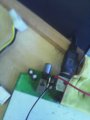
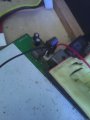
OK bench power: I have 3 values I deem important 5V 9V and 12V, dunno if u can see in the photos, my camera is severely lacking. Thats an old IDE external HDD board, has blue "on" leds that blink if you short or exceed current available/power.IMG_20141117_142719_0.jpg IMG_20141117_142705_0.jpg The PSU that comes with this board is 12V~2A; 5V~2A, and for 9v projects I use a battery. What I'm trying to do with this forum isn't bench PSU, its application PSU, so my budget is very low ~R100 MAX... for every application will need one. Now SAPO (South African Post Office) is on strike, so I don't know when I'll get my 5v wall warts, then that'll be my application PSU. In the beginning I thought my 5V PSU is going to cost me 2 expensive resistors, now I'm looking at a cheaper solution, switch mode, but it uses one of my 12V (which is fine, I did buy them for PSU applications)
 

Thread Starter

Chillum

Joined Nov 13, 2014
546
After doing some calculations I noticed that required heatsink would have to be pretty big and expensive if you want to supply 5V at 1A-3A.
Power dissipation of LM350 and est. temperature:

5V/1A=7W
56C+25C=81C its under 125C but not very good.

5V/3A=21W
168C+25C=193C way above max operating temp. of LM350 which is 125C.

The best heatsink at the store that is available has 8C°/W which would work "decently" at 5V-1A.
For 5V/3A you would need at least 3C°/W rated heatsink.

The best thing to do would be to use a switching regulator which are bit more complex but are very effective and should teach you more stuff than linear regulators(Could be cheaper since it doesn't require massive heatsink).

The decision is up to you if you want to build linear or switching regulator.

Here is a nice and cheap switching regulator with efficiency of 77%:
http://www.mantech.co.za/ProductInfo.aspx?Item=35M0329

This is a complete design? Then this is my solution.
LM 2576 = R13 * 1.14= R14.82
these have VAT included:
100uF 35V = R1.80
1n5822 = R2.68
100uH = R2.12
1000uF 50V = R5.15
Totals: R26.57

That's what I was hoping for when I started this thread, thanks!
 

Thread Starter

Chillum

Joined Nov 13, 2014
546
previous questions (just because they're all over the place, I'm simply organizing, I read the rules about restating a question, hope this doesn't break rules):
irrelevant:
Question1 - answered
OK, well with the 2 transistor circuit the heat problem would be the same?
answer = yes?
Question2
So my only choice would be a switching regulator. If I build it just like that, would work?
answer = yes?
Question3
what is the heat characteristics of the LM2576?
answer = dunno, and dunno how to find it myself
Question4
And the 77% efficiency is that for current or volts?
answer = dunno, and dunno how to find it myself
Question5
What is your budget for this project?
Answered
Question6
And with the 12V having 2A, will that be enough for 5V 3A?
and I'd like to add, how will I know what LM2576 delivers?
answer = dunno and dunno how to find i myself
Question7
Switching regulator doesn't get its voltage from 220V it needs a transformer and diode bridge.To get the dc voltage and current on required level.
But how do they make them so small?, is my matchbox sized nokia charger got a transformer in it?
 
Last edited:

ISB123

Joined May 21, 2014
1,236
This is a complete design? Then this is my solution.
LM 2576 = R13 * 1.14= R14.82
these have VAT included:
100uF 35V = R1.80
1n5822 = R2.68
100uH = R2.12
1000uF 50V = R5.15
Totals: R26.57

That's what I was hoping for when I started this thread, thanks!
You will need a heatsink but much smaller one than for LM350.
 

ISB123

Joined May 21, 2014
1,236
I'm going to do some calculations for the regulator and schematics and then I'll post in few hours when I get on the computer.

Question 1-Probably yes.
Question 2-that is example schematic I didn't do it so I don't know yet.

For the rest questions I'll post the answer after I do the calculations and schematic.


That's is TO3 heatsink you need TO220 but I need to do heat dissipation calculations first.
 

Thread Starter

Chillum

Joined Nov 13, 2014
546
I'm going to do some calculations for the regulator and schematics and then I'll post in few hours when I get on the computer.

Question 1-Probably yes.
Question 2-that is example schematic I didn't do it so I don't know yet.

For the rest questions I'll post the answer after I do the calculations and schematic.


That's is TO3 heatsink you need TO220 but I need to do heat dissipation calculations first.
thanks ISB123, I really appreciate the effort you put into helping me!
 

Thread Starter

Chillum

Joined Nov 13, 2014
546
http://www.onsemi.com/pub/Collateral/LM2576-D.PDF page 22, have the same circuit as your example one, but it requires 150uH vs your's 100uH, what is that? (its the only difference) I know that inductors can be put in series like resistors aslong as they are magnetically shielded. I can only get 100uH, and 47uH at yebo, will the circuit work the same even though inductor values differ? I haven't done any reading on inductors at all :confused:
 

Thread Starter

Chillum

Joined Nov 13, 2014
546
I'm getting a lift to Mantech on Friday, they have 150uH inductors, all the other components I'm getting tomorrow at Yebo Electronics because on some stuff they're way cheaper (than Mantech.co.za) and others not. But I can place an order on the web and then after gym Tue, they're ready for me :) packages marked with printed label, all I do is pay and sign. :)
 
Top