Voltage divider to mono-stable multivibrator [NE555]

Thread Starter

Chetan_Jadhav

Joined Mar 2, 2017
52
Hi,
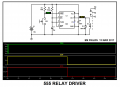
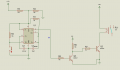
I made a circuit to trigger a relay operating on 12v for some seconds.the circuit is given in attachment.
IC NE555 is used in mono-stable multivibrator mode with input supply of 6v which is derived from 12V using simple voltage divider of 10k,10k
transistor BC547 is used to switch relay.
I implemented the circuit on breadboard
now the problem is - when I used 2 resistors of 10k, 6v is obtained from 12v of the output of voltage divider but then I connect this output to VCC of Ne555 the output drops to 2.3v or 3v. when I remove the connection of 555 from o/p of voltage divider,the o/p goes to 6V why it happens?
after lots of thinking I replaced 10K resistor by 1K resistor and now the circuit is working fine.
But I am still very curious to know what was the matter with 10K and how 1K resistor solved that?
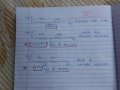
please refer the circuit diagram and some schematics.
regards.
ne555.png n.jpg
 

dl324

Joined Mar 30, 2015
18,362
after lots of thinking I replaced 10K resistor by 1K resistor and now the circuit is working fine.
Your voltage divider wasn't "stiff" enough.

With 20k total, the divider current was 0.6mA. When the timer is added, it draws too much current and the divider is no longer setting the voltage, the current through the top resistor through the timer is.

When you decreased the resistors to 2k total, you increased the current to 6mA. This still isn't sufficiently stiff to provide reliable operation of the timer.

If you must use 6V, you'd be better off using a zener diode. A simpler approach is to use 12V for the timer and adjust the resistor values on the transistors accordingly.

You shouldn't need two transistors. You could use a single PNP and drive the relay coil from the high side.

You also need to add a snubber diode to protect the transistor switch from back EMF when the relay is switched off.
 

Thread Starter

Chetan_Jadhav

Joined Mar 2, 2017
52
Your voltage divider wasn't "stiff" enough.

With 20k total, the divider current was 0.6mA. When the timer is added, it draws too much current and the divider is no longer setting the voltage, the current through the top resistor through the timer is.

When you decreased the resistors to 2k total, you increased the current to 6mA. This still isn't sufficiently stiff to provide reliable operation of the timer.

If you must use 6V, you'd be better off using a zener diode. A simpler approach is to use 12V for the timer and adjust the resistor values on the transistors accordingly.

You shouldn't need two transistors. You could use a single PNP and drive the relay coil from the high side.

You also need to add a snubber diode to protect the transistor switch from back EMF when the relay is switched off.
thanks for your help.
is it possible to use single NPN transistor to switch relay?
I actually tried that but didnt worked,because of the less current sinking capacity of BC 547 I think.please correct me if i am wrong.
 

dl324

Joined Mar 30, 2015
18,362
is it possible to use single NPN transistor to switch relay?
No. You have the relay connected so that it is off when the one shot is triggered and on when the timer times out. To use a single transistor, it needs to be PNP and you need to switch the relay high side.
I actually tried that but didnt worked,because of the less current sinking capacity of BC 547 I think
What is the coil resistance? You don't have the two transistors connected in a current amplifying configuration.
 

Thread Starter

Chetan_Jadhav

Joined Mar 2, 2017
52
No. You have the relay connected so that it is off when the one shot is triggered and on when the timer times out. To use a single transistor, it needs to be PNP and you need to switch the relay high side.
What is the coil resistance? You don't have the two transistors connected in a current amplifying configuration.
sorry but I don't know about coil resistance it is a LEONE SC5-s DC12V relay.
the transistors are not in the amplifying configuration ther are in the cutoff or saturation mode. i used 2 transistors because single NPN wasnt working. here when o/p of ne555 is high Q3 is on and Q2 is off then relay is in normally open state.
 

dl324

Joined Mar 30, 2015
18,362
the transistors are not in the amplifying configuration ther are in the cutoff or saturation mode. i used 2 transistors because single NPN wasnt working. here when o/p of ne555 is high Q3 is on and Q2 is off then relay is in normally open state.
If the relay coil needs less than 150mA, you could drive it directly from the timer output. You'd need use 12V for the timer in that case.
 

dl324

Joined Mar 30, 2015
18,362
Coil resistance is 400 ohms. NE555 will have no problem driving it directly.

Connect coil between 12V and timer output. Add snubber diode across coil to protect timer output.
 

ScottWang

Joined Aug 23, 2012
7,501
The specification of relay are:
W_Relay = 0.36W
V_Relay = 12V
I_Relay = W_Coil/V_Coil
= 0.36W/12V
= 30mA

R_Relay = V_Relay/I_Relay
= 12V/30mA
= 400Ω

You don't need the voltage divider, just connect the Pin 4,8 to the+12V and connects the relay as dl324 mentioned in #8.
 

hp1729

Joined Nov 23, 2015
2,304
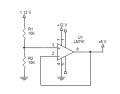
Design 1131 pos 6 V.PNG
Hi,
I made a circuit to trigger a relay operating on 12v for some seconds.the circuit is given in attachment.
IC NE555 is used in mono-stable multivibrator mode with input supply of 6v which is derived from 12V using simple voltage divider of 10k,10k
transistor BC547 is used to switch relay.
I implemented the circuit on breadboard
now the problem is - when I used 2 resistors of 10k, 6v is obtained from 12v of the output of voltage divider but then I connect this output to VCC of Ne555 the output drops to 2.3v or 3v. when I remove the connection of 555 from o/p of voltage divider,the o/p goes to 6V why it happens?
after lots of thinking I replaced 10K resistor by 1K resistor and now the circuit is working fine.
But I am still very curious to know what was the matter with 10K and how 1K resistor solved that?
please refer the circuit diagram and some schematics.
regards.
View attachment 121664 View attachment 121667
I was going to suggest an op amp. Most any would do. It gives you a more stable 6 V.
 

Reloadron

Joined Jan 15, 2015
7,892
One issue with your voltage divider as shown in the first post is your entire circuit is in parallel with R4 a leg of your divider. Using a voltage divider configured this way is a bad idea as your circuit resistance will be constantly changing.

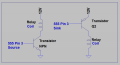
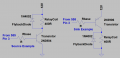
As mentioned you have a 12 volt relay (thank you Scott) with a coil current of 30 mA. Not very high coil current. I would use a 555 as you have and just let a transistor drive the relay. A simple switching generic transistor would work for example a 2N3904 or 2N3906 depending on if you want to source or sink current from the 555. Source would be using a NPN while sink would be a PNP. The entire circuit would run off the 12 volts.

Trans Source Sink.png

Ron
 

Kjeldgaard

Joined Apr 7, 2016
476
One issue with your voltage divider as shown in the first post is your entire circuit is in parallel with R4 a leg of your divider. Using a voltage divider configured this way is a bad idea as your circuit resistance will be constantly changing.

As mentioned you have a 12 volt relay (thank you Scott) with a coil current of 30 mA. Not very high coil current. I would use a 555 as you have and just let a transistor drive the relay. A simple switching generic transistor would work for example a 2N3904 or 2N3906 depending on if you want to source or sink current from the 555. Source would be using a NPN while sink would be a PNP. The entire circuit would run off the 12 volts.
The sketches are lacking relay diodes and base resistors.
 

AnalogKid

Joined Aug 1, 2013
12,158
To understand why your original circuit did not work, consider that all of the 555 output current going out of pin 3 to do anything comes through R3. That means that 1 mA of output current creates a voltage drop of 10 V across R3. Also, all ICs draw what is called "static" current. This is the operating current that flows through the chip from its Vcc pin to its GND pin even if the output is not connected to anything. Again, this static current creates a voltage drop across any resistance in series with its power pin. If for some reason you must have a resistor in series with a power pin, you can calculate the effect it will have using the standby or operating current from the chip datasheet, the current draw of whatever the chip is driving, and Ohm's Law.

ak
 

Reloadron

Joined Jan 15, 2015
7,892
Uh Oh. My bad on the flyback diodes and base resistors. They were not intended to be actual schematics but just basic examples of using either NPN or PNP for source and sink examples. Guess I should have included them.

Ron
 

Kjeldgaard

Joined Apr 7, 2016
476
Uh Oh. My bad on the flyback diodes and base resistors. They were not intended to be actual schematics but just basic examples of using either NPN or PNP for source and sink examples. Guess I should have included them.
I have no trouble understanding the excellent sketches.

But we have seen too many schematics where flyback diodes, base resistors and LED current limiting resistors is missing, that I would ignore the the omissions.
 

Reloadron

Joined Jan 15, 2015
7,892
I have no trouble understanding the excellent sketches.

But we have seen too many schematics where flyback diodes, base resistors and LED current limiting resistors is missing, that I would ignore the the omissions.
Your contribution to this thread was exactly what? To critique my post? Should you want better sketches maybe you should contribute them?

Ron
 
Top