Transistor, voltage divider, finding Ic.

Thread Starter

Krastar

Joined Apr 10, 2025
7
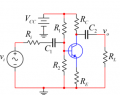
1744368097065.pngHi everyone!

In this circuit ive been given the values; R1:650kohm. R2:325kohm, Vcc:15v, Re: 0. beta=100

The question is calculate Ic and find out if the amplifier is in active mode.

I^ve calculated Vr2 to be 5 volt. And thus Vb= 5v.. When calculating Ir1 with (Vcc-Vb)/R1 and Ir2 with Vb/R2, I get Ib=Ir1-Ir2=0. Thus Ic is 0 through Ic=Ib*beta. In the next partquestion I`m being asked to calculate Ic with another beta-value, so I guess my reasoning has been wrong. Can somebody tell me why what I`ve done so far is wrong?

Thanks in advance!
 

LvW

Joined Jun 13, 2013
1,992
Hi everyone!

In this circuit ive been given the values; R1:650kohm. R2:325kohm, Vcc:15v, Re: 0. beta=100

The question is calculate Ic and find out if the amplifier is in active mode.

I^ve calculated Vr2 to be 5 volt. And thus Vb= 5v.. When calculating Ir1 with (Vcc-Vb)/R1 and Ir2 with Vb/R2, I get Ib=Ir1-Ir2=0. Thus Ic is 0 through Ic=Ib*beta. In the next partquestion I`m being asked to calculate Ic with another beta-value, so I guess my reasoning has been wrong. Can somebody tell me why what I`ve done so far is wrong?

Thanks in advance!
I think, you have made a bloody error.
You have calculated Vb=5V - assuming that R1 and R2 form a voltage divider which is not loaded by the transistor.
And - as a next step - you calculate the current through R1 and R2 - and you are surprised that Ib=0 (voltage divider not loaded by Ib).
Here is my answer:
From the beginning, it was wrong to assume that Ib=0. In contrary, there must be a very large Ib and the transistor is deep in saturation, because this large Ib is the result of saturation (B-C junction is forward biased..). If you want you can approximately calculate this Ib value - assuming that the voltage across R2 will be app. Vb=(0.75...0.8) volts.
The given value of beta plays no role in this case, because this value can be used only when the BJT is NOT in saturation.
The current ic will be so large that the voltage drop across Rc is nearly 15V (Re=0).
 
Last edited:

Thread Starter

Krastar

Joined Apr 10, 2025
7
I think, you have made a bloody error.
You have calculated Vb=5V - assuming that R1 and R2 form a voltage divider which is not loaded by the transistor.
And - as a next step - you calculate the current through R1 and R2 - and you are surprised that Ib=0 (voltage divider not loaded by Ib).
Here is my answer:
From the beginning, it was wrong to assume that Ib=0. In contrary, there must be a very large Ib and the transistor is deep in saturation, because this large Ib is the result of saturation (B-C junction is forward biased..). If you want you can approximately calculate this Ib value - assuming that the voltage across R2 will be app. Vb=(0.75...0.8) volts.
The given value of beta plays no role in this case, because this value can be used only when the BJT is NOT in saturation.
The current ic will be so large that the voltage drop across Rc is nearly 15V (Re=0).
Thank you for your answer! So the right approach would be to first assume there is a current and thus Vb=Ve+Vbc=0+0,7, Vb=0,7?
 

LvW

Joined Jun 13, 2013
1,992
Thank you for your answer! So the right approach would be to first assume there is a current and thus Vb=Ve+Vbc=0+0,7, Vb=0,7?
Yes - however, due to deep saturation you can/should assume from the beginning that Vbe is somewhat larger than 0.7V (I have suggsted 0.75...0.8 volts). The base current can be app. calculated using the voltage division between R1 abd R2||Rbe.

The situation would be totally different with an emitter resitor Re.
 
Last edited:

WBahn

Joined Mar 31, 2012
32,702
Is my analysis wrong or is it a trick question?
It's not a trick question -- you can certainly build that circuit and the transistor will certainly be in one of it's possible operating modes (namely cutoff, active, or saturation -- though there's also reverse active and reverse saturation and various breakdown modes, but we generally can ignore those). The question is just asking you whether it is in a particular one of those modes, specifically active, so how can it be a trick question?

In doing the analysis, you don't know which mode it is in, so you have to assume one of the modes, do the analysis consistent with that mode, and see whether the result is consistent with it being in that mode. If it isn't, then it must be in one of the other modes.

That is where your analysis fails.

You calculated the base voltage under the assumption that there is zero base current. Which mode of operation is that consistent with?

In saturation mode, you have significant base current.

In active mode, you only have zero current if you are dealing with an ideal transistor having infinite beta, but you are given that the beta of this transistor in active mode is 100, so there is some base current, which may or may not be negligible compared to the current in the voltage divider.

In cutoff mode, you have zero base current.

Thus, your analysis starts off with the assumption that the transistor is in cutoff. The rest of your analysis has to require that the results be consistent with that assumption.

But is a base-emitter voltage of 5 V consistent with the transistor being in cutoff?

If not, then your assumption is wrong and you need to do your analysis again using a different assumption.
 

sparky 1

Joined Nov 3, 2018
1,218
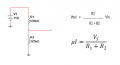
You can draw a picture to simplify

transistor base bias.png

A drawing with the right equation, after enough practice you might skip it but for now it works,
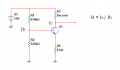
From what you now have, can you estimate or assume a reasonable current value for this transistor?

transistor beta.png
 
Last edited:

Thread Starter

Krastar

Joined Apr 10, 2025
7
It's not a trick question -- you can certainly build that circuit and the transistor will certainly be in one of it's possible operating modes (namely cutoff, active, or saturation -- though there's also reverse active and reverse saturation and various breakdown modes, but we generally can ignore those). The question is just asking you whether it is in a particular one of those modes, specifically active, so how can it be a trick question?

In doing the analysis, you don't know which mode it is in, so you have to assume one of the modes, do the analysis consistent with that mode, and see whether the result is consistent with it being in that mode. If it isn't, then it must be in one of the other modes.

That is where your analysis fails.

You calculated the base voltage under the assumption that there is zero base current. Which mode of operation is that consistent with?

In saturation mode, you have significant base current.

In active mode, you only have zero current if you are dealing with an ideal transistor having infinite beta, but you are given that the beta of this transistor in active mode is 100, so there is some base current, which may or may not be negligible compared to the current in the voltage divider.

In cutoff mode, you have zero base current.

Thus, your analysis starts off with the assumption that the transistor is in cutoff. The rest of your analysis has to require that the results be consistent with that assumption.

But is a base-emitter voltage of 5 V consistent with the transistor being in cutoff?

If not, then your assumption is wrong and you need to do your analysis again using a different assumption.
Thank you very much for the thorough and elaborate explanation!
 

WBahn

Joined Mar 31, 2012
32,702
I think, you have made a bloody error.
You have calculated Vb=5V - assuming that R1 and R2 form a voltage divider which is not loaded by the transistor.
And - as a next step - you calculate the current through R1 and R2 - and you are surprised that Ib=0 (voltage divider not loaded by Ib).
Here is my answer:
From the beginning, it was wrong to assume that Ib=0. In contrary, there must be a very large Ib and the transistor is deep in saturation, because this large Ib is the result of saturation (B-C junction is forward biased..). If you want you can approximately calculate this Ib value - assuming that the voltage across R2 will be app. Vb=(0.75...0.8) volts.
The given value of beta plays no role in this case, because this value can be used only when the BJT is NOT in saturation.
The current ic will be so large that the voltage drop across Rc is nearly 15V (Re=0).
But how do you know that Ib is so large or that the transistor is in saturation? I don't see a value for Rc being given, so how did you determine that the voltage drop across it is so large that it is nearly 15 V?

It makes a big difference if Rc = 5 kΩ versus 10 kΩ.
 

WBahn

Joined Mar 31, 2012
32,702
Yes - however, due to deep saturation you can/should assume from the beginning that Vbe is somewhat larger than 0.7V (I have suggsted 0.75...0.8 volts). The base current can be app. calculated using the voltage division between R1 abd R2||Rbe.

The situation would be totally different with an emitter resitor Re.
I wouldn't expect Vbe to be that high, even in deep saturation, when the base current is going to be less than 25 µA.

If you remove R2 completely and assume Vbe = 0 V, the current in R1 would be 23 µA, which would also be Ib. The non-zero Vbe and the presence of R2 will only make Ib smaller.
 

LvW

Joined Jun 13, 2013
1,992
But how do you know that Ib is so large or that the transistor is in saturation? I don't see a value for Rc being given, so how did you determine that the voltage drop across it is so large that it is nearly 15 V?

It makes a big difference if Rc = 5 kΩ versus 10 kΩ.
Yes, you are right. I have to correct myself.
I have made an error (estimate calculation in my head) - caused by the unexpected and unrealistic large resistor values of the voltage divider. A correct calculation (with Vb=0.7V) gives a base current of app. 20µA. Hence, the collector current (beta=100) will be app. Ic=2mA. The transistor will be in active mode for Rc values less than 7.5 kohms.
 
Last edited:

WBahn

Joined Mar 31, 2012
32,702
Yes, you are right. I have to correct myself.
I have made a calculation error - caused by the unexpected and unrealistic large resistor values of the voltage divider. A correct calculation (with Vb=0.7V) gives a base current of app. 20µA. Hence, the collector current (beta=100) will be app. Ic=2mA. The transistor will be in active mode for Rc values less than 7.5 kohms.
Easy oversight to make. My first glance at the original post led me down a similar path. I saw the TS saying that the voltage at the base was 5 V and so I just looked at the relative values to confirm that the top resistor was twice the bottom, at which point I told myself that the transistor was being wildly over driven into saturation. But then I wanted to get a quick estimate of how badly the transistor base would be loading the voltage divider, at which point I called R1 about 500 kΩ saw that the base current had to be under 30 µA. So I called that a collector current of 3 mA and went to check the voltage drop across the collector resistor and couldn't find a value given.
 

LvW

Joined Jun 13, 2013
1,992
Easy oversight to make. My first glance at the original post led me down a similar path. I saw the TS saying that the voltage at the base was 5 V and so I just looked at the relative values to confirm that the top resistor was twice the bottom, at which point I told myself that the transistor was being wildly over driven into saturation.
::::::::::::::::::::::::::::::::::
Thank you for understanding my mistake.
 

sparky 1

Joined Nov 3, 2018
1,218
The TS arrived at the point of best effort but is saying 5V however
The simplified drawing does not include the input and output impedances.
Then an expanded drawing was entered along with a question,

Someone pointed out that it was weak signal, high impedance input. correct

I left the question
From what you now have, can you estimate or assume a reasonable current value for this transistor?
 

MrAl

Joined Jun 17, 2014
13,667
You can draw a picture to simplify

View attachment 346718

A drawing with the right equation, after enough practice you might skip it but for now it works,
From what you now have, can you estimate or assume a reasonable current value for this transistor?

View attachment 346720
Hello there,

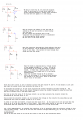
Here is a step by step illustration of how to approach this problem. Credit goes to @sparky 1 for the original diagram.
An assumption is that the base emitter diode, when forward biased, is exactly 0.7 volts. You can easily change that if you wish.
You still have to do all the calculations yourself.

Since no value for Rc was given we cannot compute a numerical value for the collector voltage which means we can only create a table for when the transistor is in saturation and when it is not.
Perhaps you forgot to mention the value for Rc, but if not, then you have to explicitly shown when the transistor is both in saturation and when it is not. If it is enough to show when it is in the active mode, then all the easier, no table would be needed only an expression for when it is in the active mode.

Note that the network is gradually transformed until we end up with more common components that make the circuit easier to solve.
If any of this is not clear you can state what is confusing here. Ignore the typo :)
 

Attachments

Last edited:

Thread Starter

Krastar

Joined Apr 10, 2025
7
The TS arrived at the point of best effort but is saying 5V however
The simplified drawing does not include the input and output impedances.
Then an expanded drawing was entered along with a question,

Someone pointed out that it was weak signal, high impedance input. correct

I left the question
From what you now have, can you estimate or assume a reasonable current value for this transistor?
Hi, from what I^ve learned so far i guess the current is calculated like this: IR1: (15-0.7)/R1=22mikroA, IR2=0.7/R2=2,15 mikroA. Ib=Ir1-Ir2=19.85mikroA. Ic=IB*100=2.0mA. Does that make sense?
 

MrAl

Joined Jun 17, 2014
13,667
Hi, from what I^ve learned so far i guess the current is calculated like this: IR1: (15-0.7)/R1=22mikroA, IR2=0.7/R2=2,15 mikroA. Ib=Ir1-Ir2=19.85mikroA. Ic=IB*100=2.0mA. Does that make sense?
Hi,

Yes that is more like it, and see the post just before yours #18 for a step by step illustration which is a good way to handle problems like this.
 
Top