Using JLCPCB for PCB Assembly smd

Thread Starter

TonyAm

Joined Oct 12, 2022
83
Hello,

I've never worked with smd components before, but looking into replacing all of the through hole parts (resistors, capacitors) with smd for assembly by JLCPCB.

Is this process just as straight forward as picking the smd parts that match the values of the through hole parts?

Sincere thanks for any advice.
TonyAm
 

ronsimpson

Joined Oct 7, 2019
4,646
I think JLCPCB has an inventory and are next to a big supplier. (much like digikey) You cannot send them parts.
If the parts you want are on the short list the price is good.
If the parts are "next door" the price is higher. Labor to get the parts. (much lower cost than in the USA)
Look at the parts they have C1234 format.
If you have a 1/4 watt 1k resistor, search their parts list for a 1k in a R0405 format. (choose what size part you want)
You will need their C1234 part number to have the boards built.

They can hand solder some parts. I have done that but not much.

There will probably be some parts they don't have. I just hand solder those.
-------------------------
All the US board assembly houses wanted me to ship them all the parts first. Then they wanted the parts in a certain format. I had problems getting everything lined up.
 

Jon Chandler

Joined Jun 12, 2008
1,560
Ron's info is a bit out of date.

First, I suggest you look at this Hack-A-Day article about a JLC parts search utility and download it. It makes parametric searching of their parts library easy.

JLC's parts are broken down into BASIC, which means they are always loaded on their vast array of pick&place machines (i.e., they are commonally used parts) or EXTENDED, which must be loaded on to a pick&place machine when needed. There is a $3 charge for each extended part which must be loaded ($3 total whether you use 1 or 1000 – it's a charge to put a reel of parts on the machine).

Look for "BASIC" components in the above search tool to save money. For example, there's probably a BASIC 10k resistor, but there are 10 that are extended.

They now accept user-supplied parts (i.e., parts you ship to them), and parts purchased by them specifically for you. They'll purchase some amount more than you need to account for wastage and bulk discounts, and store them for you until they are used. These parts must be purchased in advance.

I have not used the above options, so I'm not sure of the cost. They also routinely do through-hole parts, but I'm not aware of the cost.

So....the basic costs....

1. The normal PCB fab price
2. A $7 setup fee, which includes the stencil (which they keep)
3. The cost of the components (usually for 5 or 10 boards)
4. $3 per unique "EXTENDED" parts.

It is an excellent value.

A word of warning: If you specify a part they don't include in the program or don't have in stock, it won't be included. You'll have to obtain and solder it yourself.

I recommend using EasyEDA software supplied for free by JLCPCB. I use the "standard" version which is indeed easy to use. I've talked about its virtues elsewhere – the key here is it generates all the needed files in the proper formats for assembly. It also tells you if selected parts are available.
 

Thread Starter

TonyAm

Joined Oct 12, 2022
83
Ron's info is a bit out of date.

First, I suggest you look at this Hack-A-Day article about a JLC parts search utility and download it. It makes parametric searching of their parts library easy.

JLC's parts are broken down into BASIC, which means they are always loaded on their vast array of pick&place machines (i.e., they are commonally used parts) or EXTENDED, which must be loaded on to a pick&place machine when needed. There is a $3 charge for each extended part which must be loaded ($3 total whether you use 1 or 1000 – it's a charge to put a reel of parts on the machine).

Look for "BASIC" components in the above search tool to save money. For example, there's probably a BASIC 10k resistor, but there are 10 that are extended.

They now accept user-supplied parts (i.e., parts you ship to them), and parts purchased by them specifically for you. They'll purchase some amount more than you need to account for wastage and bulk discounts, and store them for you until they are used. These parts must be purchased in advance.

I have not used the above options, so I'm not sure of the cost. They also routinely do through-hole parts, but I'm not aware of the cost.

So....the basic costs....

1. The normal PCB fab price
2. A $7 setup fee, which includes the stencil (which they keep)
3. The cost of the components (usually for 5 or 10 boards)
4. $3 per unique "EXTENDED" parts.

It is an excellent value.

A word of warning: If you specify a part they don't include in the program or don't have in stock, it won't be included. You'll have to obtain and solder it yourself.

I recommend using EasyEDA software supplied for free by JLCPCB. I use the "standard" version which is indeed easy to use. I've talked about its virtues elsewhere – the key here is it generates all the needed files in the proper formats for assembly. It also tells you if selected parts are available.
Thanks very much. I also use the "standard" version, so that good to know. Sincere thanks.
TonyAm
 

Jon Chandler

Joined Jun 12, 2008
1,560
One of the reasons I continue to use the "standard" edition is the iBOM extension. It's an interactive bill of materials – there's a parts list on one side of the screen and an image of the board on the other. Click on a part, say 10k resistors, and every location there's a 10k resistor will be highlighted on the board.

There's a live example on Jon's Imaginarium. Use a pc to check it out – a phone screen is too small to see how it works.
 

ronsimpson

Joined Oct 7, 2019
4,646
I don't yet know what the C1234 format
That is JLCPCB's part number.
Ron's info is a bit out of date.
thank you, you said it much better than I did.

When looking at available parts, they have data sheets. Use them.
I almost exclusively use 1% resistors because they are easier to get and cheaper than 5%. Life has changed.
If the inventory said they have 10 parts, don't use the part. There is a very good chance they will not have the parts, or can't load a short strip of parts. So look for 100s or 1000s of that type.
Say you are using a 1N4001. They probably have 1N4001xyz and 1N1001abc......etc. but also look for a 1A 50V diode and you will probably find 100s of options.
 

Jon Chandler

Joined Jun 12, 2008
1,560
Ron is right - do look for similar alternative parts. Diodes with higher PIV and current rating are fine. Changing the values of resistors slightly may make the difference between a basic and extended device.

JLC is related to the supplier LCSC.com. It's basically the equivalent of Digikey, but with both Western and Chinese parts, usually at very good prices (at least until cheeto emperor imposes tariffs on the world). Often you can find Chinese equivalents (pin-for-pin and functionally) at a much lower cost. Datasheets on LCSC are often in Chinese; searching on the part number, even for Chinese parts, will often reveal an English datasheet. If a datasheet can't be located, Google Lens can help translate the datasheet.
 

ronsimpson

Joined Oct 7, 2019
4,646
At some point you may want to come back and ask about how to make an AMD PCB layout.
Example: The small parts need the PCB coper as a heatsink. I often use traces as wide as the pad.
 

rpschultz

Joined Nov 23, 2022
808
I've been using Eagle for 2-layer thru-hole designs. I know Eagle is going way soon and need a 4-layer smd design anyway, so I have been considering Kicad. The hackaday thing is cool, I'm learning. Couple questions:

1) Super simple search for a 10k resistor returns 4 that are 1%. Do I care what size? What is most common? I see the wattage ratings.
1748628652994.png

2) I'm assuming some larger polarized capacitor aren't available in smd, like 100u.

3) My design uses an LF50 500mA 5v voltage regulator, they have it, but it's extended. So in that case I may want to just solder that one by hand.
 

nsaspook

Joined Aug 27, 2009
16,250
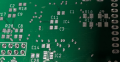
For human build-able designs, I normally stick to 0805 unless space, frequency, power requirements dictate something smaller or larger.
1748639684590.png
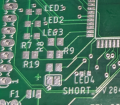
The 1206 size higher wattage resistors R10, etc... are for a voltage divider input to a ADC for up to 80VDC.

1748640290808.png
The 0603 LED4 pad. Those things will never be found if dropped. I still use the 0603 led size on larger pads because they still fit and solder by hand easily.

1748640502539.png
 

panic mode

Joined Oct 10, 2011
4,864
I have been considering Kicad.
It will get a bit of getting used as with any change but i think it is worth it. i don't chase latest and greatest version. until recently i was still on version 7.0.6. then i was bored one day and decided to move to 9.0.1 but noticed that newer version is not as stable. it crashed couple of times in past two months or so. not too happy about that, version 7.0.6 was rock solid. so now i have to try 9.0.2.

1) Super simple search for a 10k resistor returns 4 that are 1%. Do I care what size?
if you never worked with SMD, it is a good idea to stick with 0805 because there will be mistakes and boards will need reworking.

2) I'm assuming some larger polarized capacitor aren't available in smd, like 100u.
why assume? you can try parts search and see that SMD caps in Alu cans are available in excess of 1000uF. but they are all extended parts.

there are more compact variants in 100uF (tantal, ceramic..) and some are basic but watch the voltage rating.
1748646779278.png

or just use smaller value and put as many parts as needed, for example two of 47uF/10V or five 22uF/25V

3) My design uses an LF50 500mA 5v voltage regulator.
i hear you, but if the LDO is not a requirement, consider 7805:
https://jlcpcb.com/partdetail/Stmicroelectronics-L78M05ABDTTR/C58069

and extended price is not the end of the world, the $3 handling fee is applied once per extended part type, not per individual IC so the more boards you order the less significant this becomes.
 
Top