Review Request: 220V TRIAC Voltage Stabilizer using LM358 and UJT

Thread Starter

whipcream

Joined Apr 30, 2026
1
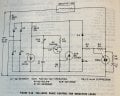
Hello, I have been tasked to build a Voltage stabilizer (220V, 50Hz). Now I am newbie at this and I dont want to offend anyone here (lol) but I have used Google Gemini to build a circuit. I have made the circuit in proteus 8 but it shows some errors for reasons unknown, gemini tells me its simply due to proteus mathematical model failing or something. So i have decided to make it in hardware, but for obvious reasons i am a little scared, so please take a look at my circuit if you will and let me know if i should proceed. The circuit uses a UJT to generate pulses for a triac to fire and op amp has been used to control the angle of the UJT pulses firing, an optocoupler has been used for isolation. I have attached the circuit and the error message screenshot in proteus. Thanks stabilizer.pngerr .png
 

schmitt trigger

Joined Jul 12, 2010
2,058
Either U2A or the UJT is redundant.
The UJT works similarly to a comparator. Once that the voltage at the emitter exceeds the voltage between base 2 and base 1 multiplied by the intrinsic standoff ratio η, the device will fire.
As shown, the LM358 is wired as a comparator, whereas when the voltage at the pot’s wiper drops below the Zener, its output will go high.
But then you feed that to the emitter via an RC delay, with the effect of causing the Triac to fire even later in the cycle. Is that what you want?
 

MrAl

Joined Jun 17, 2014
13,693
Hello, I have been tasked to build a Voltage stabilizer (220V, 50Hz). Now I am newbie at this and I dont want to offend anyone here (lol) but I have used Google Gemini to build a circuit. I have made the circuit in proteus 8 but it shows some errors for reasons unknown, gemini tells me its simply due to proteus mathematical model failing or something. So i have decided to make it in hardware, but for obvious reasons i am a little scared, so please take a look at my circuit if you will and let me know if i should proceed. The circuit uses a UJT to generate pulses for a triac to fire and op amp has been used to control the angle of the UJT pulses firing, an optocoupler has been used for isolation. I have attached the circuit and the error message screenshot in proteus. Thanks View attachment 366520View attachment 366519

Hi there,

Before we even start to analyze this, the first thing you want to do is go back and tell it you want a design that does NOT use a unijunction transistor. They are plainly just too retro.

They have parameters that vary too much, and I don't think they are widely manufactured anymore. I think the spice models are not that well made either, so even if you get this to work somehow it might not do anything in real life once you build it.

Seriously, go back and ask it to lose the UT. That way you will get simulation results that start to make more sense and are more indicative of what you will actually get in real life.

The only time you might want to use one is if you HAVE to for some reason, or you want to take advantage of its unique properties.
In all my years in electrical work, I've never used a unijunction transistor except one time for investigating its properties, but I'd never use it in a design even back in the 1980's, especially for a product that was going into mass production.
 

panic mode

Joined Oct 10, 2011
4,956
without knowing what circuit is supposed to do, there is no telling how to make correct circuit.
"voltage stabilizer" was a transformer type of device that would produce stable output voltage (such ad 220V) while fed from source that was fluctuating. for example if the input was in some range (180-250VAC for example) the output would still be without much change (220VAC). i recall opening one some half a century ago. inside was strange looking transformer with several "windows" in laminations.each of the window had coil. later on i learned that it was a type of CVT aka Constant Voltage Transformer aka Ferroresonant Transformer.


the other option is to use an autotransformer where correct tap would be selected by some circuit measuring the input voltage.

but... using triac is common way of controlling AC load. but triacs can either let the current flow, or block it. unlike transistors, they have no "middle ground", it is only a two state device (on or off). and like transistors they cannot produce energy (voltage/current). so passing through only part of the waveform may look a lot like voltage is dropped. but there is no simple mechanism to do reverse... let the load see more energy (voltage/current).
 
Last edited:
Top