Using electrilysis to clean cast iron

Thread Starter

Dan Pro

Joined Sep 14, 2007
10
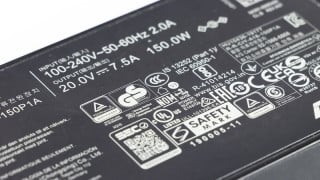
I just cleaned a cast Iron pan using an old computer power supply, oxy clean to create the electrolyte and a large piece of tin as the sacrificial iron.
A few days ago I came across an older but looking brand new battery charger with a manual switch on the front.
Is the 12v from the power supply the same as the 12v from the charger?
Is there something else involved in this such as amps?
I don't have another piece to clean at the moment so I thought I would ask for future reference.
Can someone educate me on this
 

jpanhalt

Joined Jan 18, 2008
11,087
Yes, amps/unit area is involved in that method.

Why use expensive tin as the sacrificial electrode? I just use junk steel.

12 volts from one source is the "same" as 12 volts from another source. The amount of current that can be supplied by each source may affect your results. For that procedure, ripple is probably not important so long as both supplies are DC.
 

wayneh

Joined Sep 9, 2010
18,096
Some battery chargers will not turn the power on unless they sense some voltage at the terminals - a connected battery. They won't even charge a fully dead battery unless you give it a brief tap with a good battery to get the charge flowing.
 

Thread Starter

Dan Pro

Joined Sep 14, 2007
10
Yes, amps/unit area is involved in that method.

Why use expensive tin as the sacrificial electrode? I just use junk steel.

12 volts from one source is the "same" as 12 volts from another source. The amount of current that can be supplied by each source may affect your results. For that procedure, ripple is probably not important so long as both supplies are DC.
Thanks for your reply.
My sacrificial electrode was scrap from the lid of a burned out electric pressure cooker.
It matched the size and shape of the pan well so I felt it was a good fit for the project.
Not sure what "ripple" is.
I assume that the charger would have more current available and if so would do the job quicker.
 

Thread Starter

Dan Pro

Joined Sep 14, 2007
10
Some battery chargers will not turn the power on unless they sense some voltage at the terminals - a connected battery. They won't even charge a fully dead battery unless you give it a brief tap with a good battery to get the charge flowing.

Yes that's true. This charger has a manual switch that removes the protections built in to automatic chargers.
I don't see them on newer chargers, that's why I picked it up.
I've read that, to use an auto charger for electrolysis a battery needs to be hooked up to the charger and you jump from it to the project.
This way you get the 12v supplied by the battery and the charger keeps recharging it.
It's just an extra step I'd rather not have to do.
 

wayneh

Joined Sep 9, 2010
18,096
Not sure what "ripple" is.
A battery provides DC at a nearly constant voltage. A battery charger supplies pulsing DC created by rectifying AC, which has alternating polarity pulses, to pulses of the same polarity. It's called DC because the polarity is unchanging but the voltage is still bouncing from zero to peak and averaging the nominal value. The peaks are (about 1.4X) higher and the valleys lower (zero) than the nominal voltage. Batteries don't care about this but other circuits may.
 

Thread Starter

Dan Pro

Joined Sep 14, 2007
10
A battery provides DC at a nearly constant voltage. A battery charger supplies pulsing DC created by rectifying AC, which has alternating polarity pulses, to pulses of the same polarity. It's called DC because the polarity is unchanging but the voltage is still bouncing from zero to peak and averaging the nominal value. The peaks are (about 1.4X) higher and the valleys lower (zero) than the nominal voltage. Batteries don't care about this but other circuits may.
Thank you. Nice explanation.
 
Top