Facebook
 Google
 GitHub
 Linkedin

Happy new year to all!
I'm in the midst of a project that involves converting a once-powered subwoofer to a passive version (i.e., just the original enclosure and 10" driver). The original subwoofer had an LED indicator on the front panel (which illuminated when its amplifier was active), and so I'm trying to duplicate this for cosmetic purposes, but then recently had the idea of installing an LED switch. The new switch would duplicate the illumination, but also allow me to quickly enable/disable the subwoofer.
I'm comfortable supplying the power (say, 5v + any required resisters) to drive the lighted switch, but my confusion concerns how these 4-pin switches operate. In this application, would I also be introducing 5v to the speaker signal? The incoming power should function ONLY to light the LED when the switch assembly is depressed, whereas the "switched circuit" should be the (- or +) audio signal coming from the amplifier.
Are these LED push buttons intended to drive the attached load with the same power that drives the LED?
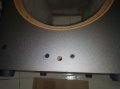
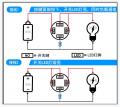
I'm in the midst of a project that involves converting a once-powered subwoofer to a passive version (i.e., just the original enclosure and 10" driver). The original subwoofer had an LED indicator on the front panel (which illuminated when its amplifier was active), and so I'm trying to duplicate this for cosmetic purposes, but then recently had the idea of installing an LED switch. The new switch would duplicate the illumination, but also allow me to quickly enable/disable the subwoofer.
I'm comfortable supplying the power (say, 5v + any required resisters) to drive the lighted switch, but my confusion concerns how these 4-pin switches operate. In this application, would I also be introducing 5v to the speaker signal? The incoming power should function ONLY to light the LED when the switch assembly is depressed, whereas the "switched circuit" should be the (- or +) audio signal coming from the amplifier.
Are these LED push buttons intended to drive the attached load with the same power that drives the LED?