Using a PSU for a homemade smart cooling system

Thread Starter

Seknem

Joined May 16, 2017
10
Hello everyone,

I am trying to build my own smart fan controller at home and I am trying to "tap into" my PC PSU as the power supply of the project. Sadly I ran into some expected issues due to my inexperience.

For the time being my main goal is to use the 12V and 5V rails with a potentiometer of some sort in order to create a way to regulate the input voltage of my fans between 7-12 volts.

My schematic:


The "power supplies" are basically the 5V and 12V leads of a molex connector and their grounds are the respective ground cables of that molex connector.
The potentiometer is the 10k one supplied with the arduino starter kit and the resistors(220) in parallel are there instead of case fans that will be connected.

I have ran into the following problems:

1) I have burned 2 10k potentiometers while trying to connect them without a resistor at 3rd lead (I do not have more potentiometers - will get some tomorrow to test it out) but after reading a few forums posts on AAC I think my problem was not adding a resistor on the ground lead (highlighted in blue on the schematic)

2) The voltage variance is non existant, the potentiometer seems to either cut the 5v lead completely or let it flow without interruption.

3) While testing without the 5v rail and connecting 6 fans in parallel the voltage coming out of the PSU was measured to be 12v but on the fans themselves only 10v went across them - meaning they do not operate at full speed as needed.

I am trying to create a stable 7-12 voltage varying power supply to power my case fans (arduino controls to be added in the future)while using the PSU leads but so far the supply is not stable nor varying.

Any help/tips appreciated!
 

#12

Joined Nov 30, 2010
18,224
My schematic:
I don't see a schematic. I see a pictorial which is missing a lot of labels, like I'm supposed to do all the figuring to see what's going on.

I'm guessing you have not figured out that some of the 10K ohms is going to be in series with the motor(s) and that's why the only results you get are all or nothing, and the "all" isn't quite right. As soon as you turn the pot a little bit, you have 500 or 1000 ohms in series with the motor and it quits.

Right?
 

Thread Starter

Seknem

Joined May 16, 2017
10
I don't see a schematic. I see a pictorial which is missing a lot of labels, like I'm supposed to do all the figuring to see what's going on.

I'm guessing you have not figured out that some of the 10K ohms is going to be in series with the motor(s) and that's why the only results you get are all or nothing, and the "all" isn't quite right. As soon as you turn the pot a little bit, you have 500 or 1000 ohms in series with the motor and it quits.

Right?

I am sorry, I will get right on the labeling!

And yes, my goal was to let the 12v just be active, and use the 5v rail on the opposite direction to reduce the voltage of the 12v gradually to 7. The potentiometer needs to either let the 5v flow freely or slowly restrict it to a point that it's negligible (thus not lowering the 12v and letting the fan motors spin at full speed)
 

Thread Starter

Seknem

Joined May 16, 2017
10
This is what I get out of your first try. See what's missing and why it doesn't make a fan work?View attachment 126948
First thing, here is the new labeled pictorial I have also corrected the placement of the 220 ohm resistor that is supposed to go to ground:


What I see from your drawing is that I get the resistance in serial to the motor thus not supplying enough voltage to it.

But what is stopping the 12v from operating? From my understanding when the resistance in the potentiometer is high enough it will act as a "disconnect" and the 5v will not have any effect and I should have the full 12v. if the resistance is low, part of the 5v will act in the opposite direction of the 12v and lower it.

Is that not so? Am I missing something here?
 
DC Brushless motors used in PCs don't control their speed by voltage in, but rather by Pulse Width Modulation. Typically the third wire is for this input ( a 5V square wave with varying duty cycle). If the fan has a fourth wire, that is for the tachometer feedback.
 

#12

Joined Nov 30, 2010
18,224
Am I missing something here?
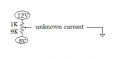
You are missing the fact that there is no known current and nobody can calculate the resistance of the motors.
Then there is the idea that potentiometers often do not arrive at 0.00 ohms. You might have 50 ohms in that potentiometer when the handle stops, but nobody knows how that will affect the motor.

@Mike Mitchell has a good point but you have not said what kind of motor you are using. How much of this are we supposed to guess?

Spill the beans. I tire of playing 20 questions with you.
 

R!f@@

Joined Apr 2, 2009
10,004
DC Brushless motors used in PCs don't control their speed by voltage in, but rather by Pulse Width Modulation. Typically the third wire is for this input ( a 5V square wave with varying duty cycle). If the fan has a fourth wire, that is for the tachometer feedback.
Wrong.
3 Pin motors speed can be reduced.
Been there, Done that.

3 Pin motors use the third as RPM pin for the mobo.
The Vcc can be varied linearly or PWM.

4 pins cannot be done this way. They use PWM always
 

bertus

Joined Apr 5, 2008
22,907
Hello,

The circuit you made will do nothing.
You have the wiper of the pot connected to the +12 Volts, wich is also directly coupled to the "fan".
There is no control element to regulate the power for the "fan".

Bertus
 

Thread Starter

Seknem

Joined May 16, 2017
10
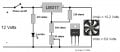
Here's what you need....

View attachment 126949
I am a beginner and kind of overwhelmed by that schematic, will that work on 6 fans on parallel or each fan needs that kind of circuit? - I am trying to have 6 fans share the save speed via voltage.

Is the LedVM only there as a means to see if the circuit is working?

And that voltage regulator, is that controlled by that 1k potentiometer?

DC Brushless motors used in PCs don't control their speed by voltage in, but rather by Pulse Width Modulation. Typically the third wire is for this input ( a 5V square wave with varying duty cycle). If the fan has a fourth wire, that is for the tachometer feedback.
I am using corsair fans that are rated for 7-12 operating voltages and are not PWM controlled (from the product page) how will you control a non PWM fan other than voltage? (Sincere question)

Thanks for the fast answers guys! And if anyone has the time to explain what was wrong with the logic of my voltage control I will be happy to learn from my mistakes.
 

R!f@@

Joined Apr 2, 2009
10,004
You cannot control fan with just a POT, period. It will burn the POT.
why don't you understand that.
What you want can be done with diagram provided by in post #7.
You can connect 10 fans to that
 

R!f@@

Joined Apr 2, 2009
10,004
The 1K pot can be used to adjust the Fan speed.
And all you need is 12V Bus.

Can you post your fan's operating current value.
 

Dodgydave

Joined Jun 22, 2012
11,395
I am a beginner and kind of overwhelmed by that schematic, will that work on 6 fans on parallel or each fan needs that kind of circuit? - I am trying to have 6 fans share the save speed via voltage.

Is the LedVM only there as a means to see if the circuit is working?

And that voltage regulator, is that controlled by that 1k potentiometer?


I am using corsair fans that are rated for 7-12 operating voltages and are not PWM controlled (from the product page) how will you control a non PWM fan other than voltage? (Sincere question)

Thanks for the fast answers guys! And if anyone has the time to explain what was wrong with the logic of my voltage control I will be happy to learn from my mistakes.
Yes the led isn't needed, The regulator will give out upto 1.5amp, with an heatsink, so as long as your fans don't take this you can use one regulator, otherwise split them up.
 

#12

Joined Nov 30, 2010
18,224
Thanks for saying what brand the fans are but nobody knows what size they are or how much current they need.
P=IE and E=IR
You need at least 2 of those to find the other 2.
As long as you only give one, the voltages, no math can happen.
 

Thread Starter

Seknem

Joined May 16, 2017
10
You are missing the fact that there is no known current and nobody can calculate the resistance of the motors.
Then there is the idea that potentiometers often do not arrive at 0.00 ohms. You might have 50 ohms in that potentiometer when the handle stops, but nobody knows how that will affect the motor.

@Mike Mitchell has a good point but you have not said what kind of motor you are using. How much of this are we supposed to guess?

Spill the beans. I tire of playing 20 questions with you.
As a newbie to circuits and this website I was not sure what information was needed and what was redundant but I appreciate the time you took to help me out! The fans are old case fans that I found laying around, they are corsair sp120 non PWM and are rated for 7-12 volts and draw 0.08-0.2A at full load.

Yes the led isn't needed, The regulator will give out upto 1.5amp, with an heatsink, so as long as your fans don't take this you can use one regulator, otherwise split them up.
That seems enough to what I needed, the fact that the fans are not getting the full 12 volts that they are listed for, does that mean I will not get maximum performance? Is there a way to fix that? Or the fact that I am using a voltage regulator with more resistors means I will always get less than the full 12v?
 

R!f@@

Joined Apr 2, 2009
10,004
If you want full performance you can connect 12V to ur fans.
The regulator provided will drive the fans near full speed.
You can bypass the regulator if you desire full speed.
You do not get everything you want with 12V. You need higher input voltage for the regulator to output 12V
 

Dodgydave

Joined Jun 22, 2012
11,395
Your fan will vary its speed with the voltage applied, and also its performance, the regulator won't make the fan any less poorer it just drops the voltage across the fan and gives it current., better than a resistance pot.
 

Thread Starter

Seknem

Joined May 16, 2017
10
If you want full performance you can connect 12V to ur fans.
The regulator provided will drive the fans near full speed.
You can bypass the regulator if you desire full speed.
You do not get everything you want with 12V. You need higher input voltage for the regulator to output 12V
I guess I could add a bypass to just get the 12 volts, thanks!

Your fan will vary its speed with the voltage applied, and also its performance, the regulator won't make the fan any less poorer it just drops the voltage across the fan and gives it current., better than a resistance pot.
I asked since the Vmax in the schematic is lower than 12 volts, but I guess I can bypass as I stated above?

Should I supply it with a higher input voltage to avoid the dropout? Will that help me get a 12vmax output? (Can I use the 5v rail for that somehow?)
 
Last edited:
Top