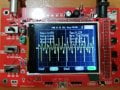
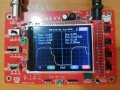
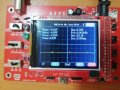
uc3843 buck-boost

Ian0

Joined Aug 7, 2020
13,158
That’s a neat little scope!
Those waveform look correct, rise and fall times could be quicker, but think about that later.
I think you need a bit of attenuation (x10 probe?) to get the waveform on the screen, and I wonder where you have the earth clip connected, as the waveform shouldn’t go negative.
What does the drain voltage look like?
 

Thread Starter

mrh586

Joined Dec 5, 2021
90
I think you need a bit of attenuation (x10 probe?)
I put a 10k resistor between the positive probe and the gate as advised by the seller and for precaution
and I wonder where you have the earth clip connected
I connected it to ground, to the negative input
That sign that is like a diode and is on the top right side of the screen (next to the word AUTO)
It goes up and down in settings, maybe when its direction is reversed, the waveform becomes positive
What does the drain voltage look like?
When the positive probe is connected to the drain, there is no waveform on the screen
I am working with the settings to see if I can fix it
Now with the output voltage of 31 volts, when I connect a 3.9 ohm resistor to the output, it shows a current of 8 amps, but the voltage drops to 9 volts.
 

Thread Starter

mrh586

Joined Dec 5, 2021
90
That’s a neat little scope!
Those waveform look correct, rise and fall times could be quicker, but think about that later.
I think you need a bit of attenuation (x10 probe?) to get the waveform on the screen, and I wonder where you have the earth clip connected, as the waveform shouldn’t go negative.
What does the drain voltage look like?
Hello
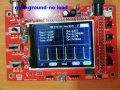
Without load, it does not show anything on the screen (Drain)
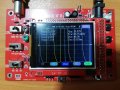
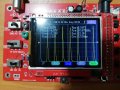
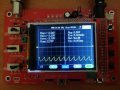
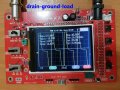
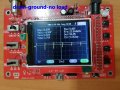
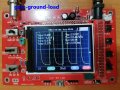
This is the photo with the load
 

Attachments

Thread Starter

mrh586

Joined Dec 5, 2021
90
You need to get all the waveform on the screen before it conveys any useful information.
I tried myself
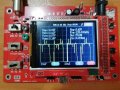
It is written on each photo which part it belongs to
If you want special settings for the oscilloscope, guide me to do it
Thank you
 

Attachments

Ian0

Joined Aug 7, 2020
13,158
Just checking, as there was talk in several posts about modifying it and removing capacitors.
Anyway, let’s see the waveform at the diode anode.
 

Thread Starter

mrh586

Joined Dec 5, 2021
90
Just checking, as there was talk in several posts about modifying it and removing capacitors.
Anyway, let’s see the waveform at the diode anode.
It is possible for the oscilloscope to burn while checking the anode
The peak voltage of this model is 25 volts
Are the waveforms I posted so far normal?
I'm not an expert, but I think the falltime gate is long
 

Ian0

Joined Aug 7, 2020
13,158
It is possible for the oscilloscope to burn while checking the anode
The peak voltage of this model is 25 volts
Are the waveforms I posted so far normal?
I'm not an expert, but I think the falltime gate is long
I did suggest using a X10 probe - that would have been safe to 250V
gate rise and fall times seem a little slow.
I’m not sure about the drain waveform, that’s why I would like to compare it to the diode anode waveform. They should match but be DC shifted
 

Thread Starter

mrh586

Joined Dec 5, 2021
90
I did suggest using a X10 probe - that would have been safe to 250V
gate rise and fall times seem a little slow.
I’m not sure about the drain waveform, that’s why I would like to compare it to the diode anode waveform. They should match but be DC shifted
Buying it now takes time
Is there another way?
Thankful
 

Thread Starter

mrh586

Joined Dec 5, 2021
90
Just checking, as there was talk in several posts about modifying it and removing capacitors.
Anyway, let’s see the waveform at the diode anode.
Is there anything clear from the photos?
This circuit has become a mystery to me
I have brought it up everywhere and no one has noticed the problem
Why does the MOSFET get too hot? Why is there a voltage drop?
I have changed the value of all the resistors, capacitors and even the inductor several times
But the problem is still there and the same
 

Ian0

Joined Aug 7, 2020
13,158
The two-part falling edge is caused because it is in discontinuous mode, and the downward slope starts early (i.e. before the MOSFET turns ON) because the inductor runs out of stored energy.
If you have an iron powder core, then it will be getting a lot more flux excursion than it really wants and will be rather warm.
 

Thread Starter

mrh586

Joined Dec 5, 2021
90
The two-part falling edge is caused because it is in discontinuous mode, and the downward slope starts early (i.e. before the MOSFET turns ON) because the inductor runs out of stored energy.
If you have an iron powder core, then it will be getting a lot more flux excursion than it really wants and will be rather warm.
Thankful
I know the core model is T157-26 and I think it is iron powder.
But I have tested with material in different sizes and number of coils
When the load is connected, the core does not get hot, but the MOSFET gets very hot and there is a voltage drop
What is your suggestion?
 
Top