“Buck Converter Design Using UC3843 – Output Dropped to 0V”

Thread Starter

arda99

Joined Aug 29, 2025
5
Hello,
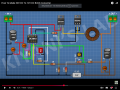
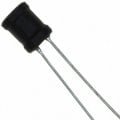
I am an electronics intern/student, and I am trying to build the circuit you see in the schematic. I assembled it in real life, but with some differences: instead of the toroidal inductor shown, I used a different inductor (photo attached), and since I didn’t have all the exact component values, I used the closest available values.


At first, when I powered it up, I measured about 9.8 V at the output. However, after about 30 minutes, without making any changes to the circuit, the output voltage suddenly dropped to 0 V.


When I supply the circuit from my power supply, the supply shows about 15 mA current draw, but as I said, the output voltage is 0 V.


What could have happened to the circuit? How can I troubleshoot and find out what went wrong?
Any advice would be greatly appreciated.bobin.jpg1.png
 

Ian0

Joined Aug 7, 2020
13,097
Ok, I'll check it out, thank you, but from now on, what could be the cause of this problem?
That's a tricky one. I think your IC might have failed, because all the other failures I can think of would lead to the supply voltage on the output. Is the clock still running? What voltage is on the COMP pin?
 

ronsimpson

Joined Oct 7, 2019
4,647
The UC3843 has an absolute max supply voltage of 30V. You are right at the break it point.
The UC3843 was not made to drive a MOSFET like this. It cannot pull up the Gate well in this mode. It is designed to drive a MOSFET with its Source on (or near) ground.
 

schmitt trigger

Joined Jul 12, 2010
2,027
Exactly what dl324 has mentioned;
schematics are the language of electronics.
Drawing a schematic that way, betrays a lack of understanding of electronics.
 

Ramussons

Joined May 3, 2013
1,567
Hello,
I am an electronics intern/student, and I am trying to build the circuit you see in the schematic. I assembled it in real life, but with some differences: instead of the toroidal inductor shown, I used a different inductor (photo attached), and since I didn’t have all the exact component values, I used the closest available values.


At first, when I powered it up, I measured about 9.8 V at the output. However, after about 30 minutes, without making any changes to the circuit, the output voltage suddenly dropped to 0 V.


When I supply the circuit from my power supply, the supply shows about 15 mA current draw, but as I said, the output voltage is 0 V.


What could have happened to the circuit? How can I troubleshoot and find out what went wrong?
Any advice would be greatly appreciated.View attachment 355304View attachment 355303
As a student learning electronics, please learn how schematics are drawn. A lot of us who would like to help you are turned off looking at a "drawing" like this.
 

whsh93a

Joined Jan 1, 2021
18
Hello,
I am an electronics intern/student, and I am trying to build the circuit you see in the schematic. I assembled it in real life, but with some differences: instead of the toroidal inductor shown, I used a different inductor (photo attached), and since I didn’t have all the exact component values, I used the closest available values.


At first, when I powered it up, I measured about 9.8 V at the output. However, after about 30 minutes, without making any changes to the circuit, the output voltage suddenly dropped to 0 V.


When I supply the circuit from my power supply, the supply shows about 15 mA current draw, but as I said, the output voltage is 0 V.


What could have happened to the circuit? How can I troubleshoot and find out what went wrong?
Any advice would be greatly appreciated.View attachment 355304View attachment 355303
Geeeze - what a bunch of imperious commenters.
In a beginning electronics situation, it's often better to use a drawing instead of a schematic because the student can follow it better. I hate drawings, too, but that's only because I know what I'm looking at. The student will soon get accustoned to more and more complicated actual schematics. Don't discourage him, encourage his efforts.
Give the guy a break, ok?
 

Ramussons

Joined May 3, 2013
1,567
it's often better to use a drawing instead of a schematic because the student can follow it better
Don't want to shatter your dream, but you are starting on the wrong foot! A schematic is the foundation, a drawing may be nice to look at. Your pick.
 

dl324

Joined Mar 30, 2015
18,220
Give the guy a break, ok?
He's able to take advice, or not; his choice.
a drawing may be nice to look at
The drawing in question isn't even nice to look at.

Unnecessary wire jogs, poor component placement, using 100V rated caps unnecessarily, lack of component designators, and the meaningless/distracting colored wires/grid. Plus, a couple of the resistors were placed so that the color code is read backwards.
 

ericgibbs

Joined Jan 29, 2010
21,390
Hi,
If it is not already obvious, the so called 'drawing' is a screenshot from an online video.

Newcomers to electronics may not have the technical know how, or technical drawing skills to create what we 'experts' would consider suitable.

We are supposed to encourage and help them to improve their knowledge.

E
 

Ian0

Joined Aug 7, 2020
13,097
The TS said "I am an electronics intern/student". An intern would be old enough to have left school, which implies a university or college student. Any college electronics student should understand what a circuit diagram is and know how to draw one, so I would assume that the TS does indeed know, and that he has just found this circuit on YouTube.
What he doesn't yet know, and is just beginning to learn, is that, most circuits that are presented like that don't work.
 

Ya’akov

Joined Jan 27, 2019
10,226
Geeeze - what a bunch of imperious commenters.
In a beginning electronics situation, it's often better to use a drawing instead of a schematic because the student can follow it better. I hate drawings, too, but that's only because I know what I'm looking at. The student will soon get accustoned to more and more complicated actual schematics. Don't discourage him, encourage his efforts.
Give the guy a break, ok?
While the tone of the comments may be off, the content is important.

There is difference between a student and a "mere hobbyist"—the latter not intended to be a pejorative, rather a description. The expressed intention of a "student" is a blend of theoretical and practical, while the mere hobbyist if focused entirely on practical outcomes. Even a hobbyist, if they want to learn how to produce novel work, needs to explore theory to some extent.

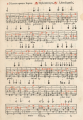
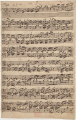
The general objection voiced here is to removing a distinction. Calling a wiring diagram a "schematic" is like calling tablature "sheet music". They are entirely different levels of abstraction and if the former is allow to replace the latter in the mind of the student, the important difference is lost.

1757229422302.png 1757229454748.png
tablature (L) vs. sheet music (R)
Tablature is the "wiring diagram", it shows fingering of an instrument to play a particular piece. It is akin to the "pictures and lines" diagrams that are often promoted to the rank of "schematic" from ignorance of the essential difference. The sheet music is shows the melody and rhythm of a piece. It does not concern itself with a particular realization of the music but instead describes the essence of it in terms of wavelength and time.

In the same way, the pictures-and-lines embodiment of a circuit is expressly designed to show the "fingering", that is, the physical interconnection of various components to create a practical realization of a circuit for which there is a schematic version that does not rely on particular components or wires.

For a person who wants to "play a song", tablature is extremely useful—it fills a gap in their ability to covert the sheet music to fingering on the fly. This means that even a legitimate student of music will find tablature has great utility. It can overcome gaps in knowledge or skill until is developed.

The fact is, it takes some insight to even understand why the objection is made. I think the tablature vs. sheet music example might be easier to understand to some extent.

A person who is only interested in the performance of a musical composition will find tablature not only sufficient but far superior to sheet music since it eliminates the necessity to translate from notes to fingering, something that might even be beyond the "mere hobbyist" ability and with intention of simple performance, beyond the cost-benefit payback of the effort to do it.

But a student of music, who wants to he able to see the underlying patterns of the music to understand it in terms of music theory, or to transpose it, or to orchestrate for different instrumentation needs the sheet music. The tablature has been reduced to a fixed manifestation that needs to be converted into sheet music for these advanced uses.

In this same way, a wiring diagram can be very useful for the mere hobbyist but to call it a "schematic" is to show that the distinction between it and a schematic, between the underlying reality of a circuit and some specific physical arrangement of components, is not present in the thinking of the speaker.

When a person who understands schematics looks at one, they are not looking at a picture of thingies connected by wires, they are looking at a circuit and can analyze that circuit by following the (correctly drawn) schematic. It is a tool for insight, for, as in music, understanding the theory involved, for transposing the circuit to some other operating parameter such as frequency or voltage, for orchestrating the circuit for a new complement of components or physical substrate.

The schematic is the essence of the circuit the way the sheet music is the essence of music—in symbols and conventions that are a "language" one must learn in order to read it. This does require effort and practice in both cases. But a self-described "student" who has professional aspirations and even labels themself a "design engineer" should know and be concerned with the difference.

So, yes—there may be a lack of gentleness in some of the responses to these pictures-and-wires "schematics", but it is generally born of the frustration of seeing so much misinformation and confusion sown by those who create these things and label them "schematics". It is about the stated goals not being consonant with the tools being employed. And about the devaluation of an essential tool for the student of electronics to the point that something which doesn't come close to the function of that tool is being held up as a replacement for it.

There is nothing wrong with being a "mere hobbyist" or a "maker", who is interested in little or no theoretical underpinnings of the various circuits and devices they assemble from the work of others. Modules and wiring diagrams allow people to focus on what they want to do without the necessity of learning things they won't use.

But someone who intends to create novel things, to be able to take parts of what they find and turn them into new, whole things. All of the tools of the student-expert are needed, and schematics are one of those tools.
 
Top